An American pilot about the behind-the-scenes of US army rescue operations. “It's terrifying”

When a US plane is shot down in combat, rarely used but highly trained air search and rescue teams spring into action. Air Force combat search and rescue mission crews they fly low and slow, exposing themselves to serious dangers, to recover downed aviators.
The current situation in Iran is the best example of this. The US military lost an F-15E fighter to enemy fire over Iran on Friday. Immediately after that, the search for the downed pilots began. Later reports indicated that two rescue helicopters were hit during the operation, highlighting the risk of such missions. Both helicopters managed to return to base.
See also: “There's no chance of that.” We reveal what is happening behind the scenes of the construction of a nuclear power plant
Additionally, on the same day, an A-10 Thunderbolt II attack aircraft crashed in Kuwaiti territory after enemy fire. The A-10 pilot was recovered safely.
Initially, US Central Command did not publicly comment on the incidents or provide information in response to Business Insider's inquiries. According to unofficial reports from The Washington Post and other sources, by Friday afternoon one of the two F-15E Strike Eagle crew members had been rescued by American forces. The fate of the second F-15E crew member remained unknown.
Today we know that they were both saved. The first of them – according to Donald Trump's declaration – on Saturday, but the American authorities did not inform about this success so as not to jeopardize the second mission.
This is what American search and rescue missions look like
CSAR is a combat search and rescue unit of the U.S. military tasked with rescuing crew members of downed aircraft who may be hiding, injured, or actively avoiding help, making a difficult mission even more complex.
Business Insider talked to an active pilot of such missions. He stated that Friday's rescue, which the footage showed as taking place in broad daylight, was incredibly daring.
CSAR missions are dangerous even in the best of conditions – ideally they take place on dark, moonless nights.
— Even on the darkest nights it's still very intense and terrifying. Doing this on a full moon would still be risky, our interlocutor argues. More light means greater risk to the crew, who are more easily detected by enemy weapons systems, often lacking the advanced night capabilities of the U.S. military.
But a rescue mission in broad daylight, exposing crews to a variety of hazards, “is a whole different level,” the pilot said, emphasizing the urgency of finding the American personnel. — It's kind of scary to think, “Let's just fly in broad daylight into the middle of a country that's at war with us.” – he points out.
For American soldiers, rescuing downed comrades is one of the most sacred duties – emphasizes the pilot. Finding the crews before the enemy is crucial is important both for the soldiers themselves and for wider operations, as their capture could have serious strategic consequences.
Air crews and other soldiers, such as special forces, prepare for the possibility of being behind enemy lines or captured during SERE (survive, evade, resist, escape) training, which helps prepare for the experience of captivity.
Search and rescue teams developed in parallel with combat aviation. The Vietnam War – when American planes were frequently shot down and their crews were taken prisoner – led to the development and refinement of these operationswith specialized units sent deep into enemy territory. Modern helicopters used in these missions are still called “Jolly Green”, referring to the times of the Vietnam War.
What does such a mission look like today?
“The CSAR mission is very well resourced in the US Air Force,” wrote Greg Bagwell, a former senior commander of the British Air Force and an air power expert. He explained that these operations are based on Air Combat Command and Air Force Special Operations Command units. “It is well-rehearsed by all crews and is a key element of every mission briefing.”
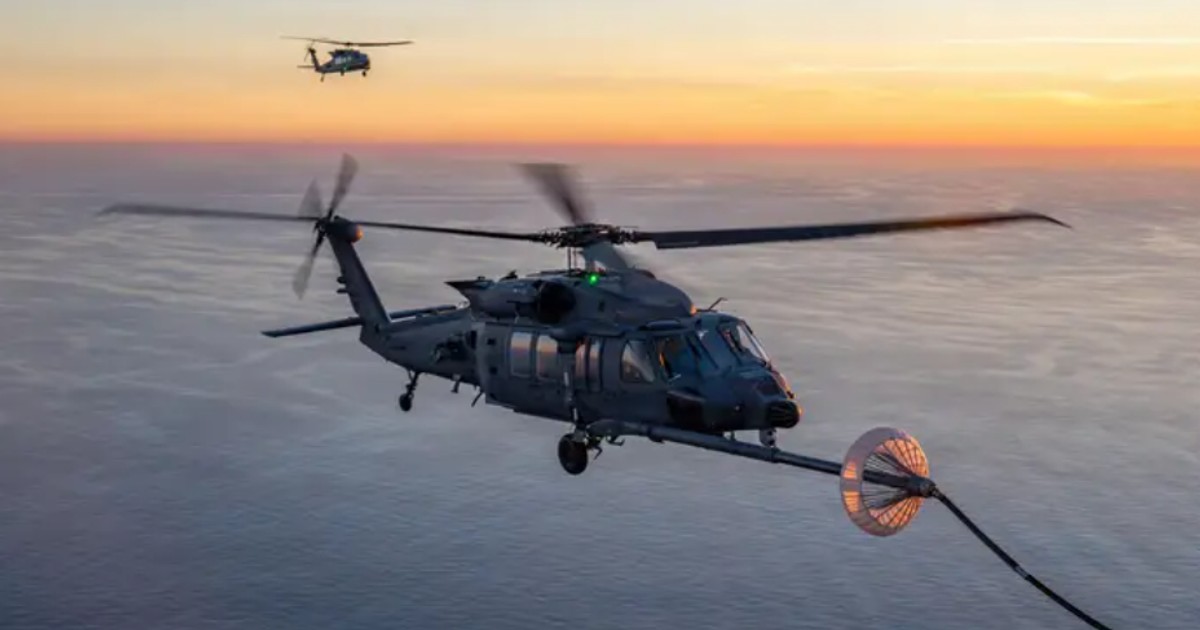
The mission often includes Pave Hawk helicopters (a derivative of the famous Black Hawk adapted for rescue), HC-130 refueling aircraft and Pararescue Jumpers (PJs), supported by special mission aviators operating weapons and winches on the helicopters.
An Air Force HH-60W Jolly Green II helicopter takes off from Ceiba, Puerto Rico
|
Senior Airman Gabriel Jones/US Air Force
The helicopters searching the area are slow, poorly armed and require refueling support to continue the search.
During the operation, another aircraft, such as the A-10 Warthog attack aircraft, can hover nearby and act as a mission command machine – a sort of “quarterback” that coordinates rescue operations. Such an aircraft can also cover rescue forces, although this is not always the case.
Rescue helicopter crews take enormous risks by flying low and slow.
— They're trying to get there, avoid the gunfire and somehow find this person, the pilot tells us. — The goal is for the PJs to jump out, grab the guy who looks American, get him into the chopper and fly him away – he adds.
When a plane is shot down in combat, there is a high probability that its crew is hiding somewhere near the enemy, which means that CSAR teams may encounter resistance when trying to find them.
In addition to the threat of enemy fire – from small arms fire to shoulder-launched missiles and surface-to-air missiles – helicopter crews must be ready to operate in any environment: from open terrain to complex urban spaces with hard-to-see power lines and other obstacles. And in such conditions they still have to carry out the rescue operation itself.
“You train a lot with the hope that you'll never have to do it,” the CSAR pilot said. “But you practice it every day,” he emphasizes.
The above text is a translation from American edition of Business Insider, updated with the latest mission information