
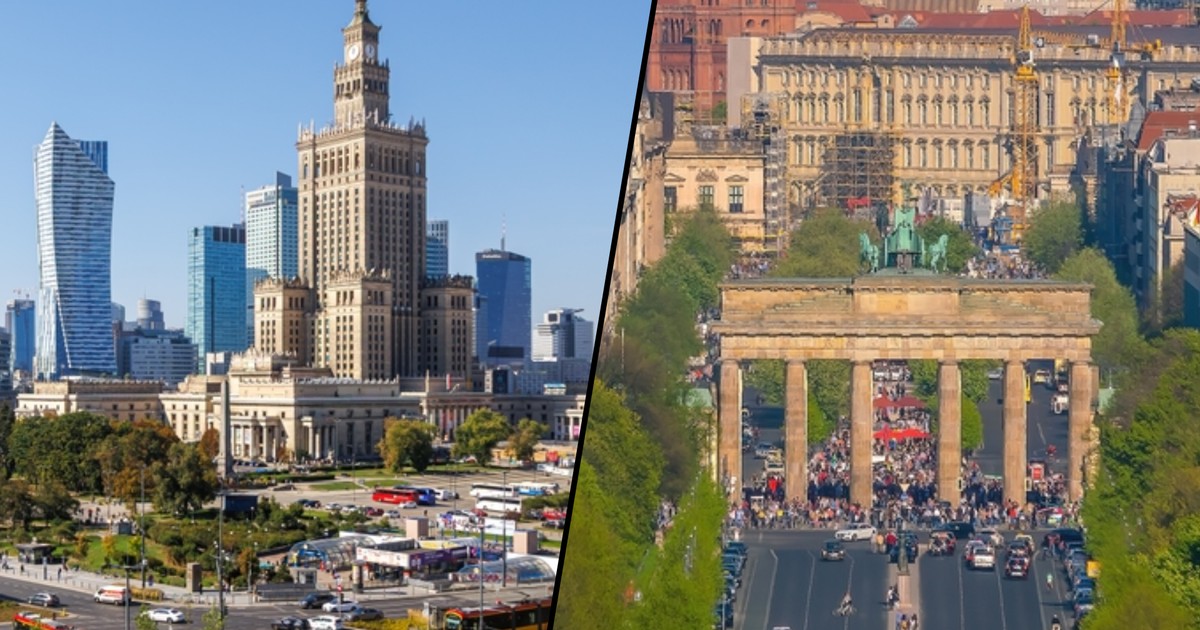
The German government on Wednesday cut its economic growth forecast for this year in half after the U.S. war with Iran sent energy prices for industry and households soaring. Currently you can expect GDP growth in Germany o 0.5%, while in January the target was 1%.
“The escalation in the Middle East and the war in Iran have set us back,” said Economy Minister Katherina Reiche. “The situation remains very unstable” – she added.
Germany also revised its growth forecast in 2027 to 0.9%. from 1.3 percent
The German economy is weakening. What about Poland?
This is disturbing information from Poland's perspective. Our economy and the German economy are very closely linked, mainly through trade, because Germany is the largest export partner and recipient of a significant part of Polish goods. Many Polish companies are part of German supply chains, especially in the automotive, household appliances and component production industries.
You might think that since Germany is drastically cutting its forecasts, the prospects for the Polish economy will also be much worse. Meanwhile, on the part of the Ministry of Finance and economists, there are no equally significant revisions in expectations for this year.
Finance Minister Andrzej Domański, in an interview with CNN in mid-April, emphasized that “we will be the fastest growing large European economy this year.” When asked about the resilience of the Polish economy, despite the multitude of crises, he said: “we have a well-diversified, diversified economy that is resistant to external crises because we have many engines of economic growth. We do not rely only on exports or only on domestic consumption. Even if one of them is trimmed a little, the others work.”
See also: Higher inflation in Poland. The Minister of Finance names the culprit
Our economy is so resistant to crises, or are the government and economists simply too optimistic? — Both statements may have some truth in them – Piotr Bielski, chief economist at Santander, replies in an interview with Business Insider.
— There is no doubt that our economy is more resilient than Germany's. This year in particular, we should react less to the global shock than Germany. This is quite a specific year in which the deadlines for using KPO funds end. Therefore, we are facing an investment sprint that will stimulate the economy. EU funds can be spent regardless of the situation in the Middle East, he comments.
The Santander economist reminds that for many recent years the Polish economy has shown that it can survive various types of global shocks relatively safely, and this will not change quickly.
Polish economy perceived too optimistically?
Piotr Bielski at the same time does not rule out that the perception of the current crisis slightly underestimates the effects on the Polish economy. He explains that economists rely on certain assumptions, and the prevailing belief is that the conflict in the Middle East is close to ending. He emphasizes that in the event of signals of a significant prolongation of the war and further problems with access to energy resources, deeper adjustments to GDP forecasts should be expected.
Santander economists recently lowered their Polish GDP growth forecasts for this year by only 0.1 percentage point. — from 3.9 to 3.8 percent
See also: Polish economy compared to Europe. Analysts emphasize the risk
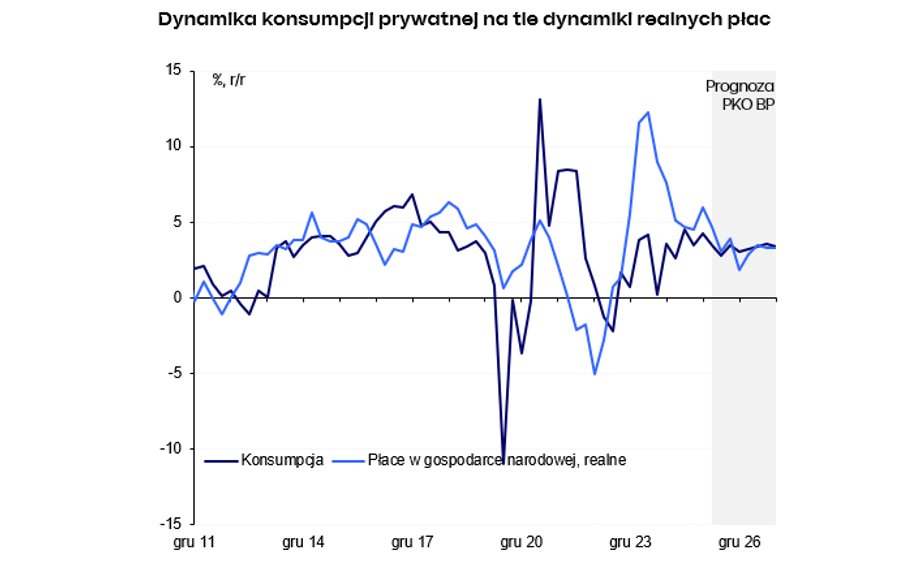
PKO BP economists speak in a similar tone. “The geopolitical shock disturbs the “Goldilocks” image of the national economy, but does not eliminate it for now.. Optimistic assumptions regarding GDP growth were based on investments stimulated by EU funds and steadily growing consumption. The sensitivity of “EU” investments to oil prices and uncertainty is significantly lower than that of private projects. Consumers, in turn, will benefit from the protection of the CPN initiative and can additionally smooth the growth path of their spending by limiting the savings rate that has been growing in recent quarters. For now, our revision of GDP growth for this year is symbolic (-0.2 percentage points – from 3.7 to 3.5%).” – we read in the quarterly of PKO BP economists.
Real GDP dynamics
|
PKO BP Analysis Center
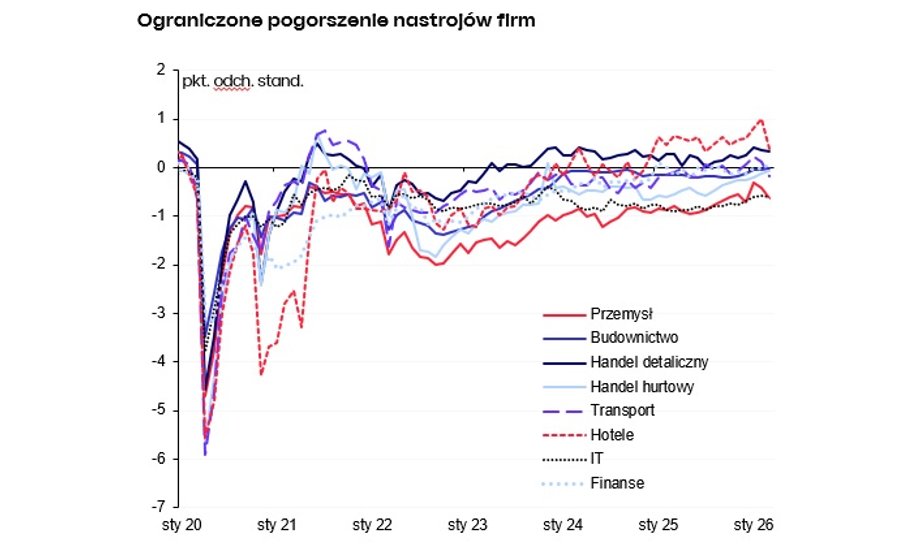
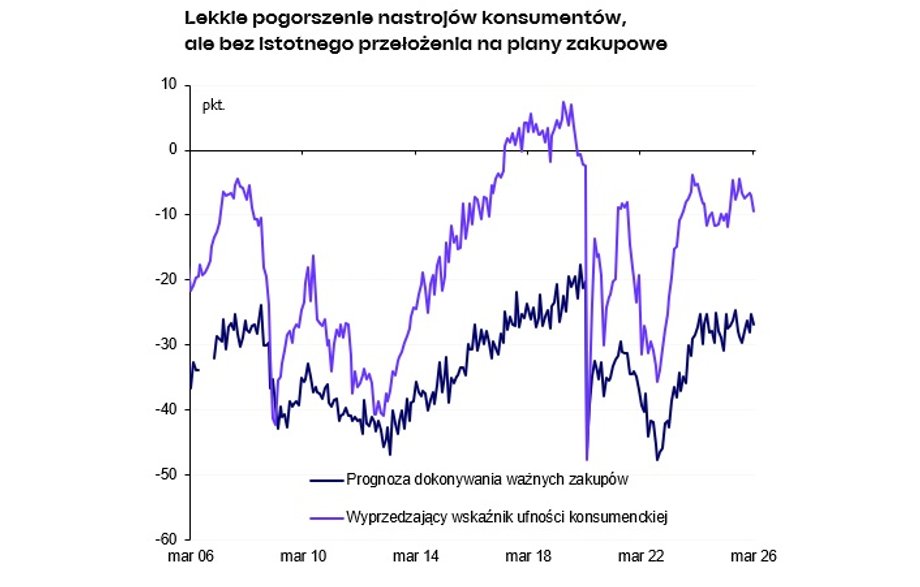
PKO BP economists point out that Polish companies and consumers have little reaction to the global turmoil. The mood deteriorated, but much less than during previous shocks.
|
PKO BP Analysis Center
|
PKO BP Analysis Center
|
PKO BP Analysis Center
The impact of the weaker German economy on Poland. The next years may be worse
The Polish economy is more resistant to shocks than the German one, but weaker growth in our western neighbors will have an impact on the condition of the well-oiled machine on the Vistula River. Although there is no universal rule, as our interlocutor estimates based on his experience, In a normal situation in Poland, the slowdown could be at least half as large as in Germany. However, for now we have a boost in the form of KPO.
See also: A breakthrough in the KPO case for Poland. Unofficially: billions will flow from Brussels
— If the German economy slows down by 0.5 percentage points, there should be no greater loss than 0.1-0.2 percentage points in our country. – says Piotr Bielski.
Santander's economist stipulates that: next year will be a bigger concern. – We will lose the protective element of the KPO, and if it turns out that the global mood deteriorates more permanently, the damage to the Polish economy will be greater – he points out.
Author: Damian Słomski, journalist of Business Insider Polska


