The gaming PC is no longer a fad: why pre-built systems are becoming the smart choice in 2026

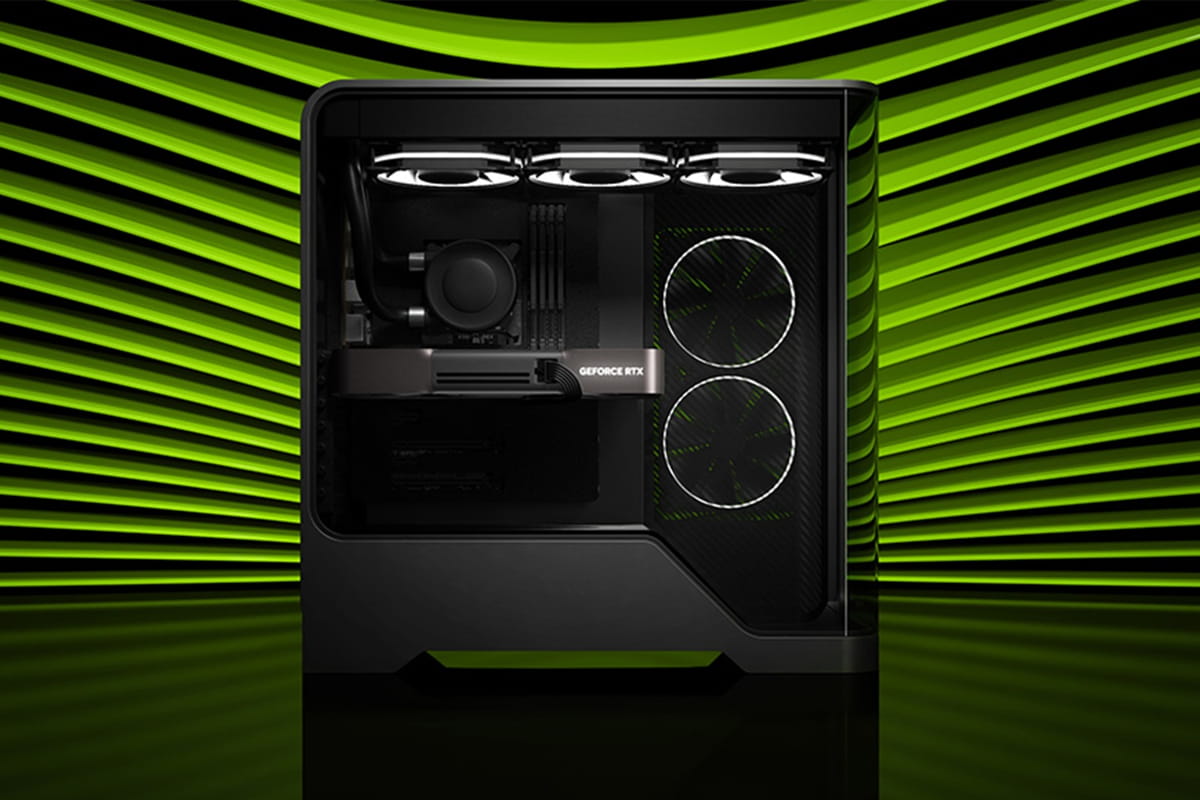
Even though the desire to have a high-performance gaming PC has remained constant, the importance of such a system is greater today than ever. Modern games are no longer just a form of casual entertainment, but complex, cinematic experiences that emphasize visual detail, realism and quick reactions. A well-balanced gaming PC isn't just about “running games”, it's about running them in optimal conditions, without interruptions, with low response times and visual quality that really makes a difference. In addition, the same system can also be used for streaming, video editing or other creative activities, which makes it a versatile investment, not just a simple gaming “fad”.
As the demands of games increase, the choice of components becomes more and more complicated for the average user. That's why for many, the simple solution is starting to be a ready-assembled system again, which removes the uncertainties of compatibility, mounting or optimization.
An interesting example comes from the Altex offer, which has the MYRIA Vision V121 Powered by ASUS system in its portfolio. It's a PC that goes a little over the 5,000 lei threshold, but it comes balanced and ready for serious gaming, without hassles with assembly or component compatibility.
What makes it attractive from the start is the fact that we are talking about a configuration made in collaboration with ASUS. This matters more than it seems at first glance, because pre-built systems have had a pretty poor reputation for years. In this case, you have more confidence that the parts are well chosen and installed correctly.
The centerpiece of the system is the NVIDIA GeForce RTX 5060 video card, in the Dual OC variant. For an average user, this means that it can run modern games smoothly, with high details and good fluidity. But more important than raw power are the technologies behind it, which really change the gaming experience.
One of the most important is DLSS, which has meanwhile reached an extremely mature version. The basic idea is simple: the video card renders the scene at a lower resolution to get more performance, and then the AI reconstructs the image at a quality close to the native resolution — or even higher. For the user, this translates into games that run smoother and look great at the same time. In version 4.5, there are already many cases where the image generated by the AI manages to surpass what the game engine provides directly. We are no longer talking about a simple artifice, but a real leap in image quality.
More interesting is the evolution of the technology towards Multi Frame Generation and especially Dynamic Multi Frame Generation, which can generate several additional frames between those normally rendered by the video card for significantly higher fluidity. That translates into a much smoother and more natural visual experience. The major difference comes in the dynamic variant, where the system intelligently decides, in real time, when and how much to intervene, depending on what is happening on the screen. Basically, you don't have to go through the settings anymore, the video card adapts on the fly.
Also included in the package is NVIDIA Reflex, a technology that reduces latency. In Romanian, in-game reactions are faster, which is important especially in competitive titles where every fraction of a second counts.
Behind the video card we find an Intel Core Ultra 5 225F processor, powerful enough for any current game. It's not the kind of processor that impresses on paper with spectacular numbers, but in real use it does its job very well and has low consumption, which means lower temperatures and a quieter system.
The setup comes with 16GB of DDR5 RAM and a 1TB SSD, enough for the operating system and a few big games installed. At the same time, there is room for upgrades, which is important in the long run. You can add more memory or storage without changing the entire system.
Another interesting detail is the 750W source from the TUF Gaming range. It's more powerful than the system would normally need, but that's not a bad thing. On the contrary, it means it will run more efficiently and cooler, and you have a good base if you want to upgrade in the future.
Design-wise, the white case with glass panel and RGB lighting makes the system look good on the desk without being over the top. It's the kind of PC that not only runs games, but also looks like a modern gaming system.
At a price of approximately 5,399 lei, the MYRIA Vision V121 Powered by ASUS is, in the current context, a fair offer. It's not the cheapest PC possible, but it doesn't try to be either. It's more of a balance between performance, quality and simplicity.
For someone who doesn't want to mess around with component selection or assembly, but still wants a capable system for modern gaming, this kind of pre-built PC starts to make a very logical choice again. In addition, manufacturers are increasingly interested in optimizing the costs of these systems so that the final price is competitive or even better than if you bought the components separately and assembled them yourself. In addition, you eliminate the stress, the need for technical knowledge and the time wasted with documentation and assembly, and instead of separate warranties for each component, you benefit from a unified warranty for the entire system, which is much easier to manage.
Article sponsored by Altex