The filthy rich banker who became the architect of modern Europe. He was a genius of diplomacy and changed the cultural destiny of the continent

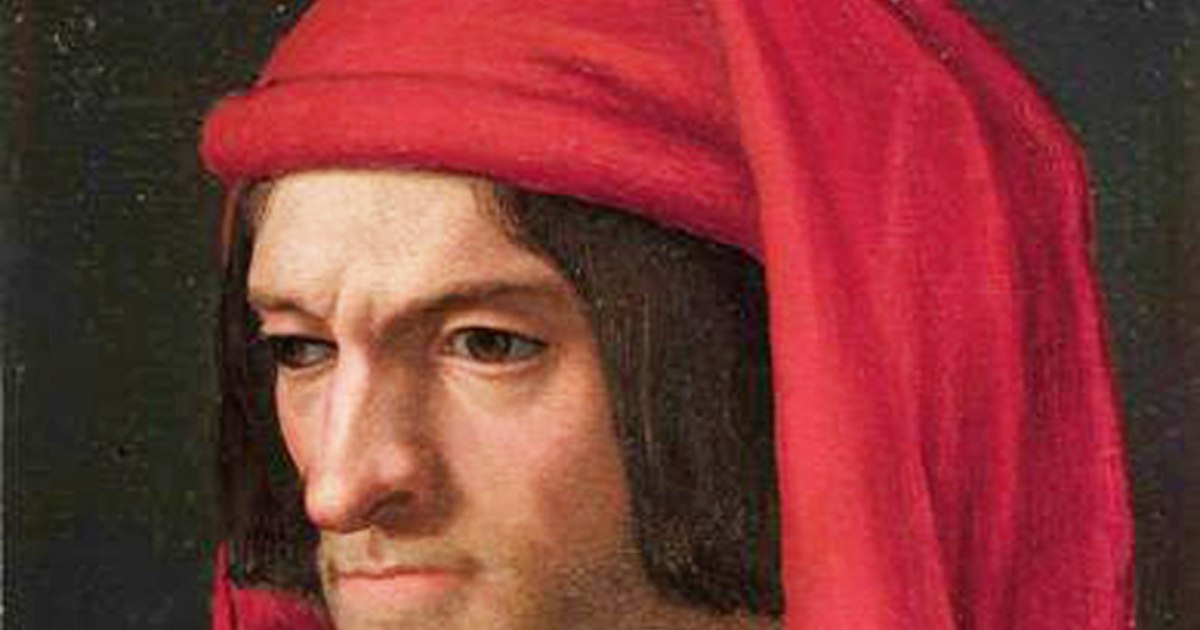
An Italian banker, passionate about art and with an extraordinary intelligence, is considered the shadow architect of modern Europe. Many of humanity's great works of art, as well as the development of modern thought, would not have existed without his influence and involvement. He was called “The Magnificent”.
Lorenzo de' Medici PHOTO wilkipedia
Italy, 15th century. On the banks of the river Arno, in bright Florence, a tall and elegant figure, a face with an aquiline profile and a gaze that seems to see beyond the Tuscan horizon rewrites the destiny of Europe. He was not a king, not a religious leader, not a great artist, not even a great senior. And yet he was called “The Magnificent.”
He was the Italian banker turned architect of the modern world, to whom today's era owes a significant part of its artistic masterpieces and the affirmation of modern thought. His name was Lorenzo de' Medici, one of the most powerful and influential men of the Renaissance.
“He was a banker, a statesman, a patron and a poet, bringing together in himself the spirit of the Renaissance”wrote Christopher Hibbert.
The “Wall Street” of medieval Europe
Lorenzo de' Medici was born on January 1, 1449, into one of the richest families in Florence, then a major financial center of Italy, dominated by the Medici family.
The family's rise began with his grandfather, Cosimo de Medici, also called the “Father of the Fatherland”, the first to take control of the city. The Medici Bank had become one of the most powerful financial institutions in Europe, with branches in the main Western states. Cosimo, among the wealthiest men of the age, converted his wealth into political influence. Although they did not claim to be official rulers, members of the Medici family actually controlled Florence. “The House of Medici raised Florence to the highest level of culture and refinement”wrote Will Durant.
Lorenzo's father, Piero I de Medici, known as “Piero the Gutose”, reinforced the family's orientation towards art, being a patron of artists and a collector. His mother, Lucrezia Tornabuoni, was a poet and sonnet writer, influencing Lorenzo's interest in literature. He continued the tradition, cultivating poetry and the arts, but also inherited his grandfather's financial and political skill. He was considered the most promising of Piero's five children.
He received a choice education, formed by diplomats and humanists of the time, studying Latin and classical authors. The era in which he lived, often called the “golden age” of Italy, was marked by intense intellectual effervescence, but also by political instability. The Italian peninsula was fragmented into five major powers, in a fragile balance and in a constant competition for supremacy.
For example, the Duchy of Milan was a remarkable military power, ruled by the Sforza family. The Venetian Republic was the “mistress of the seas”, and the Kingdom of Naples, under a dynasty of Spanish origin, represented the feudal south. Added to them were the Papal States, a major political and religious force, where popes often behaved more like warrior princes than spiritual leaders.
Florence was the center of Italian finance and culture. At the same time, Lorenzo's age was a period of transition from the medieval mentality, centered on God and the afterlife, to humanism, oriented towards man, reason and the legacy of Antiquity.
In this world shaped by the Medici family, power no longer belonged exclusively to the blood nobility, but increasingly to bankers and merchants. Florence had become a veritable “Wall Street” of Europe, and the gold florin functioned as the currency of reference in the known world.
The extraordinary diplomat who saved Italy
Above all, Lorenzo de' Medici was a diplomat of great ability. In an unstable era, with a fragmented Italy and the great European powers poised to intervene, he carefully managed the political balance of the peninsula.
He began his training from a young age. Noted for his intelligence, he was sent by his father on diplomatic missions. As a teenager, he was commissioned to defend, before the pope, the legitimacy of Galeazzo Maria Sforza as Duke of Milan, and he successfully accomplished his mission.
In 1469, at only 20 years old, he took over the de facto leadership of Florence after his father's death. He quickly initiated a policy of balance, aware that the outbreak of major conflicts between the five powers of Italy would have weakened the entire region.
The wars would have brought economic and cultural decline, and France and Spain, already interested in the peninsula, would have taken advantage of this weakness. At the same time, Lorenzo understood that the excessive rise of one of the powers would have produced the same result: external intervention and the loss of autonomy.
That is why he constantly sought to maintain a balance, without decisively favoring any state, not even his own city. For example, when the Venetian Republic and the papacy allied against Ferrara, Lorenzo intervened diplomatically to restore stability.
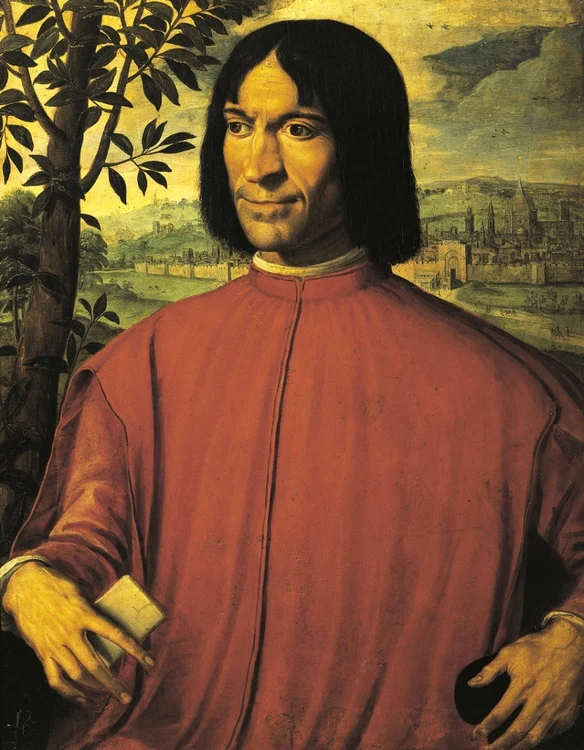
Lorenzo de Medici PHOTO wikipedia
Sacred and profane music at the Athenaeum
Florence was a republic, however, and the power of the Medici family aroused envy. The Pazzi family, supported by the Archbishop of Pisa and Pope Sixtus IV, hatched a conspiracy: a violent attack in the city's cathedral itself.
The conspirators attacked Giuliano de Medici and Lorenzo de Medici. Giuliano was killed, while Lorenzo managed to escape. Severe repression followed: Lorenzo ordered the execution of those directly involved and other supporters of the plot.
The Pope excommunicated Lorenzo, and the Kingdom of Naples was preparing a military intervention. In this context, Lorenzo personally went to Naples and succeeded in obtaining peace through negotiation.
Externally, he maintained commercial and diplomatic relations including with Mehmed II, the Ottoman sultan, maritime trade representing an important source of prosperity for the Florentines.
The man who gave Europe a new way of thinking and the splendor of the Renaissance
It was not diplomacy or wealth that really made Lorenzo de' Medici distinct in European history, but the cultural legacy he left behind. He was, above all, an important patron of the arts and sciences.
The peace he helped maintain in Italy created the conditions in which cities flourished, and with them art. In this context, the Renaissance emerged, the current that shaped European culture and decisively influenced modern thinking. “Without Lorenzo, the Florentine Renaissance might have withered before it had fully blossomed”wrote Paul Strathern.
Among the artists he supported were Sandro Botticelli, Michelangelo Buonarroti and Leonardo da Vinci. His support gave them the resources and stability to develop their works, which would become landmarks of European art.
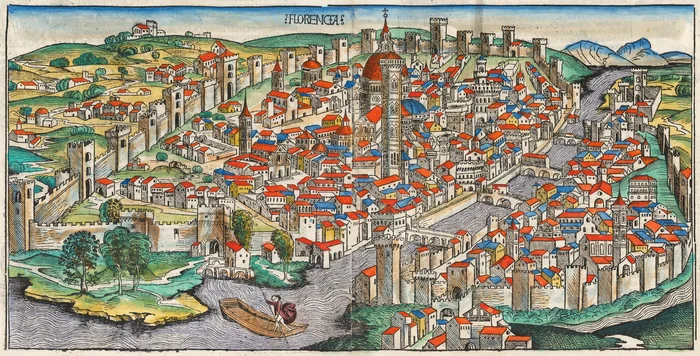
Florence in 1493 PHOTO wikipedia
Lorenzo de' Medici's court became a veritable intellectual center, where artists, poets and philosophers discussed ideas inspired by Classical Antiquity. One of his most important cultural projects was supporting the Platonic Academy in Florence, led by Marsilio Ficino. Plato's works were translated and reinterpreted here, deeply influencing European thought.
This rediscovery of ancient philosophy was the basis of Renaissance humanism, an orientation that put man, reason and the beauty of the world at the center of reflection. Lorenzo was not only a financial supporter, but also an active participant in these circles. After the fall of Constantinople, many Greek scholars found refuge at his court.
Art or pornography. American expert, on the controversy of Michelangelo's sculptures: “David's nude is a celebration of Man”
Under his leadership, Florence was transformed into a model Renaissance city, where architecture, painting and philosophical reflection coexisted in a rare balance. The royal courts of France, Spain, and England began to adopt this model, making cultural patronage a sign of prestige.
In this way, Lorenzo contributed to the spread of Renaissance values in Europe, through the rediscovery of Greco-Roman culture, the promotion of humanistic education and the emphasis on individuality and creativity.
Art as a political weapon. The first follower of “Soft Power”
For Lorenzo de Medici, art and philosophy had become instruments through which he strengthened the prestige and prosperity of Florence. He intuited, long before modern theorizing, what today is called “soft power”. In an age when mercenary armies, the condottieri, were expensive and often unreliable, he understood that a work by Sandro Botticelli or a sculpture by Andrea del Verrocchio could have a more lasting political impact than a military campaign.
Lorenzo used artists as cultural ambassadors. When other princes or popes requested architects or painters, he not only accepted, but sent some of the city's most valuable talents. For example, Leonardo da Vinci arrived at the court of Ludovico Sforza, contributing to the cultural life of a rival state. At the same time, through the Platonic Academy in Florence, the idea that visible beauty reflected a higher order was promoted.
When artists depicted the Medici family in religious scenes, such as in the Adoration of the Magi, the message was clear: the family associated its image with legitimacy and divine order.
Lorenzo sent not only diplomatic letters, but also gifts: illuminated manuscripts, ancient sculptures, jewelry made by Florentine craftsmen. These gestures strengthened relations with French courts or with leaders such as Mehmed II and contributed to the city's prestige.
After his death, the balance fell apart. In 1494, Charles VIII invaded the peninsula, taking advantage of the weakening of the Italian political system.