When Americans' attention turned to Thanksgiving tables on Thursday, Moscow took advantage of this moment to tighten its negotiating stance. She presented a new demand, for Ukraine to withdraw its troops from Donbas or risk a renewed military attack.
The harsh message, delivered with characteristic ruthlessness by Vladimir Putin at a press conference, is based on the well-known Kremlin list of issues. He portrays President Volodymyr Zelensky's power as “illegitimate”, questions the binding nature of any future agreements and again insists on more territorial concessions as the price of peace.
The moment was not accidental. A U.S. delegation is scheduled to land in Moscow for what the Trump administration has described as preliminary peace talks — the first attempt in months to create even a scrap of diplomatic spacej.
Instead, Putin is upping the ante by signaling that any process that begins with Ukrainian sovereignty has no prospects. According to George Barros, a Russia analyst at the Washington Institute for War Studies, this message should not be misunderstood as a diplomatic gambit.
The article continues below the video
“It's not a serious proposition,” Barros says. He argues that what Putin has offered is not a path to negotiations, but a psychological operation aimed at shaping the information environment and setting expectations in Moscow's favor.
A serious Kremlin ultimatum or a clever narrative trap?
Barros reads the ultimatum as element of Russia's “cognitive warfare efforts”a strategy designed to present Russian victory as inevitable and imminent. The goal, as he puts it, is to convince Ukraine — and perhaps more importantly, the West — that giving up territory now would spare Ukrainian lives in the future.
“This is all false for many reasons,” Barros says. — It's almost certain that Russia cannot quickly take over all of Donetskgiven that the war is positional and will probably remain so, he adds. Even assuming the current momentum on the battlefield, “at the current pace it would take at least two years, and the Russian economy may not be able to sustain two more years of fighting.”
According to Barros, this gap between rhetoric and reality is precisely the crux of the matter. Moscow sets “maximum” conditions not as an offer to open talks, but to create an alibi for further military operations.
“We can force Russia to talk”
Barros speaks bluntly about the American political audience of the Kremlin theater. — This ultimatum also serves as a misdirection to distract Americans from the fact that Russia will probably reject the peace plan that the White House will present to Russia – says.
He warns that if the plan is rejected, Washington will need more than diplomatic persistence. “We need a strategy to force Russia to talk after it rejects the terms of the deal,” Barros continues. — The United States has tools that we haven't used, but we can, to force Russia to talk.
Conclusion: Putin's announcements are a preventive exercise in blame-shifting, creating the narrative that it was Washington, not Moscow, that ruined the chances for diplomacy.
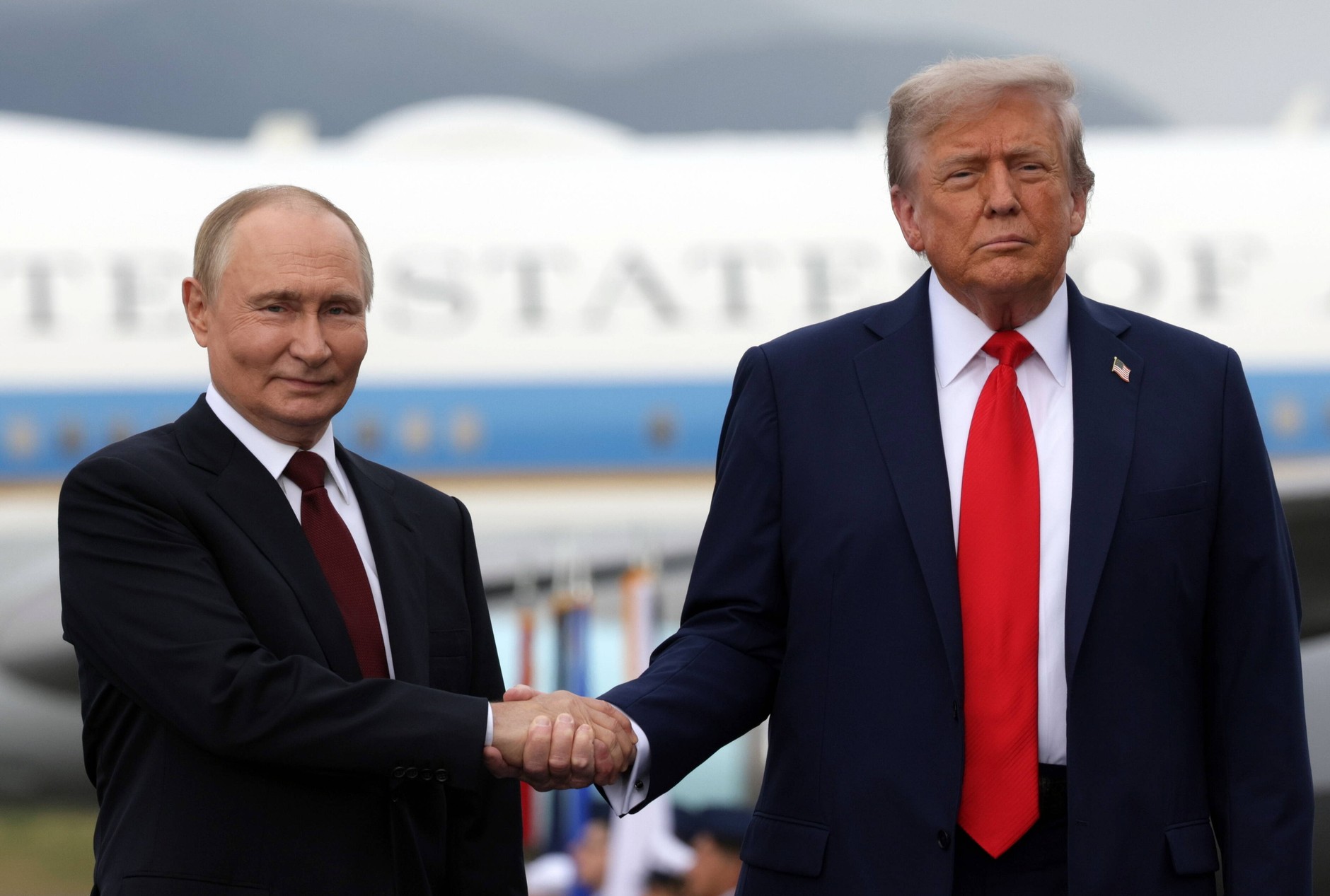
Vladimir Putin and Donald Trump meet in Anchorage, Alaska, August 15, 2025.GAVRIIL GRIGOROV/SPUTNIK/KREMLIN POOL / POOL / PAP
Barros suggests that the ultimatum will not be a shock for Ukraine. — Ukrainians already understand that Putin's demands go far beyond the territory currently claimed, he says, giving the examples of Donetsk, Zaporozhye, Kherson and Luhansk. He argues that any deal based on giving up land today in exchange for Putin's promise not to move forward tomorrow would be 'naive'.
The realities of the front lines reinforce this skepticism. Ukraine still has it “a belt of fortifications and 5,800 square kilometers of territory in Donetsk, which is heavily fortified”notes Barros. These positions represent some of Ukraine's most militarily significant areas – ones that the defending army does not give up lightly.
The Kremlin's gambit, Barros warns, is aimed at both to test the West's determination and to shape the conditions for talks. His advice to Washington: focus on the fundamentals and refuse to adopt the Russian framework.
– Ideally, if the US rejected the phrase about the inevitable loss of the rest of Donetsk as a fait accompli, he said. In his opinion, a reasonable starting point for any negotiations “are de facto front lines, and not a preventive surrender of some of Ukraine's most militarized areas.”
Whether the Trump administration will heed this advice — or whether Putin's ultimatum will reshape the political space in Washington, Kiev or Brussels — will become clearer as the diplomatic caravan reaches Moscow. But for now, the message from the Kremlin is the same as it has been for months: talks on Moscow's terms or no talks at all.
AND in Washington, officials are preparing for another round of high-stakes diplomacydefined less by what is said at the table than by the battles that take place around it. We are reminded of the well-known truth that in war, narrative is a weapon, and the moment is never accidental.
I’m Ashley Davis as an editor, I’m committed to upholding the highest standards of integrity and accuracy in every piece we publish. My work is driven by curiosity, a passion for truth, and a belief that journalism plays a crucial role in shaping public discourse. I strive to tell stories that not only inform but also inspire action and conversation.