Oil giants 'open the champagne' for the Gulf War. Their profits are $30 million per hour
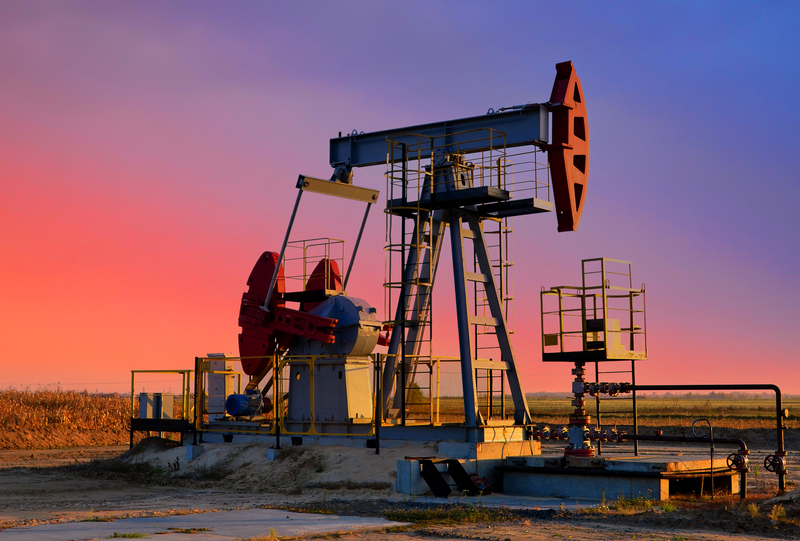
This is the profit made by the 100 largest oil giants in the first 40 days of the Gulf War.
These sums – unimaginable to the common mind – result from an analysis by Rystad Energy of the top 100 oil and gas companies in the world.
“In March, crude oil prices were trading around $100 per barrel, generating an additional $234 billion in profits for major oil companies,” estimates The Guardian newspaper, quoted by the Greek press. Analysts calculated windfall profits by comparing the free cash flow generated by oil and gas production before the war, when prices were around $70 a barrel, with the price after the start of the war, when oil prices were around $100 a barrel.
“The record profits of oil companies mainly come from revenues generated by the crisis,” says energy market expert Claudia Kempert. “It's clear that supply decreases and prices increase during crises,” she explains.
“The Rocket and the Feathers”
Kempert talks about the “Rocket and Feathers Effect”, which is an economic phenomenon observed in the fuel and energy markets, but also in other sectors.
This effect describes the asymmetry with which retail prices respond to changes in wholesale (or raw material) prices:
Prices rise rapidly when input costs rise – like a rocket
Prices fall slowly when input costs fall – like a wedge
The classic example – gasoline: When the price of crude oil rises, gas stations raise prices almost immediately (sometimes within hours). When the price of oil falls, the reduction is passed on to consumers much more slowly — it can take weeks.”
Once trade routes such as the Strait of Hormuz stabilize, risk premiums will also decrease. Then the income will fall again.
In a strange twist of fate, the biggest gains were made by two Gulf countries affected by the disruption of oil production due to Iranian attacks: Saudi Arabia and Kuwait.
Saudi Aramco, the state-owned company of the Arabian Peninsula's largest country, will benefit from additional profits of $25.5 billion in the March-December period, nearly 11 percent of the $234 billion total of the world's top 100 oil companies.
Kuwait Peroleum Corporation follows with $12.1 billion (5.2%).
Exxon Mobil also posted an additional $11 billion in profits, and Chevron Corp. of 9.2 billion dollars.
Russian oil giants are also expected to emerge big winners from the war, with Gazprom, Rosneft and Lukoil set to reap nearly $24 billion in additional profits from the war by the end of the year. “The Gulf conflict also fueled Vladimir Putin's coffers for his war in Ukraine, with Russia earning $840 million a day from oil exports in March — 50 percent more than in February,” according to an analysis by the Center for Energy and Clean Air Research.
“Profits are increasing for those companies that previously pumped a lot of oil at a lower cost, now they are selling it, taking advantage of this arbitrage,” market players tell Naftemporiki.
Shares in ExxonMobil and Shell have also risen since the conflict began. Logistics companies such as Gunvor are also seeing positive results: “The key element of this strategy has been to focus on transporting natural oil rather than oil derivatives,” writes the Financial Times.
Energy and weapons
“Sectors such as energy, defense, insurance and speculative finance benefit from geopolitical instability,” market players told Naftemporiki. “Oil prices are rising, demand for weapons is high, insurance premiums are rising, and the profits are going to those who know how to exploit the risk.”
These trends and data show that the world is far from reducing its dependence on crude oil. Aided by geopolitical turmoil, the era of black gold will continue, dictating macroeconomic agendas around the world.