Revelations about the role of pro-Iranian militias in the war with the US and Israel. How the chain of command worked

Iran has granted increased autonomy to the commanders in charge of militias in Iraq, allowing some groups to carry out operations without Tehran's direct approval. The shift, confirmed by several militia members and officials cited by The Associated Press, reflects the growing pressures of the war and marks a transition to a decentralized command model.
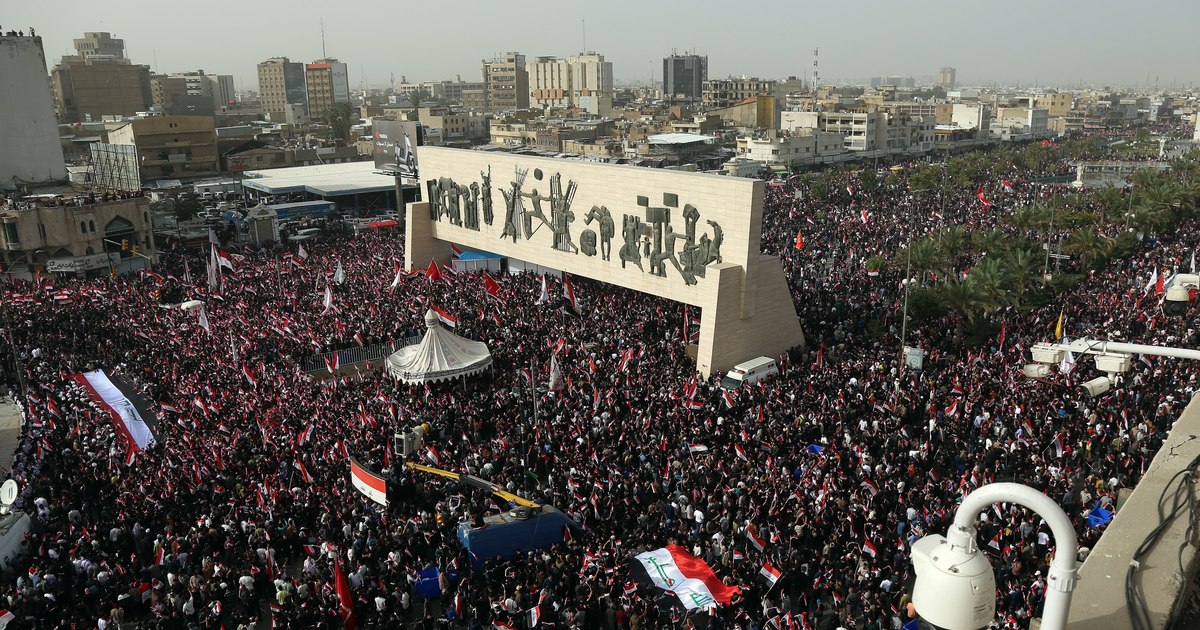
Protests in Iraq against the US and Israeli bombings PHOTO EPA-EFE
Despite mounting pressure from the US, Baghdad has struggled to limit or discourage the groups. The most radical factions now operate under Iranian advisers, using a decentralized command structure, the five officials told the AP on condition of anonymity.
According to a militia official, the new directives allow forces on the ground to act independently: “The forces were given the authority to operate according to their own assessments in the field, no longer reporting to a central command”. This approach would represent a significant change from previous strategies, when decisions were made strictly at the central level.
The decision comes in a tense regional context, after the escalation of the conflict triggered by the US and Israeli strikes on Iran at the end of February. Shortly after the war broke out, an Iranian delegation sent a clear message to authorities in the Iraqi Kurdistan region: if militia attacks escalate near US bases or commercial and diplomatic interests, Tehran will not be able to intervene. “They said they had transferred authority to Iranian regional commanders”a senior Kurdish official said on condition of anonymity.
The same official explained that in the past, Kurdish leaders have turned to Iranian officials for explanations after attacks, but this time Tehran tried to prevent such demands: “This time they wanted to preempt the situation by saying, 'We can't help you at this time with regards to the groups in the south.'”
The change in strategy would also have been influenced by the lessons learned from the 12-day war in June, when operations were strictly centralized. This time, the Iranian leadership would have decided to give more freedom to the units in the field.
In parallel, tensions between the United States and Iranian-backed militias continue to rise. Although a fragile truce was concluded in April, experts believe that Washington will continue to act against these groups. “The US will still consider itself free to strike Iraqi militias,” pointed out security expert Michael Knights. “This could translate into an effort to influence the formation of a less militia-dominated government.”
In the recent war, key Iraqi militia leaders do not appear to be directly involved in operations. The US strikes killed mostly mid-level commanders, according to militia officials.
“None of the frontline leaders were killed“, said a second militia official, who was not authorized to speak to the media.
The US is targeting militias influential in Iraq's government
Instead of targeting important figures, the US also targeted advisory cells of the Revolutionary Guards, explained Knights, who monitored the attacks. In an attack in Baghdad's posh Jadriya district, three Guardian advisers were killed in a house used as their headquarters during a meeting, according to a second militia official.
Iran announces it has attacked Kurdish groups in Iraq. They are considered the best organized faction of the Iranian opposition. The reaction of a Kurdish leader
The United States recently imposed sanctions on seven commanders and senior members of Iran-backed radical groups in an attempt to limit their influence.
The situation in Iraq highlights the fragility of state institutions. Although the government says it cannot control these militias, many of them are officially integrated into the Popular Mobilization Forces (PMF), a structure created in 2014 to fight the Islamic State group. Over time, the PMF grew into a highly influential force with access to government resources, including salaries, weaponry, and intelligence.
This reality creates a major paradox: state-sponsored groups act in accordance with Iran's interests, sometimes at the expense of Iraq's national interests. At the same time, these militias are linked to political parties that helped install the current government led by Prime Minister Mohammed Shia al-Sudani.
The US is focusing on limiting the power of these groups in Iraq, the senior Iraqi Kurdish official and a Western diplomat said, which will put increasing pressure on the government, which is still operating under an interim regime.
Last week, Iraq's ambassador to the US was summoned to Washington to protest attacks by Iranian-backed factions on US diplomatic personnel and missions, according to State Department deputy spokesman Tommy Bigot.
US authorities sent a strong message, calling for immediate action. “The United States will not tolerate any attack on its interests and expects the Iraqi government to take all necessary steps to dismantle Iran-aligned groups”he transmitted.
The militias oppose the measures taken by the Iraqi government
The government has taken some steps to reduce the influence of the militias, including further institutionalizing the PMF and occasionally removing commanders who act outside the authority of the state, but is encountering strong resistance from the militias. Thus, some of the most radical groups, such as Kataib Hezbollah or Harakat al-Nujaba, could become priority targets for political and military isolation by the US,
However, the representatives of these groups openly affirm their alliance with Iran. “Frankly speaking, we are allies of the Islamic Republic”said Mahdi al-Kaabi, spokesman for Harakat al-Nujaba. At the same time, he claimed that his organization complies with the Iraqi legal framework: “It is true that we are not affiliated with the government or the prime minister, but we respect the law and the constitution.”
A spokesman for Harakat Hezbollah al-Nujaba, which is among the Iranian-backed militia groups that have attacked the US in Iraq, said there was “coordination” with Iran in launching the attacks, but did not elaborate.
“Since we are allies of the Islamic Republic, we have coordination with our brothers in the Islamic Republic”said Mahdi al-Kaabi.