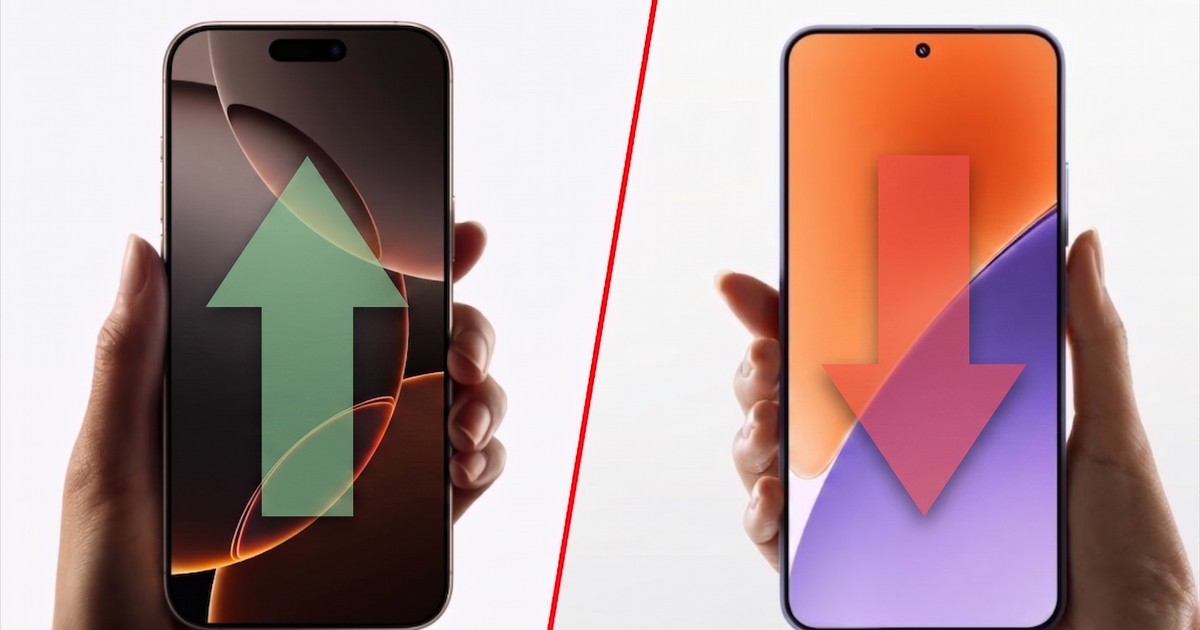
A report prepared by IDC analysts shows that in the first quarter of 2026, global phone shipments decreased by 4.1%. year to yearup to 289.7 million pieces. This is the first such decline since 2023. The reason? IDC's Nabila Popal describes the situation very clearly – “The smartphone market has entered one of the most difficult periods in its history, caused by severe memory supply constraintsthat have a direct impact on both supply volumes and demand.
The first such decline, but not the last. IDC has previously warned that the memory crisis will not be an episode for one quarter. In its February analysis, the company indicated that the pressure on computer memory supplies may continue throughout 2026 and extend into 2027.
A crisis in which some phone manufacturers benefit at the expense of others
Interestingly, the current crisis is very unevenly distributed among phone manufacturers. In the top five of the largest of them Samsung and Apple managed to increase sales year over year. Samsung shipped 62.8 million phones and regained its position as market leader, and Apple ended the quarter with 61.1 million iPhones sold. However, Xiaomi, OPPO and vivo were already on the other side of this change – their deliveries decreased, however Xiaomi suffered the most, with a decline of as much as 19.1%. year to year.
| 1Q26 shipments (million pieces) | 1Q26 market share | 1Q25 shipments (million pieces) | 1Q25 market share | Year-to-year change | |
|---|---|---|---|---|---|
| 1. Samsung |
62.8 |
21.7% |
60.6 |
20.1% |
3.6% |
| 2.Apple |
61.1 |
21.1% |
59.1 |
19.6% |
3.3% |
| 3. Xiaomi |
33.8 |
11.7% |
41.8 |
13.8% |
-19.1% |
| 4. OPPO |
30/7 |
10.6% |
34.1 |
11.3% |
-9.9% |
| 5. vivo |
21.2 |
7.3% |
22.7 |
7.5% |
-6.8% |
| Others |
80.1 |
27.6% |
83.6 |
27.7% |
-4.2% |
| Sum |
289.7 |
100.0% |
302.0 |
100.0% |
-4.1% |
This balance of power is not a coincidence. Companies with greater purchasing power, better relationships with suppliers and higher product profitability, resulting largely from the high popularity of their premium phones, have a clear advantage today. It is much more difficult for brands that have built their position on aggressive pricing. In their case, any increase in the cost of memory has a double impact: it reduces the profitability of production and weakens the attractiveness of the finished phone once it hits the store shelf.
The production of cheap phones is becoming less and less profitable
That is why the current change affects the budget segment the most. IDC points out that in some emerging markets, phone prices have already increased by 40-50%.which significantly reduces demand among the most price-sensitive customers. The manufacturer may try to save itself by cutting costs, but in these conditions the room for maneuver is limited.
The current market situation will be the greatest challenge for brands associated with lower- and mid-range phones, valued for their good price-quality ratio, such as the Redmi brand owned by Xiaomi.
|
mediaexpert.pl
One potential strategy is despecinga technological version of the so-called “shrinkflation”, known mainly from food products. In practice, a new phone at the same or even higher price today may have less RAM or less data memory than its equivalent from a year ago. This changes the logic of the entire phone market: the customer pays more, but does not necessarily get better equipment in return.
The beginning of the reshuffling of the telephone market
From the industry's perspective, this is a signal that the phone market is entering a structurally new stage. IDC currently forecasts that throughout 2026, the global phone market may shrink by as much as 12.9%. — with a simultaneous increase in the average price of devices sold. This is the “fewer pieces, higher price” model, which favors the largest players, but weakens manufacturers dependent on mass sales of budget phones, associated with a good price-quality ratio.
Analysts assume that the market will increasingly move towards premium phones.
|
Lukas Gojda / Shutterstock
For now, the first winners are already visible. Samsung and Apple benefit from being able to better secure supplies, more effectively absorb rising memory costs and better defend the premium segment. The losers are also quite clear: these are the manufacturers for whom a cheap phone was the basis of their business model, and consumers who, in the coming months, may see that their potential new phone is both more expensive and more modestly equipped.