A study by the Biostat Research and Development Center shows that a pet has 66.6 percent Poleswhich means that having a pet is a mass experience, not a niche one. Most often they are dogspresent in 70.3 percent farms with animalsand catswhich he has 53.8 percent owners.
Although dogs and cats clearly dominate, the structure of pet ownership is more diverse. Fish has 8.1 percent respondents, rodents (e.g. hamsters, guinea pigs) — 5.3 percent, birds — 4.5 percenta rabbits — 3.6 percent. Reptiles and amphibians appear in 1.8 percent farmsand other animals in 0.8 percent. Although these are smaller groups, they also generate ongoing costs – often less visible, but long-term.
Pets are clearly more common among younger people and those of working age. In a group 18-29 years old he has a pet 76.4 percent respondents, and among 30-39-year-olds – 75.1 percent. A relatively high percentage also remains among people aged 40–59, but only in this group 60+ owning a pet is no longer the norm (50.8 percent). From a financial perspective, this means that the costs of keeping animals are borne mainly by professionally active people, for whom they compete with other consumer expenses.
One animal is often just the beginning
The study clearly shows that costs are rising not only due to prices, but also the number of animals. 51.8 percent one animal has ownersbut now 26.1 percent has twoa a total of almost 48 percent households keep more than one pet. Importantly, 9.3 percent owners declare having five or more animalswhich means a completely different scale of monthly expenses and greater sensitivity to price changes.
- Read also: Do you have a dog or cat? The Sejm passed an important bill
A dozen or so zlotys? It's a thing of the past
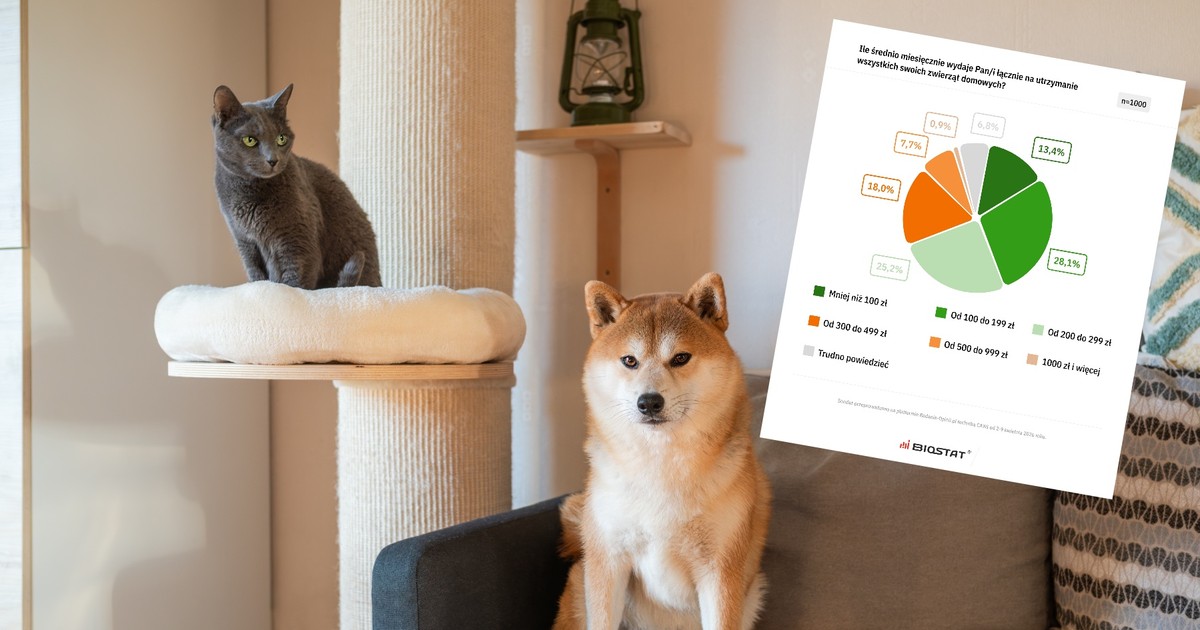
Maintaining an animal increasingly resembles a fixed installment in the household budget. The largest group of owners (28.1 percent) spends monthly PLN 100–199a 25.2 percent dedicates PLN 200–299. This means that over half of owners (53.3%) falls within the range PLN 100–299 per month.
This is how much we spend on animals (according to a report by the Biostat Research and Development Center)
|
Biostat
Simultaneously 18.0 percent respondents declare their expenditure at PLN 300–499and the next ones 7.7 percent — PLN 500–999 per month. For 0.9 percent costs exceed PLN 1,000which most often applies to farms with many animals or animals requiring specialized care. Just 13.4 percent owners falls below today PLN 100 per monthwhich shows how much the scale of financial involvement has changed.
Karma rules the budget, the vet chases
The spending structure clearly shows where the money is concentrated. 94.7% spend on food and treats. ownersand for 73.1 percent it is largest single cost.
- Read also: “Humanization” of animals. Poles resorted to expensive foods
However, health expenses are becoming almost equally common: 67.3 percent respondents bear veterinary costsand for 14.0 percent it is the treatment that poses the greatest financial burden.
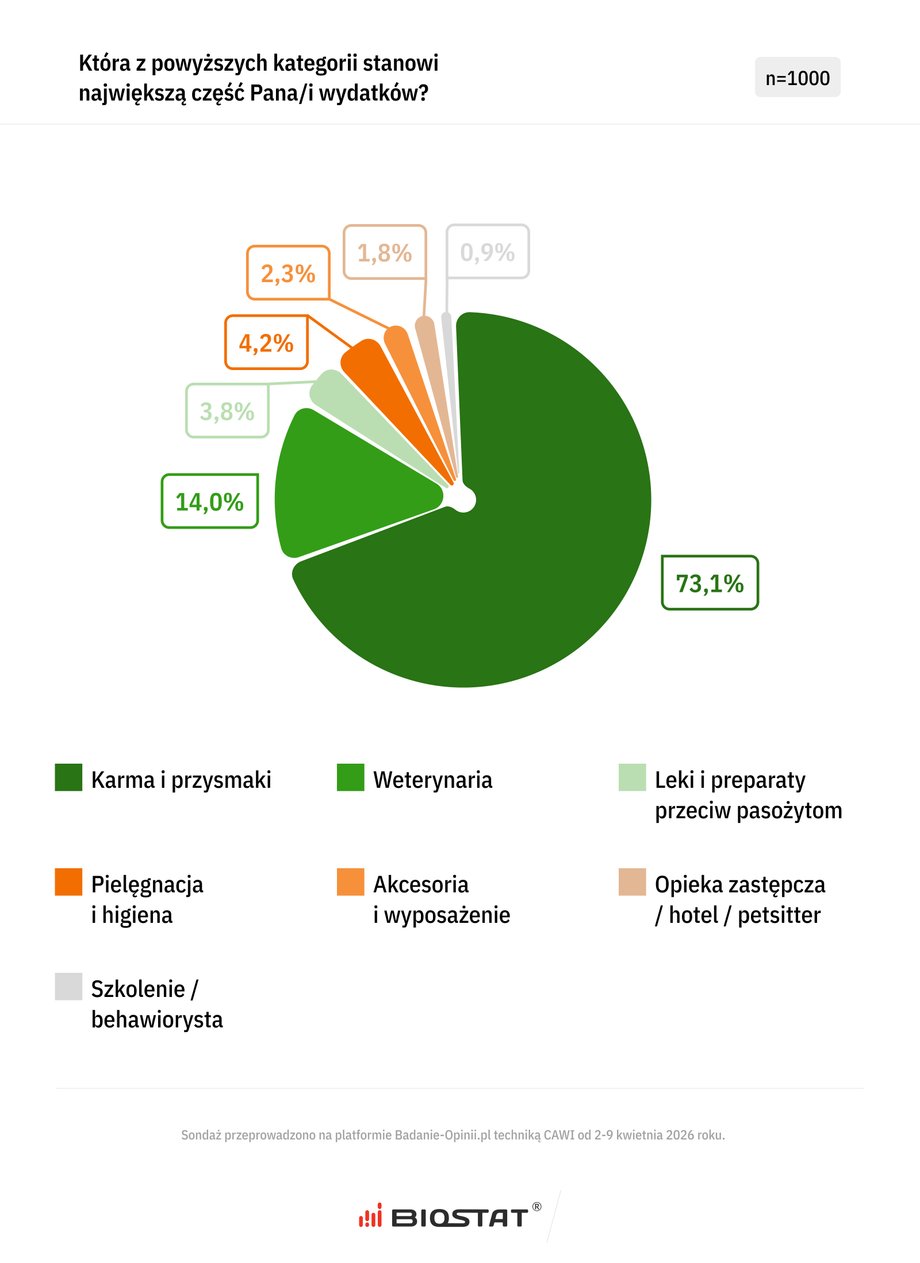
According to the report, food is the largest part of pet spending
|
Biostat
More than half of owners also spend on care and hygiene (57.4%) and drugs and preparations against parasites (55.3%). This means that maintaining an animal increasingly includes not only basic needs, but also regular preventive care – and this generates fixed costs, regardless of the current financial situation of the household members.
Love, but… within reason. Prices are rising faster than acceptance
The growing cost pressure is already being felt. 63.0 percent pet owners declares an increase in expenses over the last 12 months, incl 12.5 percent speaks of significant growth. At the same time, the study shows a clear limit of financial tolerance for increasingly expensive services and goods.
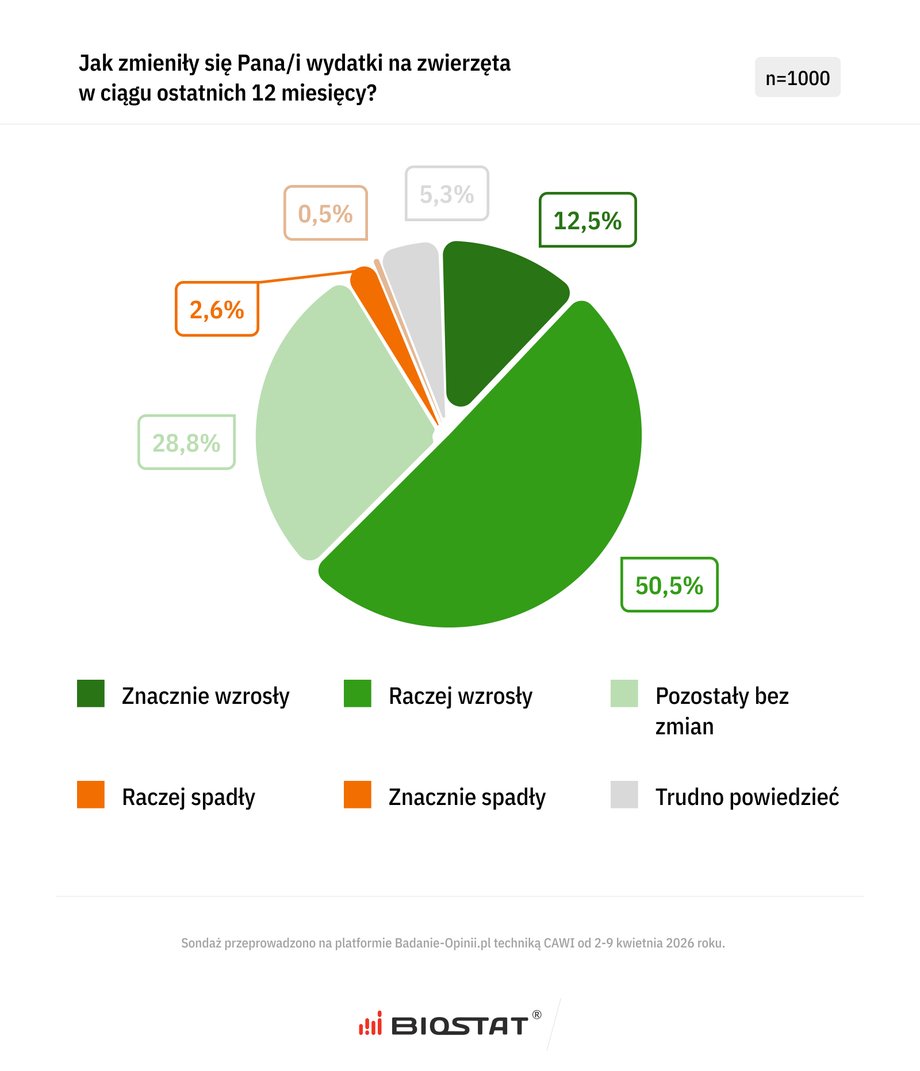
Poles spend more and more on animals
|
Biostat
The largest group of respondents (41.7 percent) accepts maximum 10 percent increase in pricesa 24.5 percent allows for raises up to 30 percent. Every eighth owner (12.9%) admits that even a small increase becomes a problembut only declares readiness to accept large increases 2.7 percent respondents.
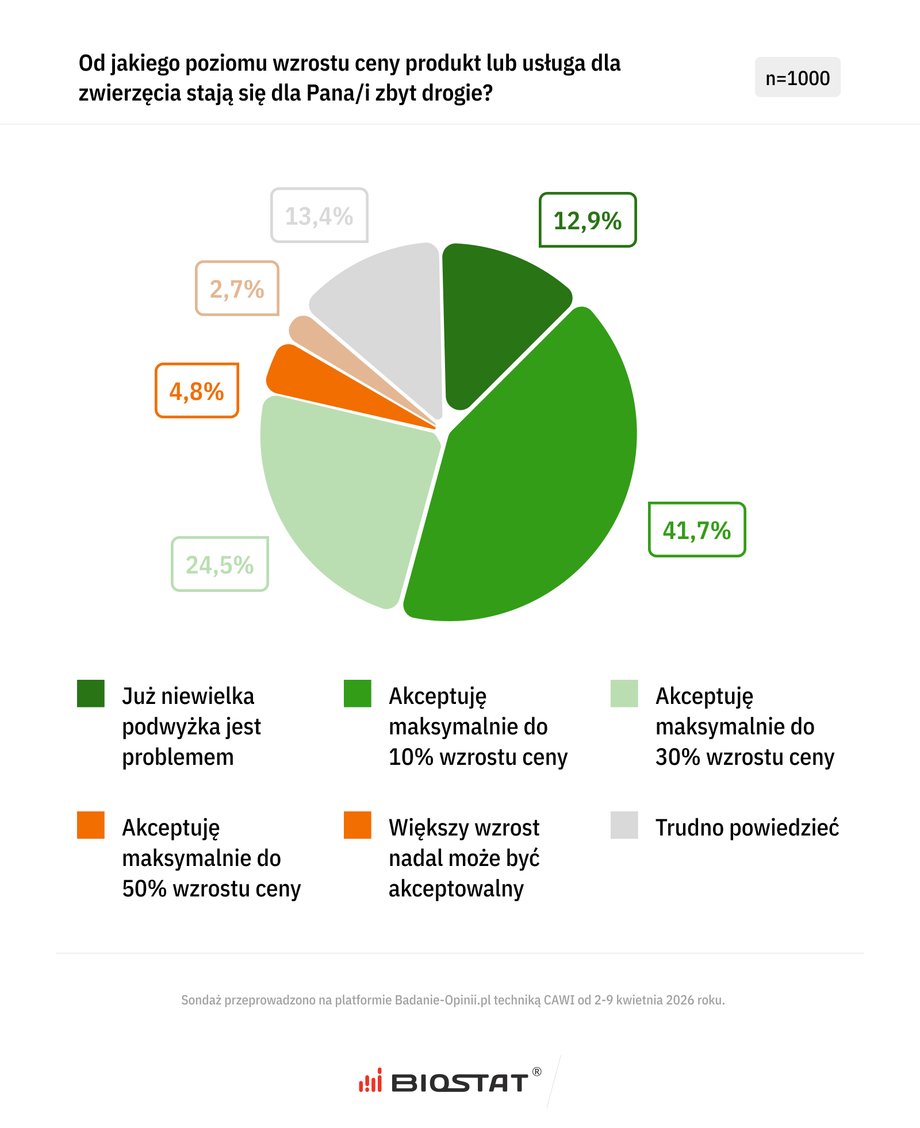
We willingly spend on pets, but… there are limits
|
Biostat