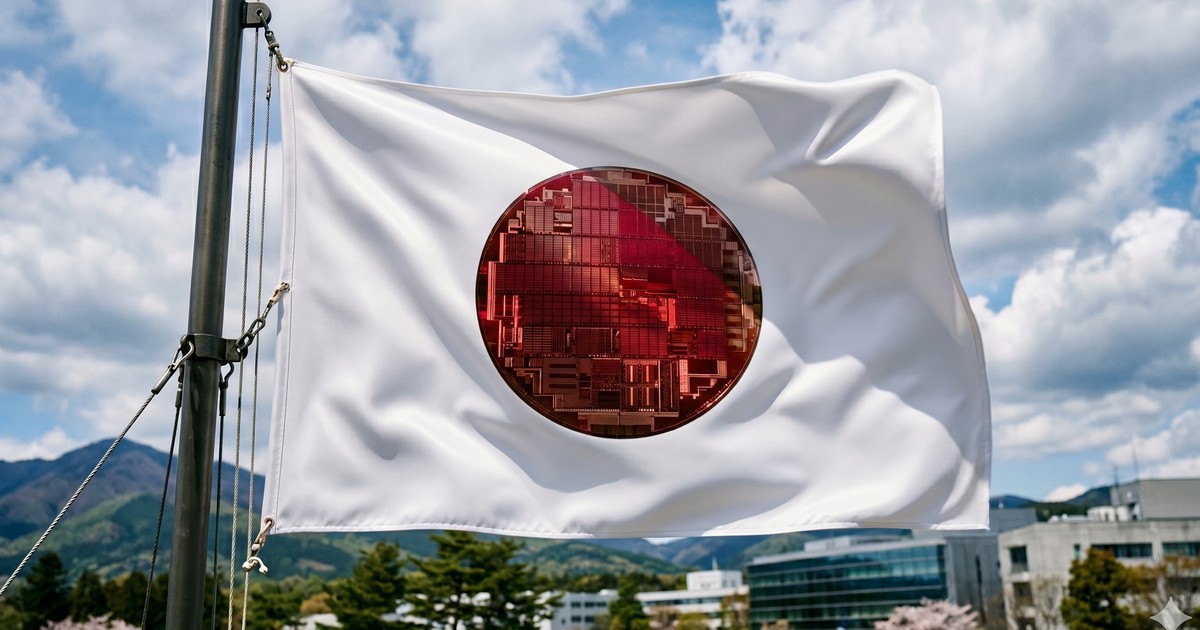
At the height of its power, in the late 1980s, The Land of the Rising Sun accounted for about half of the global semiconductor market. The Japanese specialized in the production of DRAM memory – in 1987 they controlled approximately 80 percent. its global supplies. At the turn of the 1980s and 1990s, they also dominated the production of machines necessary to expose silicon wafers, which for years was set by the duopoly of Canon and Nikon.
Nowadays the situation is completely different. The former domination of Japanese companies in the DRAM market is now only a memory — in 2012, Elpida, the last Japanese manufacturer of chips of this type, went bankrupt, and in 2013 it was taken over by the American Micron. At the turn of the century, the Dutch ASML began to displace the market for the production of the most advanced lithography machines, Canon and Nikon, and after some time it actually pushed the former Japanese tycoons out of the race for technological primacy.
The fact is that Japan is still a very important element in the world of semiconductor production, because companies from this country have de facto monopolized, among others, production of chemicals necessary for the production of the most advanced chips (photoresists for EUV lithography) and the so-called coaters, i.e. machines used for applying and then developing the mentioned chemicals. It is also an important producer of lithographic masks, silicon wafers and ABF, a layered insulating material used in advanced substrates for high-performance systems. On the side of finished products, it is also impossible to talk about the complete erasure of Japan from the industry map – Kioxia is still one of the leading producers of NAND flash memory for data storage media, and Sony remains the leader of the photosensitive matrix market.
But when we think about the hottest part of the semiconductor market today — advanced logic for AI and HBM memory — Japan doesn't play a role comparable to Taiwan, South Korea or the United States.
How did this regression occur? The topic, as always, is very complex.
The fall didn't start with one decision
A very important turning point was the Japanese-American trade war over semiconductors. In 1985, US chipmakers accused Japan of obstructing market access and dumping. Trade in semiconductors then became a hot political issue, and as a result, in 1986, the USA and Japan signed an agreement under which the latter country committed to facilitate access for companies from other countries to the Japanese market and to counteract dumping of semiconductors. The following year, the US decided that Japanese actions were insufficient and President Ronald Reagan imposed 100 percent tariffs on selected Japanese electronics and semiconductors.
Although this situation had a huge impact on the global balance of power and was a form of lifeline for American companies, something else was happening at the same time. The world of semiconductors began to change faster than Japanese companies could adapt. The market gradually stopped being dominated by memory production and turned towards more complex systems. Flash memory grew in importance, standardization of manufacturing equipment lowered entry barriers, and foundries such as TSMC that produced custom chips became increasingly important. It was then that South Korea and Taiwan began to take the lead in segments that would later prove to be crucial.
In the industry and academic literature, there is also a recurring theme of too closed cooperation networks between companies and attachment to a development model that worked well in the 1970s and 1980s, but was much worse in the new, more dispersed and faster industry. In other words: Japan did not so much “sleep through” the technological change as it assumed for too long that the rules of the game would remain the same.
When all this was added to the end of the Japanese economic bubble and the resulting recession, little remained of Japanese dominance.
Read also: The “king of plasmas” hands over the reins to the Chinese. It's almost the end of Japanese TV
Tokyo is back in the game
However, the country would like to regain at least some of its lost glory, and the local government spares no effort and resources to make this happen. On the one hand, for Japan it is a matter of stimulating the development of the economy, and on the other – the ability to produce chips on its own is seen as a matter of national security. The semiconductor crisis caused by the breakdown of the supply chain during the COVID-19 pandemic, which was strongly felt by, among others, Japanese car manufacturers, only strengthened the decision to achieve silicon sovereignty. Therefore, at the beginning of this decade, Japan allocated the equivalent of 0.71% to the development of the semiconductor sector over three years. GDP – the highest among developed economies. In total, this amounted to USD 25.7 billion.
JASM is a joint venture between TSMC, Sony, Denso and Toyota that operates a chip factory in Kumamoto.
Some of this money was used to provide incentives to foreign semiconductor manufacturers. They co-financed, among others: rise TSMC's first Japanese factory in Kumamotowhich produces older generation chips, including: for the needs of the automotive market. Micron also received support of 192 billion yen as it expands and modernizes its DRAM factory in Hiroshima.
These two projects – TSMC and Micron – show that Japan is not trying to rebuild the entire industry from scratch. First of all, it wants to secure access to important technologies and regain some of its productive agency where it makes economic and strategic sense. However, it is by far the largest beneficiary of government subsidies and the most important project of the Ministry of Economy, Trade and Industry of Japan (METI). Rapidus.
Silicon sovereignty costs a fortune
Rapidus is a company founded in 2022 that is building a modern microprocessor factory on the island of Hokkaido. In the second half of 2027, it is expected to start mass production of chips using a 2 nm technological processdeveloped in cooperation with IBM. If successful, it would be the first entirely new manufacturer of the most advanced chips in many years.
Although Rapidus' initial capital was provided by eight companies – Denso, Kioxia, MUFG Bank, NEC, NTT, SoftBank, Sony and Toyota – and in February 2026, another 26 companies joined the investor group, from the beginning, the project was conceived as an undertaking based mainly on public funds. The state's total involvement – including fees and investments – is expected to reach approximately 2.6 trillion yen (approx. USD 16 billion) by the end of the 2026/27 fiscal year. In addition, it also allocated funds to IBM Japan and Fujitsu to help these companies develop chips that would be produced in the Rapidus factories in the future.
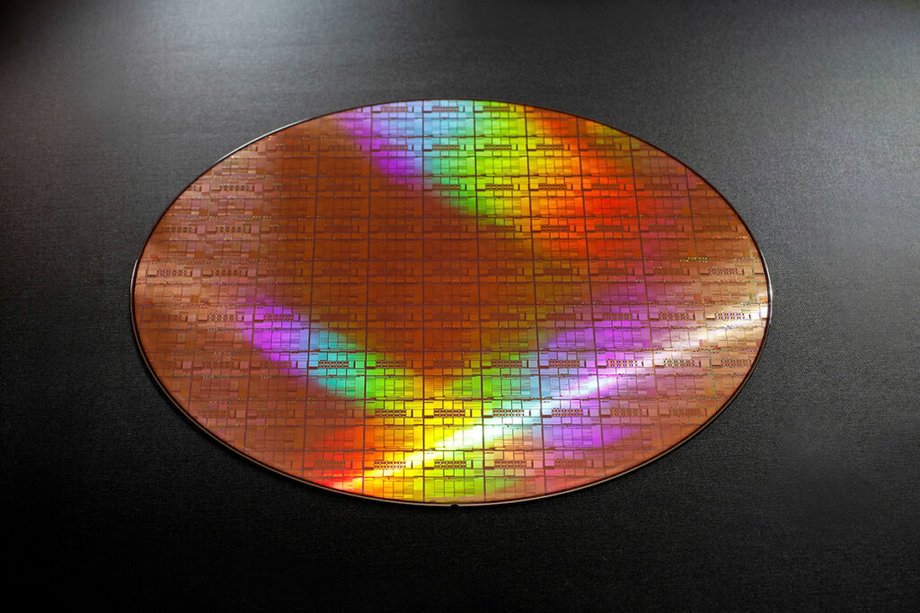
Rapidus wants to start batch production of chips using the 2 nm technological process in 2027 – several months after TSMC.
The fact that the Japanese administration cares about the success of this project is also proven by the fact that it has secured the so-called “golden voice”. Although the state is the largest shareholder of Rapidus, it has a rigidly limited maximum number of votes to 11.5%. But in the case of strategic decisions, it has veto power. In other words, everyone realizes that Rapidus may be a bottomless financial pit for years. Private investors might not have enough patience to continue this project, so the “golden vote” is intended to be a kind of security for the future of Japanese ambitions.
This is why Rapidus is not simply a new factory. This is a state industrial project whose logic goes beyond pure business calculations — although, of course, the assumption is that it will stand on its own feet in the future. The question is whether there is actually a chance for this to happen. Rapidus argues that it does not want to copy TSMC, but to build a silicon foundry focused on smaller series, faster revision cycles and shorter delivery times. This may be attractive to some clients designing advanced systems for AI, data centers or robotics. On the other hand, the economics of cutting-edge processes still reward scale: preparing a design for a 2nm process costs millions of dollars, so the natural need for customers is to produce large volumes to spread this cost over as many chips as possible. The examples of Samsung and Intel also prove how difficult this business is – these market veterans with experience and a scale much larger than Rapidus have problems with generating profits from contract chip production and, therefore, with financing the technological development of their production lines.
Regardless, the world will certainly be watching developments in Japan, as semiconductor sovereignty is a buzzword at the moment. This country is blazing a trail that other parts of the world would certainly like to follow. I wonder how many potential followers will be effectively extinguished when they see the final bill for this trip.