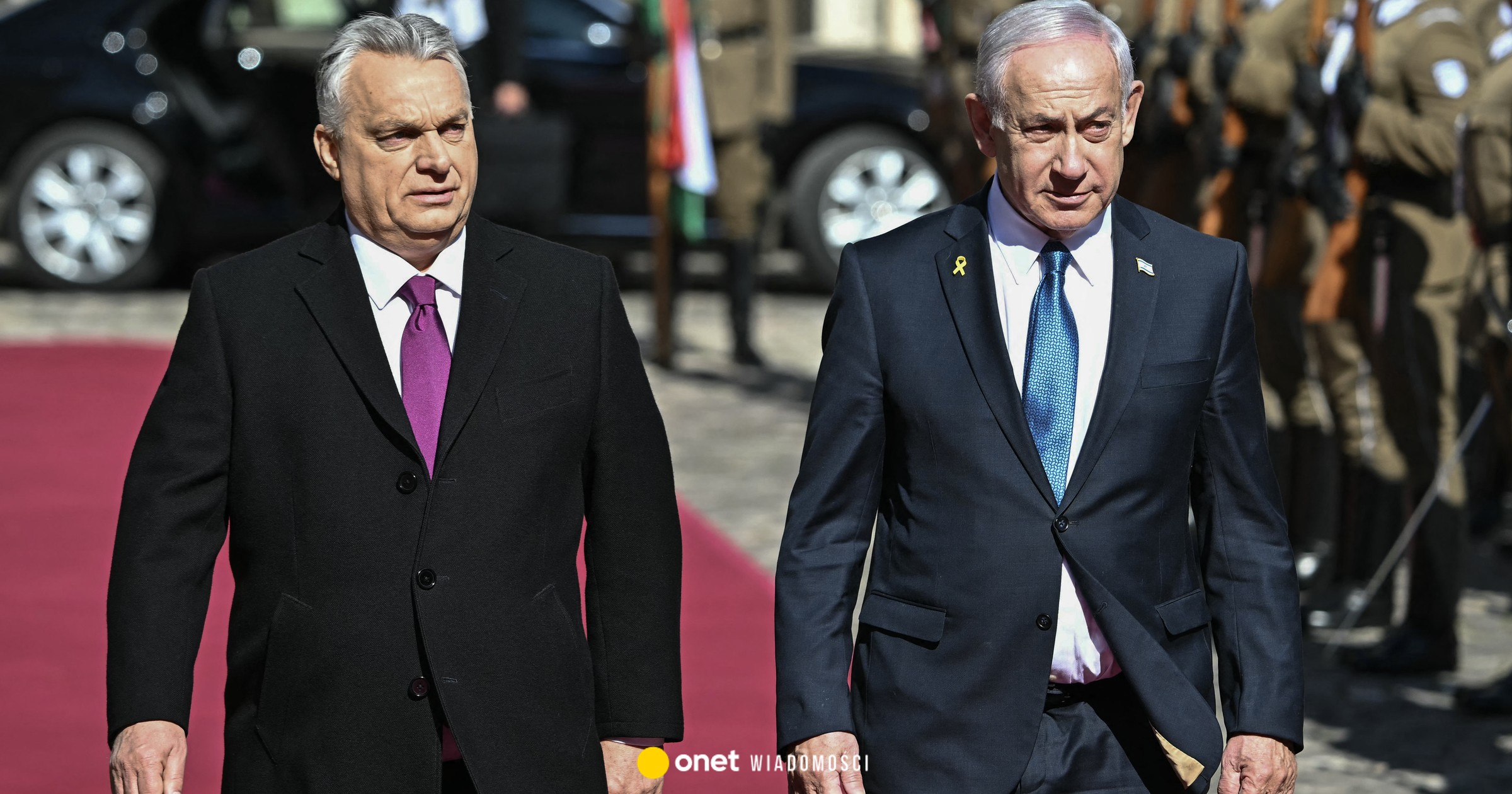
Orbán's departure comes at a time when Criticism of Israel is growing across Europe. This increases the likelihood of the EU imposing new sanctions on violent settlers in the West Bank and adds momentum to efforts to worsen relations between the EU and Israel.
The change is visible even among leaders who were perceived as favorable to Israel. German Chancellor Friedrich Merz said on Tuesday that it was “deeply concerned about developments in the Palestinian territories”. This follows reports by human rights organizations of a sharp increase in violence against Palestinians by settlers in the West Bank.
Last week, Italy suspended a defense and technology deal with Israel after Foreign Minister Antonio Tajani condemned Israel's “unacceptable” attacks in Lebanon.
Orban, who ruled for 16 years and won Netanyahu's support in the election campaign before his failed re-election bid, blocked a motion to impose sanctions on violent settlers in the West Bank in Februarywhich was supported by 26 out of 27 EU Member States.
According to three EU diplomats and two EU officials, when Peter Magyar, who defeated Orban on April 12, takes over as prime minister, sanctions will likely be introduced.
Although Magyar said he would maintain Hungary's special relationship with Israel, he told reporters the day after the election that he “cannot guarantee that Hungary will continue to block EU decisions regarding Israel.”
The article continues below the video
Turning point in Brussels
One EU official says it was a “turning point” in Brussels' attitude towards Israel a series of Israeli airstrikes on Lebanon in early April. More than 250 people died as a result of the attacks. “It cost Israel some friends,” the source added.
The next potential step on the part of the EU is the suspension of the Association Agreement, an option proposed by the European Commission at the height of Israel's war in the Gaza Strip and pushed on Sunday by Spanish Prime Minister Pedro Sanchez. The agreement, which entered into force in 2000, forms the basis of trade relations between the EU and Israel.
So far, the measure has not obtained the qualified majority required for approval. However, a senior EU official believes this threshold could be reached if Italy withdraws its opposition.
Currently, the focus is on increasing pressure on Israel. High Representative for Foreign Affairs and Security Policy Kaja Kallas chairs the meeting of the Global Alliance for a Two-State Solution as well as the meeting of EU foreign ministers in Luxembourg. Ministers are expected to discuss sanctions against the West Bank and the Association Agreement.
At the same time, one of the EU diplomats and the official quoted above claim that countries may refrain from further actions for the sake of peace talks between Israel and Lebanon.
Tensions are rising
The push to reconsider sanctions comes as EU leaders step up criticism of Israel over its actions in Lebanon and a controversial bill, backed by Netanyahu, that allows the death penalty for terrorists from the Palestinian territories.
In a statement issued on behalf of the EU on March 31, Kallas sharply criticized the bill — which comes ahead of Israeli elections scheduled for later this year. The diplomat calls him “a serious step back”. Germany, France and Britain also warned that the bill “threatens to undermine Israel's commitments to democratic principles.”
Destruction after Israeli attacks on Beirut, April 19, 2026.Manon Roca / AFP
Right-wing ministers in Netanyahu's coalition, although not the prime minister himself, reacted to the criticism. They accused opponents of weakness and called on the Israeli Supreme Court not to block the law's application. A spokesman for the Israeli Embassy to the European Union declined to comment to POLITICO on the matter.
The bill is also expected to spur renewed efforts to impose sanctions on Israel, including reviving the debate on the EU-Israel Association Agreement. However, both diplomats believe that no concrete measures have been presented yet.
Hungarian-Israeli relations
“The mood is changing,” says the second senior EU representative involved in organizing the diplomatic talks. — Look at Merz's comments and what is happening in Italy, the source adds, noting that much will depend on the peace process in Lebanon.
Last year, a Dutch initiative to suspend the agreement over alleged human rights violations in the Gaza Strip failed to obtain the qualified majority needed for approval. When asked whether the Commission's proposal will have to be reconsidered in the light of the ceasefire in Gaza, the quoted EU diplomats give different answers: one thinks no, the other thinks the proposal is no longer relevant.
In the face of new criticism, Israeli officials acknowledged that Orban's departure could change the diplomatic landscape in Europe. However, Israel still expects Hungary to stay “friend”according to one official familiar with the Netanyahu government's thinking.
Magyar and Netanyahu had a “warm introductory telephone conversation” on Wednesday during which they agreed that their foreign ministers would meet soon, the Israeli prime minister's office said.
I’m Ashley Davis as an editor, I’m committed to upholding the highest standards of integrity and accuracy in every piece we publish. My work is driven by curiosity, a passion for truth, and a belief that journalism plays a crucial role in shaping public discourse. I strive to tell stories that not only inform but also inspire action and conversation.