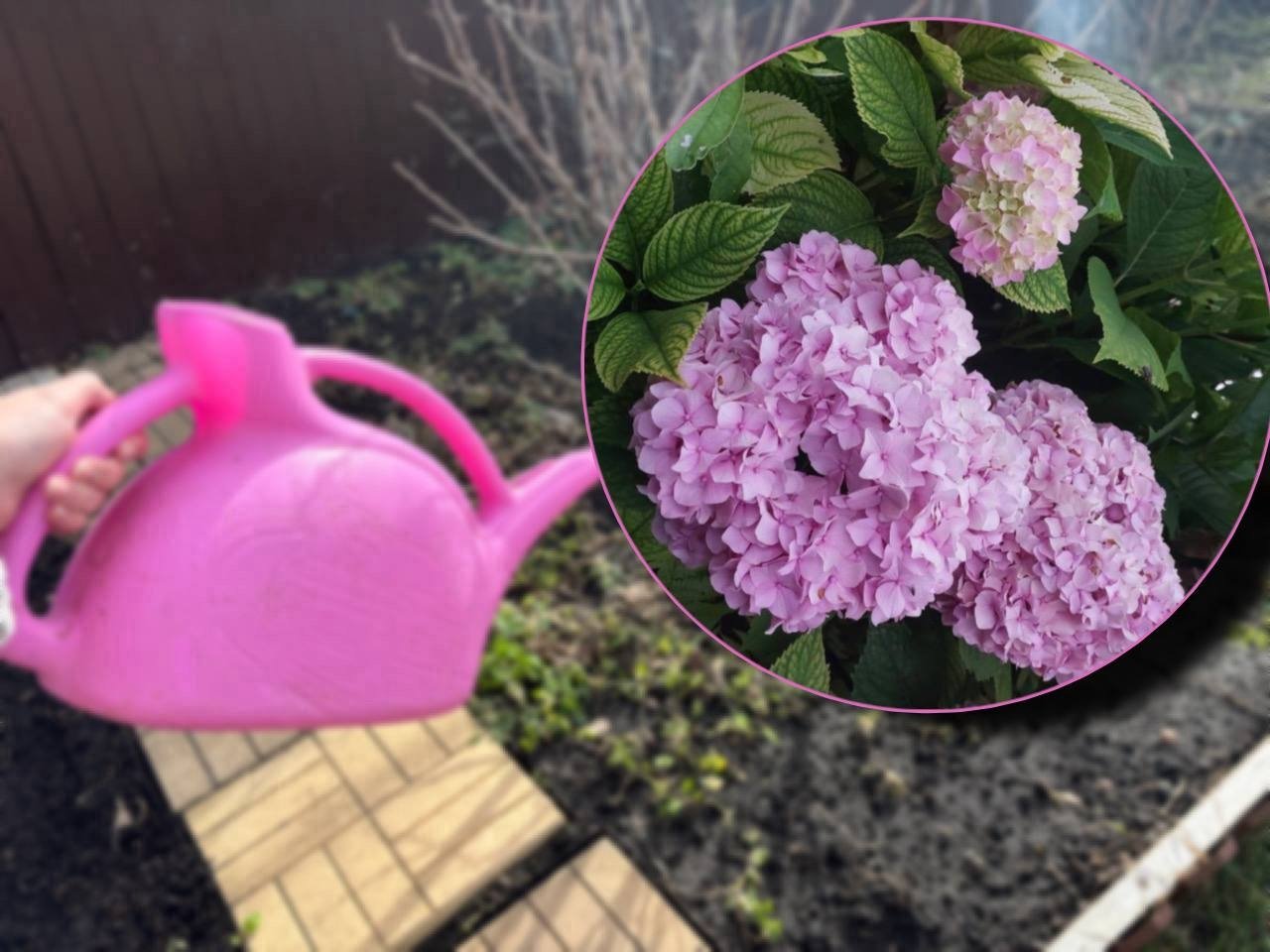
To ensure that your garden has a beautiful, lush hydrangea bush, it needs to be watered at certain points throughout the season. A detailed diagram was presented by the Zen channel “About Fazenda.Country Life” (12+).
First you need to wait for two signs. First, the ground thawed to the depth of a spade bayonet. Secondly, at night it stays stably above +5 °C. In the middle zone this is usually the second half of April, in the Urals and Siberia – May.
There is no need to rush: the bush is just waking up, the roots are not yet working at full capacity, and the fertilizer simply will not be absorbed.
Before any feeding, the bush must be watered with clean water – at least 10 liters for an adult plant.
What to feed hydrangea in spring
In spring, the bush needs nitrogen most of all. It triggers the growth of shoots and lays down future inflorescences.
Two options are used. The first is urea: 20 grams per 10 liters of water, water the tree trunk circle. This is enough for one adult bush. The second is ammonium sulfate: 25 grams per 10 liters. It not only provides nitrogen, but also slightly acidifies the soil – and hydrangea loves this.
How to acidify the soil
Dilute one tablespoon of citric acid per 10 liters of water and water once every two weeks all summer.
The second option is ferrous sulfate: 10 grams per 10 liters of water. It acidifies more gently and at the same time gives the plant iron, which makes the leaves more saturated in color. These two means alternate every other time.
Feeding scheme for the whole season
April–May – nitrogen. Urea (20 g per 10 l) or ammonium sulfate (25 g per 10 l).
June — the bush begins to lay inflorescences. Nitrogen is already superfluous here: it will drive away foliage to the detriment of flowering. Switch to phosphorus and potassium. Dilute 15 g of superphosphate and 10 g of potassium sulfate per 10 liters of water. This stage was skipped in the first two seasons – and it was then that there were almost no inflorescences.
July – the bush is already blooming, repeat the same phosphorus-potassium composition. According to observations, after this feeding, flowering lasts two to three weeks longer.
September – potassium only: 15 g of potassium sulfate per 10 liters of water. As a matter of principle, they don’t give nitrogen in the fall—the bush will grow and freeze in winter.