Deputies of the Legislative Assembly in the first reading agreed on a law on a quota of jobs for SVO participants


April 18 11:19
In the Krasnoyarsk Territory, the Legislative Assembly in the first reading supported the bill “On quotas for jobs for participants in a special military operation in the Krasnoyarsk Territory.” The document was initiated by the regional prosecutor's office.
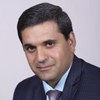
At a session of the regional parliament, Prosecutor of the Krasnoyarsk Territory Roman Tyutyunik recalled that the law will facilitate the social adaptation of fighters who have returned to civilian life. For the Krasnoyarsk Territory, the problem of employment of SVO participants remains relevant; about 20% of demobilized people need help.
Statistics show that SVO participants often face difficulties returning to civilian life. Among the reasons are health problems and the need to adapt to changed working conditions. The draft law provides for the obligation of employers with more than 100 employees to allocate 1% of jobs for the employment of SVO participants. The document offers support for companies that comply with this requirement, in the form of cost recovery, and liability for failure to comply.
During the discussion, Alexander Ratakhin subsequently proposed, due to its special social significance, to take control over the enforcement of the law and make it truly operational. Pavel Semizorov called for expanding the target audience of the bill to include all combat veterans. Arthur Avetisyan said that it is necessary to take into account the norms of professional standards of professions when applying for employment, including in educational organizations.
Speaking on behalf of the relevant committee, Ilya Zaitsev explained that by the second reading the document will be finalized so that as a result, a working mechanism for supporting SVO participants will appear in the region.
Alexey Dodatko noted that at the current session, in the second reading, a bill will be considered on providing employers with subsidies from the regional budget for the employment of citizens who have difficulty finding work, including participants in the SVO. Thus, a system of employment for SVO participants is being developed in the region, which will include accounting for demobilized people, control and incentives for employers.
“We take a systematic approach to the issues of social adaptation of participants in a special military operation. A significant portion of military personnel continue to perform their duty, but there are already those who are returning to civilian life and need support with employment and social integration. This task requires an early and comprehensive solution. Today, employment issues of SVO participants are resolved in the mode of individual support, and most appeals are resolved. However, we must be prepared to act systematically. The bill has already been adopted in the first reading. In its current version, it provides that organizations with over 100 employees are required to maintain special records of jobs reserved under a quota for participants in a special military operation. To ensure the real effectiveness of the law, a detailed study of the mechanisms for its implementation is required. Together with the prosecutor’s office, the Ministry of Economy, local governments and veterans’ organizations, we are working to prepare the document for the second reading,” said Alexey Dodatko.