Peter Magyar wants to repair relations with Poland by extraditing some politicians. “Don't buy furniture because I won't stay long”

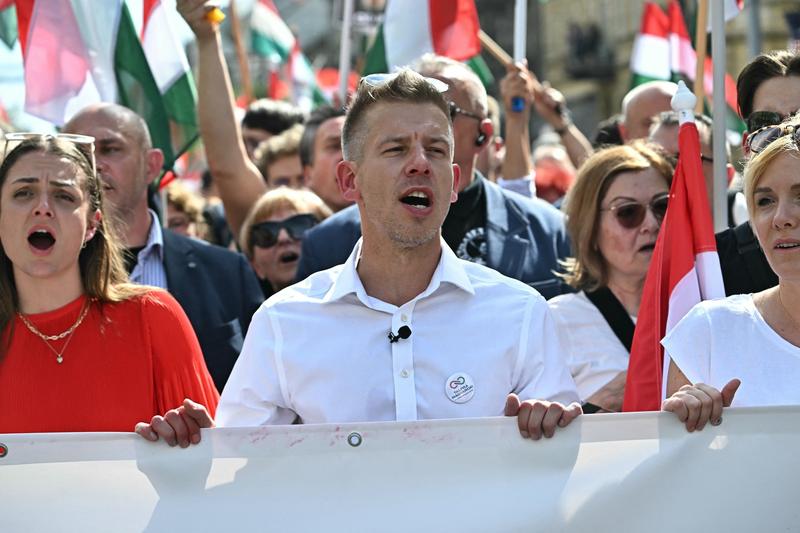
During Viktor Orban's time in power, Hungary lost one of its traditional allies, Poland. The reason is related not only to the pro-Russian attitude of the Fidesz regime, but also to the fact that two Polish politicians prosecuted in their native country found refuge in Hungary. Peter Magyar has already announced that he will extradite the two.
The day after he won the election, Tisza leader Peter Magyar announced that Poland's former Justice Minister Zbigniew Ziobro and his deputy Marcin Romanowski would no longer be subject to the strictures of the law in their native country in Hungary.
“I suggest they don't bother going to Ikea to buy furniture because they won't be here for long. Hungary will not be a dumping ground for internationally wanted criminals,” Peter Magyar said on Monday, as quoted by Reuters.
Magyar's first foreign visit will be to Warsaw
Magyar told the two that they should turn themselves in to the judicial authorities in their country of origin.
“The important thing is that we will find a way, if they haven't already left – because they might not even be in Budapest anymore – to extradite them to Poland,” Magyar added.
The extradition of the two is part of a stated plan by Hungary's new prime minister to mend relations with Poland, saying he will make his first foreign visit to Warsaw to rebuild “Polish-Hungarian friendship of a thousand years,” according to Poland's public radio station.
Magyar's words are not exactly an exaggeration, considering that the two countries have had very close relations since the Middle Ages, including having kings from the same dynasty.
The “political asylum” scandal
But recent years have produced large cracks in the bilateral relationship, primarily due to the Russophilia of the Orban regime, given that Poland has historical traumas related to Russia, and hostility towards Moscow is one of the few things that the political right and left in Warsaw have in common.
But the Hungarian authorities' decision to grant “political asylum” to Romanowski, wanted for embezzlement, caused anger in Warsaw, especially since Gergely Gulyas, Prime Minister Viktor Orban's chief of staff, said in December 2024 that the Polish government was persecuting his political opponents.
“The actions of the government led by [prim-ministrul Donald] Tusk have created a situation where the Polish government ignores the decisions of the Constitutional Court… and uses criminal law as a tool against political opponents,” Gulyas said.
In response, Poland described Romanowski's “political asylum” as a hostile act and withdrew its ambassador from Budapest.
The scandal was then amplified by the fact that the former Minister of Justice in the PiS government, Zbigniew Ziobro, who faces 26 charges, including the leadership of an organized criminal group, also requested political asylum in Hungary. Orban met Ziobro in Budapest in October 2025 and accused Warsaw of a “political witch hunt”.
The Gruevski case
The two cases are not the first occasions when Hungary has shown that it is willing to harbor corrupt politicians from other countries if they are ideological friends of Viktor Orban. In October 2018, the former Prime Minister of North Macedonia Nikola Gruevski was convicted of acts of corruption, but Gruevski took refuge in Hungary, from where he has not been extradited either.
Gruevski entered Albania, probably on foot, and left this country in a car belonging to the Hungarian embassy in Tirana. North Macedonia delivered a note of protest to the Hungarian ambassador in Skopje, and the European Parliament formally requested Gruevski's extradition. But in vain.
And former UDMR deputy Marko Attila took refuge in Hungary after being indicted by anti-corruption prosecutors in Romania. Marko Attila, former member of the commission of the National Authority for Property Restitution (ANRP), was sentenced in 2014, together with the other members of the commission, to three years of suspended prison in the case in which the restitution of the Szekely Miko College in Sfântu Gheorghe was decided, and then other similar charges were brought against him so that he fled to Hungary before the sentence of five years of imprisonment with execution.
Marko Attila returned to Romania in April 2023, after the High Court of Cassation and Justice pronounced the final sentence of acquittal.