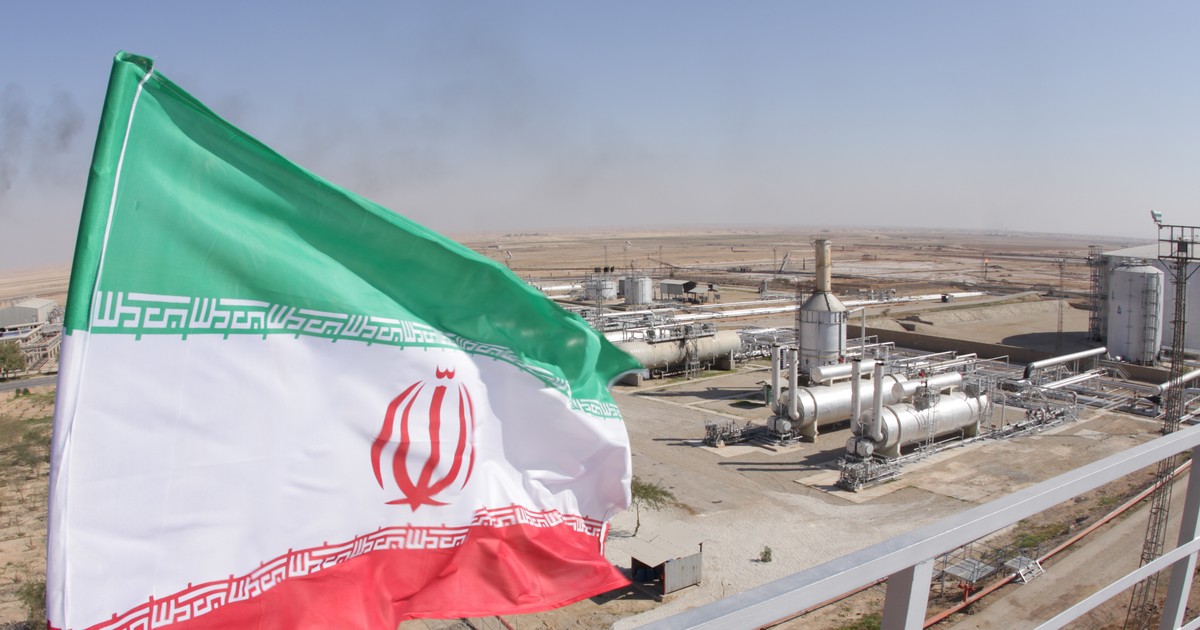
If the conflict in the Middle East keeps oil prices at $100. per barrel, the global economy may grow at the slowest pace since 2020 – warns the International Monetary Fund, as reported by the Financial Times. According to the fund's forecasts, in such a scenario, global economic growth will amount to only 2.5% and inflation will reach 5.4%.
The price of Brent crude oil, the global benchmark, exceeded the $100 mark on Monday. per barrel after the failure of talks between the US and Iran and Washington's decision to impose a naval blockade on the Strait of Hormuz. Before the conflict, oil prices fluctuated around $70. per barrel, but supply disruptions from a key transport route pushed them to their current levels.
Pierre-Olivier Gourinchas, chief economist at the IMF, said in an interview with the Financial Times that last weekend's events contributed to an increase in oil prices, which brings the world economy closer to an unfavorable scenario. — The failure of negotiations between Iran and the US and mutual blockades, including the blockade of the Strait of Hormuz, could worsen the situation by limiting oil exports to world markets, Gourinchas said.
Forecasts in the shadow of conflict
At the beginning of the month, before the collapse of the peace talks, the IMF predicted global economic growth at 3.1%. and inflation at 4.4 percent. Including the so-called The reference scenario assumed a quick end to the conflict and a return of oil prices to pre-crisis levels. It is worth recalling that in 2023, the global economy grew at a rate of 3.5% and inflation was 4.1%.
As “FT” notes, without the conflict in Iran, the IMF even planned to raise its economic growth forecasts, published in January. However, given the current situation, the fund warns that the world's poorest countries may require financial support to cope with rising energy and fertilizer prices. Gourinchas noted that an increase in fertilizer prices translates into an increase in food prices within 12 months.
The most endangered regions
The IMF predicts that even in a moderate scenario in which developed economies will largely immune to the effects of conflict, emerging markets will see their growth decline by 0.3 percentage points. In the Middle East and Central Asia region, growth in 2026 may fall to 1.9%, compared to 3.6%. last year.
In a more pessimistic scenario, assuming an increase in oil prices to $110. per barrel in 2026 and $125. in 2027, inflation may force central banks to raise interest rates. In such a case, global economic growth would drop to 2 percent and inflation would reach 5.8 percent.
Key meetings in Washington
The IMF's negative forecast comes as finance ministers and central bank governors from around the world gather in Washington for the IMF and World Bank spring meetings. Many of the poorest countries plan to turn to the fund for help in dealing with the consequences of the war, especially in the context of rising energy and food prices.