“She didn't deserve to end like this.” After being called by fraudsters, an 80-year-old woman died

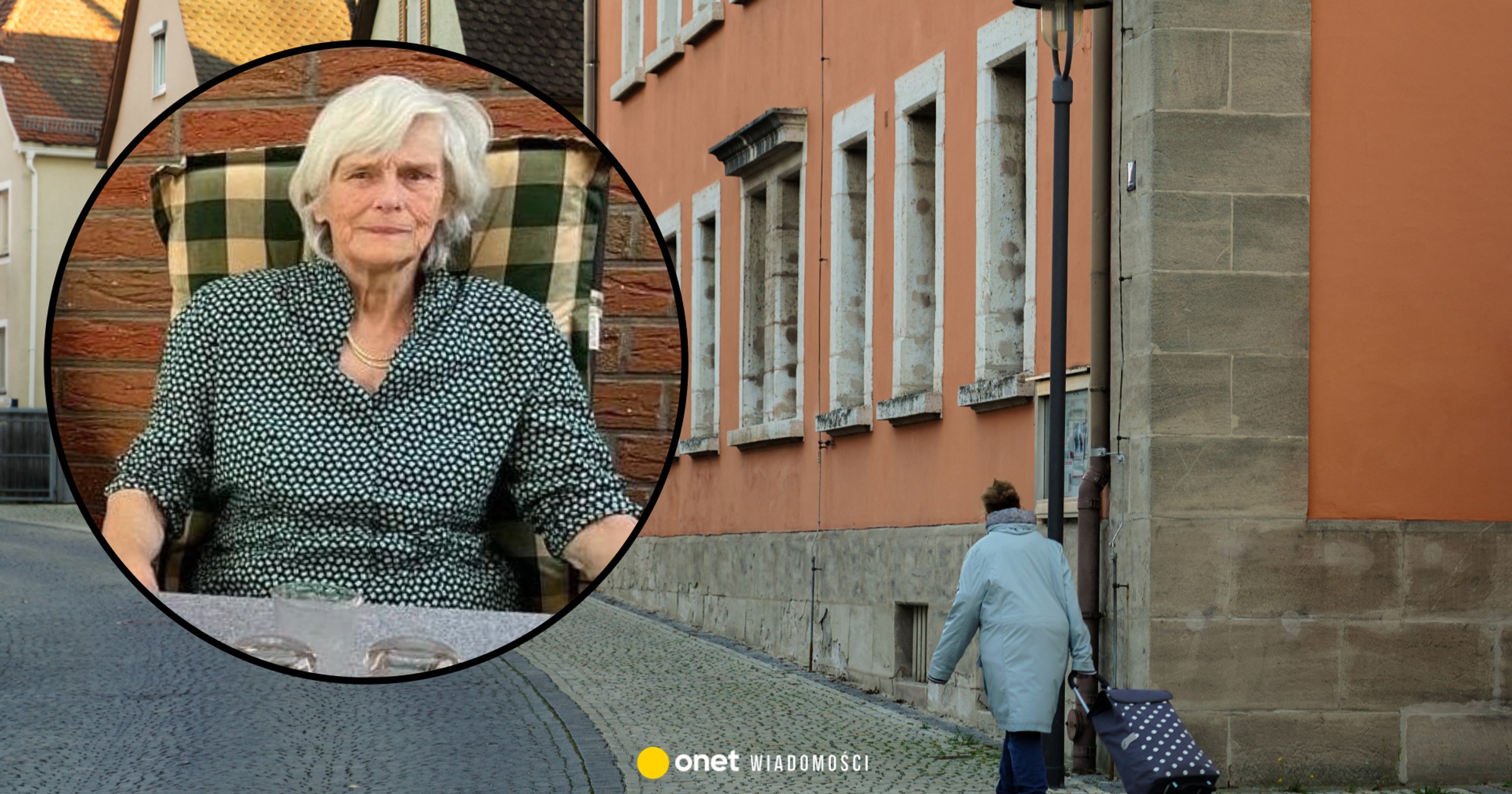
Ursula was full of energy and always there when she was needed: as a mother, grandmother, caregiver for her sick husband, and educator of generations of preschoolers. Then, when her strength was weakening, when she no longer had the same overview of the situation as before, she fell into the trap of fraudsters who pretend to be policemen over the phone in order to extort wealth from elderly people.
However, rarely does this method of deception end as tragically as in Ursula's case: she did not experience shock and shame that she fell for these false stories. — She didn't deserve to end like this. And I had to watch it all helplessly – says her daughter Bettina.
A woman in her fifties sits with her partner in a Hamburg restaurant and talks about the last weeks, days and hours of her mother's life – a painful attempt to process unimaginable events with some distance. Bettina is consciously making this story public. I want to draw attention to the many people who fall victim to this form of crime year after year.
Born in early 1945, Ursula grows up in Lübeck, like many children, without a father who died in the war. There is often no food at home. Since there is little money, he cannot go to high school and has to start earning money early. She really wants to work with children, (so) at the age of 16 she starts training to become a teacher. To escape from the cramped conditions of her small apartment, she goes to dance classes, dates friends, and is constantly on the road. In an ice cream shop in Ratzeburg, she meets a young man who also wants to move out of his parents' house as soon as possible. Ursula is 20 when they get married. In 1968, a daughter, Bettina, was born to them, and two years later a son.
A young family buys a car, furniture, takes out loans, and buys a flat. Ursula works as an educator and has been taking care of girls and boys in church and state kindergartens for over 40 years. In addition to working in institutions and running the house, she paints oil paintings that she gives to friends and relatives. He bowls and does gymnastics in sports clubs, is passionate about cycling, and at the age of 42, he passes his driving test. And he always makes sure that the family goes on vacation together, even when the children are adults and have their own partners. “She was the center of our family,” Bettina recalls.
When grandchildren appear, the athletic grandmother steps in whenever needed – as a driver, tutor, someone to talk to. In February 2018, however, everything changes. My husband became seriously ill and lay in a coma for many weeks. When he leaves the hospital after months, he requires care. Ursula, then already in her early 70s, quickly makes a decision: she will be with her husband. For over seven years, he has been caring for patients from morning to evening, without any holidays. “She sacrificed herself and forgot about herself,” says her daughter.
However, unconditional devotion leaves traces. The elderly woman, exhausted from caring for the sick, seems increasingly absent-minded. Much is forgotten, much is lost. Suddenly he has difficulty using his cell phone or withdrawing money from an ATM. He can no longer operate the washing machine and dishwasher and instead washes and dishes by hand. There are notes everywhere with information on where things are or where they can be found. Ursula reacts with irritation to cautious requests to let her help herself. He doesn't accept help from his children and doesn't want to hire domestic help. How many elderly people do not want to admit that they are no longer as functional as they once were. He also steadfastly refuses to go to the doctor to be checked for possible diseases. Everything in her life revolves around her husband who requires care.
“This man sounded so credible.”
Like many seniors, she eventually encounters fraudsters who want to defraud her savings. Scammers who deliberately look for older people who still have a landline and are listed in the phone book under old-fashioned names. For people like Ursula, who after a long life are a bit weakened and easily influenced. And who still have basic trust in state institutions and their representatives: the police, the justice system, criminal officers and prosecutors. It is this belief in authorities that fraudsters take advantage of by posing as investigators and justice officials over the phone.
Ursula narrowly escaped damage on her first fraud attempt. In the fall of 2024, an alleged prosecutor calls with the shocking news that his daughter caused a serious car accident and is in pretrial detention. To free her, you have to pay a five-figure sum. Ursula, upset, asks for time to think and confides in her neighbor. She, in turn, informs her allegedly injured daughter about this – the fraud fails. Bettina leaves police leaflets in her parents' apartment, warning the services against such callers. When the mother talks about the suspicious calls again and is concerned, the daughter advises her not to answer the landline phone anymore. “They're scammers, Mom, scammers,” she kept telling her.
December 4, 2025 at 22:30. Ursula is tired and just about to go to sleep when the phone rings. The man on the other end of the line who identifies himself as a policeman has alarming news: there has been a burglary in her neighborhood. Her bank details and address were found with the perpetrator, who was arrested. Apparently he was planning to break into her house as well. To save his fortune, there is only one solution: he must hand over all his valuables to the police. It's a story that has been exposed thousands of times as a fraud, and warned about it many times in newspapers and on the Internet. But Ursula believes in her. Especially since the alleged policeman scares her: she has to hurry, every hour counts. She must not tell anyone about this. He quotes paragraphs, it sounds dangerous.
Ursula panics. She and her husband had always lived frugally, always saving something. They bought jewelry for special occasions and kept it in their home safe, as they did cash and securities. Ursula guarded these savings as if they were a treasure intended for her heirs. Is all this now going to fall prey to criminals? He packs the contents of the safe into a large bag and, as instructed by the phone, places it in front of the front door. She doesn't listen to her husband, who desperately tries to stop her: “Don't do it, don't do it!” Just before midnight, the bag disappears from the door. Doubts arise. First gradually, then more and more insistently.
Ursula calls her daughter and confesses everything. Bettina is furious. “The man sounded so believable,” the mother defends, “so absolutely true.” When she realizes that she has been deceived, that she has given her closely guarded property to criminals, she feels sick and her voice falls silent. The daughter hears, still faintly, “Tine, my heart, my heart” – then there is silence. The daughter and son-in-law, who live an hour's drive from Ursula, rush to Hamburg. They find her dead in a chair. He still holds the telephone receiver in his hand.
Investigation into Ursula's death and other deaths of deceived women
There is no trace of the perpetrators. They can feel safe: According to police findings, the callers are abroadcall mainly from call centers in large Turkish cities, from Istanbul, Ankara or Izmir. They are often Germans of Turkish origin who were born and grew up in the Federal Republic of Germany and speak German without an accent. They use police jargon and refer to the texts of laws. The so-called the couriers who come to the victims' homes for money are Turks, but also Germans and people of other nationalities. Their task is to discreetly take the loot and quickly disappear with it.
— We are dealing here with structures similar to those in organized crime, with real professionals – says Criminal Director Joerg Schroeder, head of the Hamburg department for property crimes. About 20 officers from his department are currently fighting fraudsters. In 2025, approximately 1,300 reports of telephone scammers taking advantage of the victim's shock after learning about the alleged accident of someone close to them were registered in Hamburg alone. There are tens of thousands throughout the country, and the trend is upwards. The police assume that the number of unreported cases is much greater than those they learn about. — For every reported case, there are probably 99 attempts. These are calls during which potential victims are not at home or become suspicious and simply hang up. Or they do not report to the police because they are ashamed of having fallen for the tricks of fraudsters.
Annual losses amount to millions (euros). Because those behind these frauds operate primarily from Turkey, investigators are dependent on cooperation with authorities there. Support is “limited,” according to police officer Schroeder. Often, tedious bureaucratic hurdles must first be overcome. Success is usually only possible if you manage to catch one of the couriers and make him confess.
In Ursula's case, the prosecutor's office initiated proceedings against unknown perpetrators. The investigation is not just about fraud. — We are also checking whether a murder occurred, explains Hamburg district attorney Mia Sperling-Karstens. Although this is not an intentional crime, unintentional manslaughter may be considered. The caller and his accomplice could at least have expected that their victim was elderly and likely to collapse from agitation. They could therefore take into account the possibility of Ursula's death and thus be subject to punishment.
Investigators do not see such a close connection between the fraud and death in two similar cases because the victims did not die immediately (after the incident). However, there are clear similarities: in mid-January, an 86-year-old resident of Hamburg was duped by a fake prosecutor over the phone who – as in the case of Ursula – used the pretext of alleged burglaries in the neighborhood to let a fake criminal police officer into her apartment after giving her a password.
When the intruder disappeared with the jewelry and money from her safe, the woman, who suddenly became suspicious, alerted the police. While giving her testimony, she fainted; she died a few days later in hospital. Using the same trick, fraudsters managed to extort three savings books from another 81-year-old a week later. She also reported a crime. Two days later, she was found dead in her apartment, probably having suffered a heart attack. It is unclear whether the perpetrators were the same in all three cases.
Ursula was buried, as she wished, in a small forest cemetery, and her apartment had already been vacated. However, the circumstances of her death do not give peace to her relatives. Another feeling now joined the mourning: anger. Great anger, the daughter explains, “that such acts are possible and the criminals go unpunished”. After the death of his wife, Ursula's husband can no longer live alone at home. He ended up in a nursing home.