Viktor Orban may lose power. We reveal the pillars of “Orbanomics”

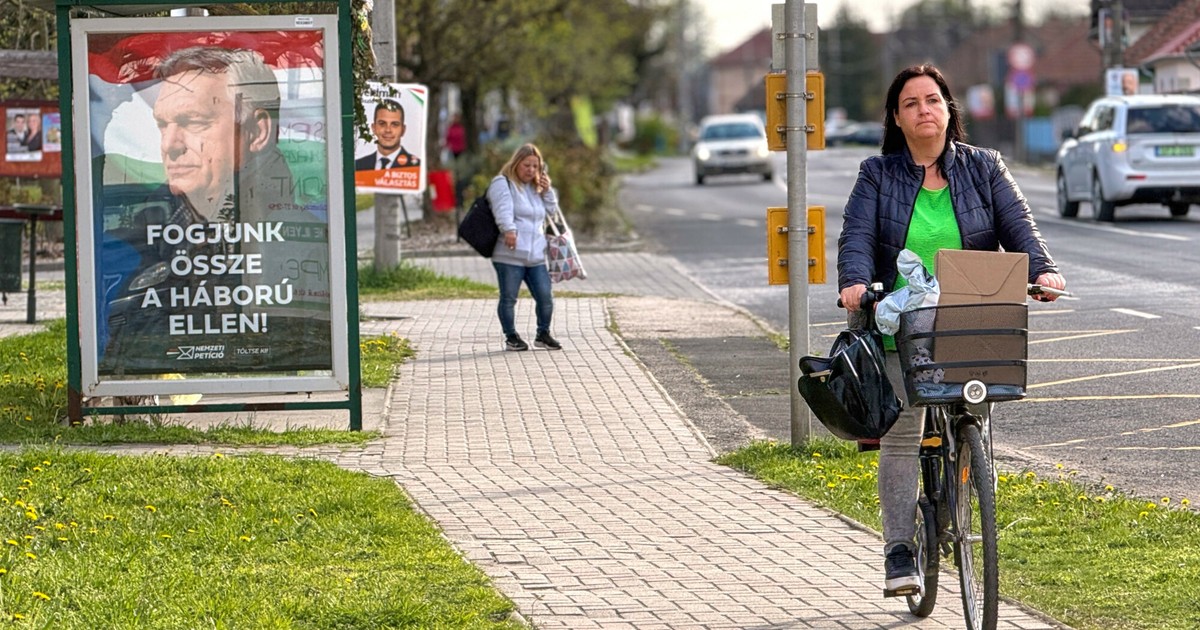
Viktor Orban's rise to power coincided with a great economic crisis. His Fidesz won the elections just after Hungary's economy shrank by almost 7%. during the year.
After taking over as prime minister, Orban quite quickly carried out several reforms that – as it seemed at the time – could lift Hungary out of the doldrums. And it worked quite well for many years.
Only the pandemic and the war in Ukraine painfully exposed “Orbanomics”.
Read also in BUSINESS INSIDER
Changes in taxes
To start with, Fidesz introduced a flat tax for all citizens. Zero tax brackets for the poor and the rich – everyone pays 15 (originally 16) percent. PIT. Simultaneously VAT went to a record 27%.which is still the highest rate in the entire European Union.
The first reforms therefore provided relief for the rich (until now, they often paid taxes at a rate of 36%), and contributed to all citizens (VAT is paid by everyone in the price of products, including the poorest).
In addition, there is something that the government in Poland later followed, i.e. sectoral taxes. Additional burdens included, among others: banks or retail chains. In general The hardest times were in those industries where there was a lot of foreign capital.
Chaos and oligarchization
The thing is that the prime minister's actions were quite chaotic and sometimes excessive.
— At the beginning, Orban's entire economic policy was based on the – somewhat correct – observation that privatization has gone too far and there is too much external capital in the country, this made Hungary very vulnerable to external crises – tells us Dr. Andrzej Sadecki from the Center for Eastern Studies.
Therefore, reforms began, which ultimately led to the oligarchization of the Hungarian economy. — Orban created the entire scheme transferring public money to entrepreneurs linked to the governmentwhich practically killed fair competition in many markets – adds the expert.
As Ilona Gizińska from OSW writes in her report on Hungary's economic policy, “the reforms did not form a coherent development strategy and were often reactive in nature.”
Orbán strongly favored domestic capital in services, while providing generous incentives to foreign companies in the manufacturing sector. He also privatized Hungarians' savings accumulated in open pension funds.
From the very beginning of his rule, Orban's tendency to manually control the economy and generate regulatory instability in the country was also noticeable.
See also: Orban introduces maximum prices in Hungary. He chose six products
— In addition, there is a clear turn east towards Russia and China. On the one hand, to obtain cheap energy, and on the other – to invest in the automotive industry – explains Dr. Sadecki.
All this taken together also put Hungary in sharp conflict with Brussels. The effect is that EU funds do not flow to Budapest, and as a result, investments in this country are declining.
The pandemic and war exposed the truth
“Orbanomics” operated for many years. Unemployment fell, economic growth accelerated, and inflation was kept in check. Although Budapest was increasingly lagging behind other countries in the region in terms of basic economic indicators.
See also: These charts stimulate the imagination. Poles have completely “gone away” from Hungary
Energy prices were relatively low thanks to dependence on Russia, but only for a while. The short-sightedness of the reforms was exposed only by the coronavirus pandemic and the war in Ukraine.
— Today, dependence on supplies from Russia is no longer an advantage, but a high-risk factor. In fact, this has already partially materialized after oil stopped flowing to Hungary through Ukraine, explains Andrzej Sadecki.
“Global events after 2020 exposed the high vulnerability of the economy operating under Orbán's government to external shocks and ended the period of relatively stable growth in recent years. Similarly to the global financial crisis of 2008–2009, the Hungarian economy experienced a stronger collapse than most countries in the region (including the Czech Republic and Slovakia with economies of similar size), which indicates its low resilience and suggests the existence of important internal conditions deepening the scale of the shock,” writes Ilona Gizińska in her report on Hungary.
See also: New survey in Hungary. Orban's party is definitely losing to its main rival
As we read, “in the authorities' narrative, responsibility for the deterioration of the economic situation is attributed primarily to external factors, such as the COVID-19 pandemic, the war in Ukraine or the sanctions imposed on Russia.”
“In fact, these events made it visible structural limitations of the Hungarian growth model based on the inflow of foreign capitalexports and expansionary budget policy,” Gizińska concludes.