Hungary increases imports of gas and oil from Russia. Here is the behind-the-scenes of Orban's policy

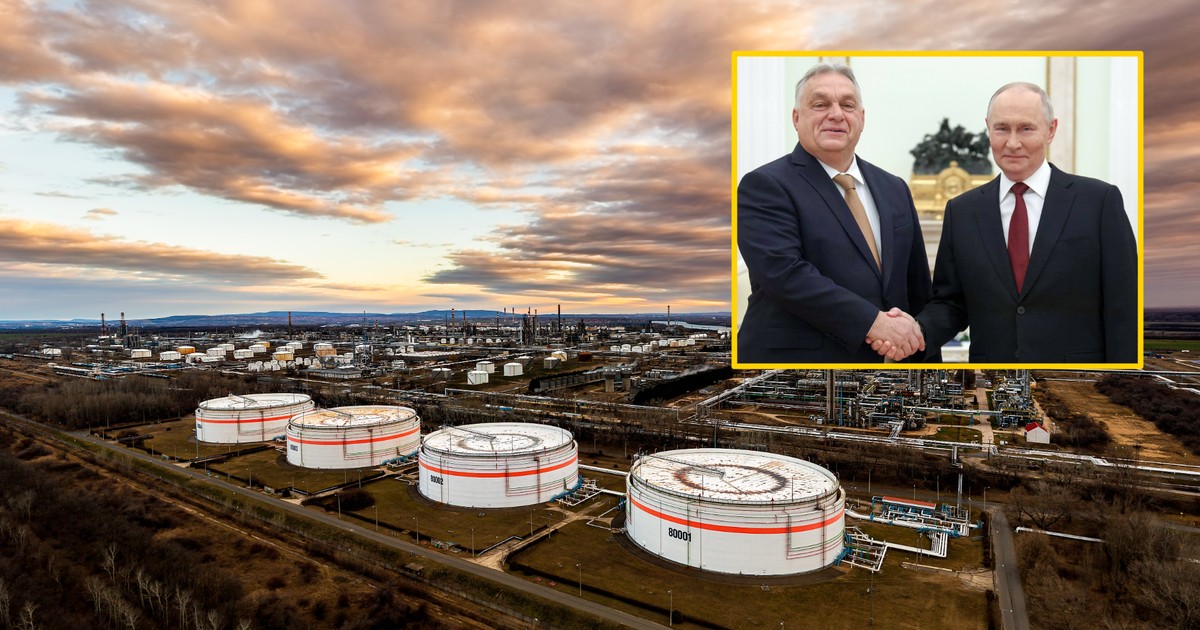
Hungary under Viktor Orban's rule is often called Russia's “Trojan horse” in Europe – a country that, despite belonging to Western political structures such as the European Union and NATO, de facto defends the interests of the Kremlin. Raw material and energy issues play an important role in this.
Read also: Elections in Hungary. Ukrainian services warn against Russian provocations
Hungary. Imports of oil and gas from Russia are increasing
While most member states agree that dependence on eastern fossil fuels was a mistake and that programs such as REPowerEU aim to end it, Hungary – along with neighboring Slovakia – remains steadfast in continuing to purchase Russian oil and gas. There are too many examples to mention them all here; it is enough to recall the recent Hungarian-Slovak veto in March against the next package of sanctions. In the same month, Hungary appealed to the Court of Justice of the EU the EU regulation introducing a total ban on the import of raw materials from Vladimir Putin's country by 2027 and 2028. They justified this by the right of EU member states to decide independently about the sources of energy supplies.
The data speaks for itself. A report by the Center for the Study of Democracy published in March this year shows that in the years 2021-2025, Hungarian dependence on Russian oil increased from 61%. up to 93 percent From the outbreak of the war until January 27, 2026, when the Druzhba pipeline was damaged, the state-owned Hungarian monopoly MOL paid approximately EUR 17.4 billion for oil imports to Hungary and Slovakia.
Imports of Russian oil to Hungary in 2021-2025
|
Center For The Study Of Democracy / Center For The Study Of Democracy
In 2025, Russia also came from approx. 95 percent natural gas imported to Hungary. The basis for this is the fifteen-year contract with Gazprom concluded in 2021, as a result of which, according to the Institute of Central Europe, in 2024 Hungary imported 7.5 billion cubic meters of gas through pipelines. gas from Russia. In 2025, it was supposed to be 8-8.5 billion cubic meters.
The value of Hungarian gas imports from Russia since the beginning of the full-scale invasion of Ukraine, estimated by the Center for the Study of Democracy, amounted to EUR 15.6 billion. As Michał Paszkowski from the Institute of Central Europe states in his analysis, “Hungary is one of the few EU countries that still maintains a stable and sometimes even growing volume of supplies of this raw material (natural gas – editor's note) from Russia” A similar statement can also be made about oil.
The country on Lake Balaton is therefore going against the trend visible throughout the EU, which in 2021-2025 reduced its dependence on imports from Russia from 25.8 percent. up to 2.2 percent (in the case of oil) and from 45 percent up to 12 percent (in case of gas). To show the importance of both fuels for the economy in Hungary, we can refer to the data of the International Energy Agency, according to which in 2024, oil and petroleum products were responsible for almost 32%. total energy consumption in this country, and natural gas – for almost 31%.
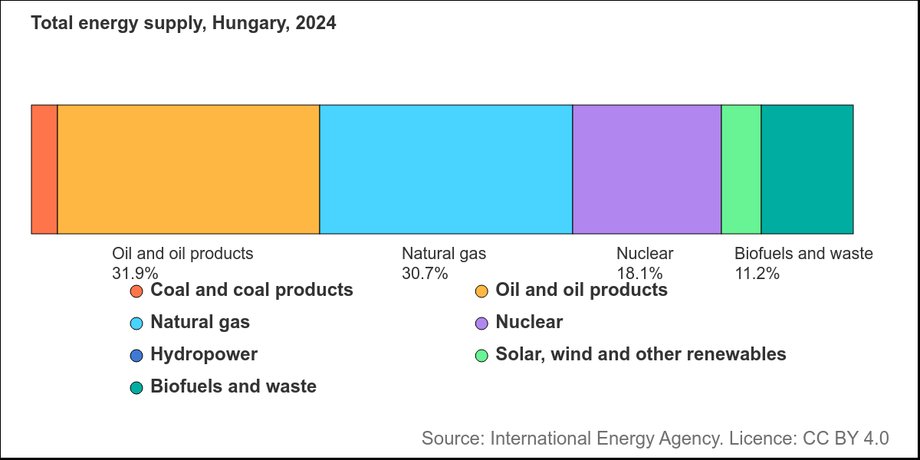
Energy sources in Hungary
|
International Energy Agency/IEA
Hungarian dependency. Only Russian oil is suitable
What determines Hungarian dependence on raw materials from Russia? Although the causes overlap and are interdependent, three can be distinguished; geography, technological backwardness and, finally, a conscious political choice. Prof. Robert Rajczyk, political scientist, habilitated doctor of social sciences and senior analyst at the Institute of Central Europe, starts with the former.
— Hungary is a landlocked country. Compared to landlocked countries such as Poland, import options are naturally limited. So far, the only alternative to supplying oil and gas via pipelines from the East were connections with Croatia, he says.
Read also: “The economic situation is catastrophic.” Half Pole, half Hungarian about Viktor Orban's rule
Another factor favors the purchase of fossil fuels from Russia. As explained by prof. Rajczyk, the most important Hungarian refinery in Százhalombatta near Budapest, owned by the MOL concern (there was a fire there in October 2025), is almost exclusively adapted to process oil offered by the Kremlin.
—Both MOL refineries – the one near Budapest and the other in Slovakia – are only able to handle the more sulfurized Urals crude oil purchased from Russia. Oil is divided into different species, which cannot be easily converted into ready-made petrochemical products such as gasoline or diesel oil everywhere – explains the expert.
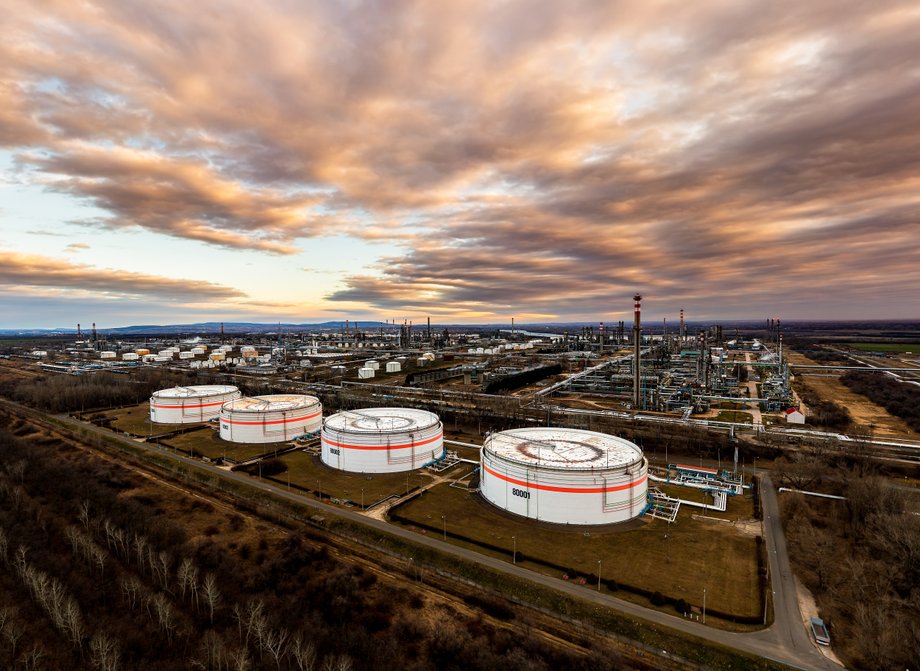
Shazhalombatta Refinery
|
Geza Corey hen / Shutterstock
The refinery in Százhalombatta remains less developed than its counterparts in other European countries, including Poland, capable of processing various types of oil. According to our interlocutor, this is influenced by the third factor, i.e a specific course of the Hungarian state, which builds its economic relations with the rest of the world in a thoughtful way.
Hungarian politics. “Opening to the East”
—The decision to technologically modernize both MOL refineries was probably not made for political reasons, although, of course, their expansion would also require expenditure. However, since 2010, i.e. the beginning of the rule of Fidesz and Viktor Orban personally, the doctrine of openness to the East has been in force in foreign and economic policy, which favors importing raw materials from specific directions, mainly from Russia – says Prof. Rajczyk.
In the intention of the right-wing prime minister, “opening to the East” was to diversify the Hungarian economy, stuck in the so-called the middle development trap – a position in which, after reaching a certain level of wealth, further growth does not guarantee the country's advancement, but perpetuates its status as a subcontractor for wealthier players.
– Orban explained his opening for sovereignty reasons. In this policy, the East is broadly understood; does not only include Russia, but also Turkey, China and other Asian countries. As a result, foreign investment in Hungary has actually started to diversify somewhat; next to German car factories, Chinese or Korean battery factories have also appeared – says the specialist, noting that Eastern investments sometimes go hand in hand with non-compliance with environmental protection or occupational health and safety standards.
In the fall of 2024, the “opening to the East” program was supplemented by the announced doctrine of economic neutrality, which also covers investments by the Hungarian public energy company MVM in gas fields in Azerbaijan.
As for the diversification of fuel supplies, at the end of last year a contract for the supply of liquefied natural gas (LNG) was signed with the American Chevron, and earlier – with the French Engie. Despite these steps, Prof. Rajczyk emphasizes that the clear dominance of imports from Russia is a well-thought-out decision.
Hungarian-Russian relations. History doesn't play a role
Interestingly, Hungary is not prevented from sticking to it by what is the main source of distrust and reluctance towards Russia in Poland or the Baltic states, i.e. historical baggage. Although the anti-Soviet uprising of 1956, bloodily suppressed by the Red Army, is present in the official policy of memory, it does not influence today's relations.
—The topic of the uprising, although still recalled institutionally or, for example, in films, has no major significance for Hungarian-Russian relations today. The ruling team in Budapest consists of pragmatists who know that Russian Urals oil is usually cheaper than that from the USA or other parts of the world – says a representative of the Institute of Central Europe. Lower raw material prices do not translate into direct benefits for consumers, but are politically discounted in a different way.
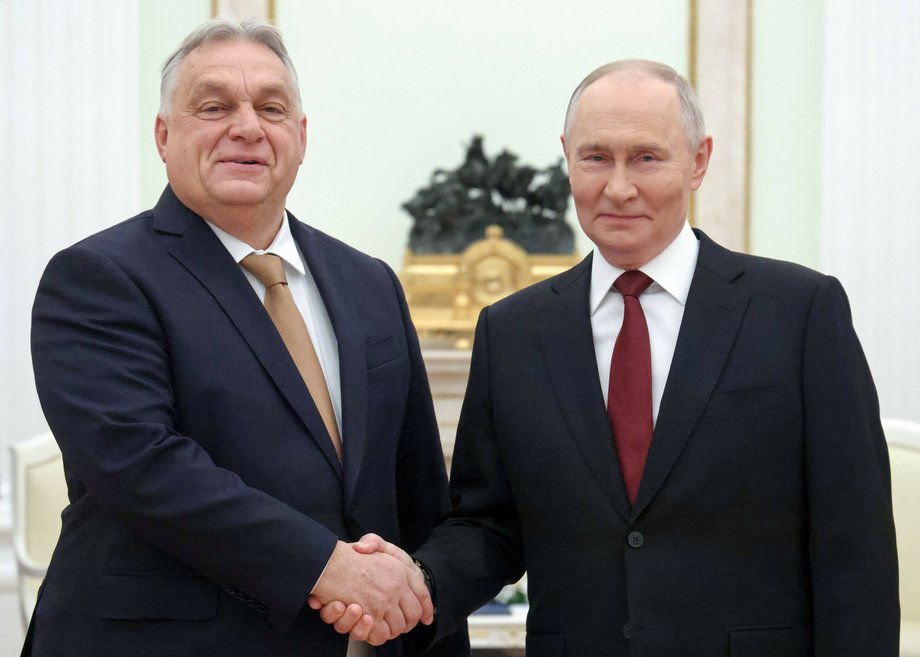
History is not an obstacle to warm Hungarian-Russian relations
|
IMAGO/Vladimir Gerdo/Imago Stock and People/East News / East News
Read also: “I am at your service.” Viktor Orban's confidential conversation with Vladimir Putin comes to light
Without Russian oil, would the cost of living increase?
—Theoretically, compared to neighboring countries, fuels in Hungary should be competitively priced, since they are based on cheaper crude oil. However, this is not the case for a very simple reason – high margin. The state-owned MOL earns a lot of money, which is then used as a tax on profits to finance social transfers, but also, for example, subsidies to gas prices in households – explains Prof. Rajczyk.
Such dependencies further politicize the issue of imports from Russia. – According to a recent statement by one of the Fidesz representatives, if it were not for oil from Russia, the cost of living for an average Hungarian family would increase by approximately PLN 100,000. forints per month. This is the equivalent of approximately PLN 1,200. It is difficult to say how accurate these calculations are, but they show that the presence of Russian fuel helps maintain public support for the current government, says the specialist.
Hungary also cooperates with Russia in the field of nuclear energy, in which new capacities – a unit at the Paks-2 power plant – are being built by the Kremlin's Rosatom.
— Last September, the Court of Justice of the European Union issued a ruling questioning the European Commission's prior consent to state aid for this project. Despite this, construction is progressing, reports Prof. Rajczyk.
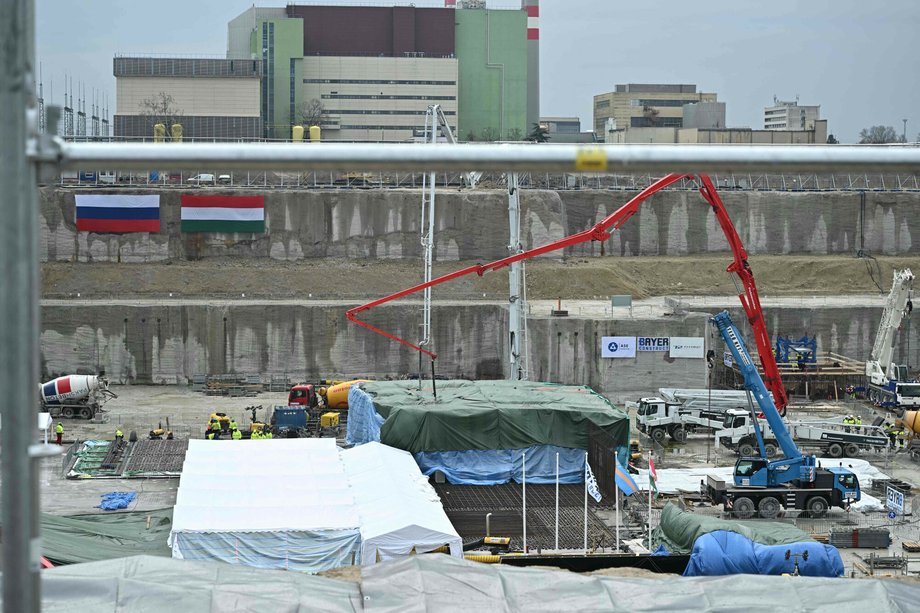
Expansion of the Paks 2 nuclear power plant in February 2026. Flags of Hungary and Russia in the background
|
ATTILA KISBENEDEK/AFP/East News / East News
Americans are also interested in nuclear development in Hungary, as evidenced by the so-called memorandum of understanding regarding the possibility of purchasing nuclear fuel from Westinghouse. There are also ideas to build modular SMR reactors from the USA as part of the Central European hub. Currently, however, the Russians are undoubtedly the leader in this technology on the Danube.
Hungary. Moving away from fuels from the East will not happen overnight
Can the current situation change after a possible defeat of Fidesz? Although Peter Magyrar's opposition Tisza declares reducing dependence on Russia and abandoning imports by 2035, prof. However, Robert Rajczyk advises caution.
— Hungarian society is very polarized, and the elections will be decided “on razor blades”, i.e. with a slight advantage of either side. When information emerged on Easter that the Serbian authorities had thwarted an attempt to blow up the Balkan Stream gas pipeline, which supplies Russian gas to Hungary, Magyar stated that his country should obtain energy from various sources. Fidesz immediately picked up on this, saying that then they also need them from Russia. Europe promises a lot after a possible change of power in Budapest, but for purely pragmatic reasons, abandoning the import of fossil fuels from the East will not happen overnight – sums up the specialist.