
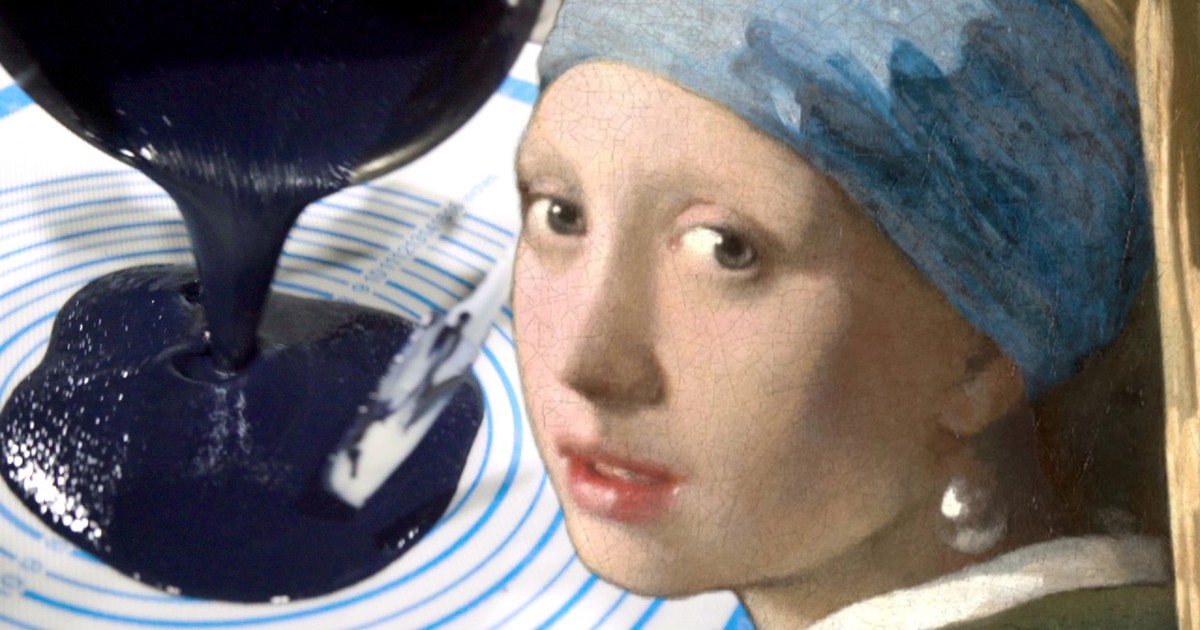
It is the most expensive blue paint in the world. It comes from lapis lazuli rocks mined in mines in Afghanistan.
However, you cannot simply crush lapis lazuli and turn the rocks into paint like you can with many other natural pigments. It takes a painstaking process to create the color called ultramarine blue.
We found it for $460. for a tube of oil paint with a capacity of 225 ml. It was a promotional price. An identically sized tube of synthetic ultramarine costs only $19.
Lapis lazuli pigment has been expensive since ancient times, but modern artists have a much cheaper alternative to choose from. So why do some people still prefer this natural pigment and why is it so expensive?
Read also: Cheap garlic from China was supposed to destroy them. Today they rule the US market
The first step in turning lapis lazuli rock into paint is to grind it up
|
Business Insider
How is the most expensive blue paint in the world made?
The first step in turning lapis lazuli rock into paint is to grind it up. The next step is further grinding.
“Sometimes I sneeze and my hair turns blue,” says Muhammad Irfan, founder and president of De Mairo.
Mohammed Irfan's goal is to obtain a fine powder, but not too fine, otherwise it will be difficult for him to extract the lapis lazuli from the other minerals in the rock.
If lapis lazuli is not pure enough, you get a cloudy, grayish color instead of the true blue that ultramarine blue is famous for. This is because lapis lazuli rock contains a mixture of minerals which, if left in the mixture, can dilute the color of the finished product.
— See those blue bits? It's all lapis lazuli. Glazes, pyrite, silicate. Our job is to remove all these impurities and obtain pure lapis lazuli, Muhammad explains.
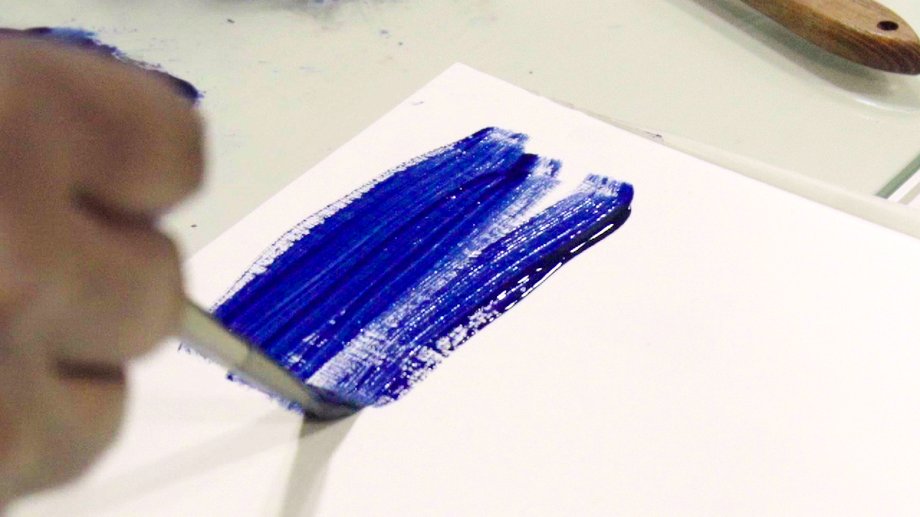
To transform the pigment into paint, Mohammad mixes it with oil
|
Business Insider
However, isolating the pigment is not easy. When Business Insider visited Mohammad's workshop in Canada, he showed us the Cennini method, named after the Italian painter who described it.
This is one of the oldest and most labor-intensive methods of transforming lapis lazuli into Fra Angelico, the purest ultramarine blue pigment. It takes longer to obtain and produces less pigment than other methods, so it is usually reserved for special orders.
What distinguishes the Cennini method from other methods is the fact that the powder turns into a dough. Mohammed heats powdered lapis lazuli with beeswax, pine resin, mastic gum and linseed oil.
When I work with mastic gum, I sometimes eat it because it is so good
– he laughs.
Traditionally, the mixture is kept for a week and kneaded every day. Instead, Mohammad shapes the dough into small balls and lets them dry for two or three days.
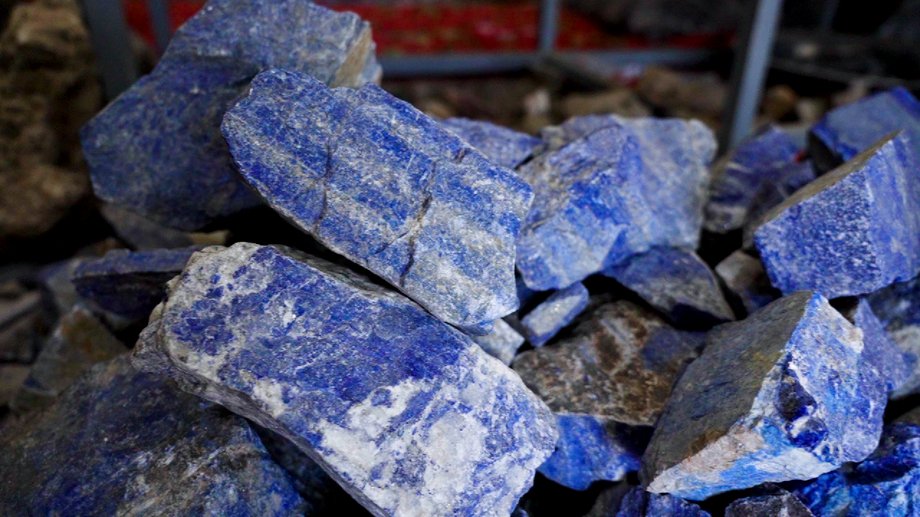
If lapis lazuli is not pure enough, the result is a cloudy, grayish color instead of true blue
|
Business Insider
From 400 g of lapis lazuli, only 20-30 g of the final product is produced
It smells beautiful. This reminds me that I grew up in the north of Pakistan, where pine trees grow everywhere. I feel them when I smell this fragrance. I feel like I'm back where I grew up. I used to make long sticks and work by hand, but now I don't use my hands. I have a machine for that
says Muhammad.
In this way, Muhammad departs even further from Cennini's original method. Cennini specified that the pigment should be washed out of the dough manually, specifically with the hands of a young girl. Mohammed's method is mostly touchless.
It is based on the use of a ball mill that mixes dough balls with steel balls and hot water. After about two hours, you will have lapis lazuli and water, and the other minerals will remain in the dough.
– I'm pouring the water away. Only Fra Angelico remains. “You have to wash it five or six more times,” he explains.
After the final wash, Muhammad passes the drained pigment through a dehydrator and in about two hours it is ready for use.
– You can see that it has a beautiful color. I'm really happy with the results. We used 400 g of lapis lazuli and obtained approximately 20-30 g. A jar of Fra Angelico costs about $190. – he adds.
Muhammad's company, De Mairo, produces between 1.8 and 2.3 tons of lapis lazuli pigment per year, mostly using a secret method that took him six years to develop. The Cennini method allows you to obtain 1 kg of pigment in four days, the Muhammad method allows you to obtain up to 20 kg in one day.
– This applies to wholesale orders, such as from Michael Harding, to which we supply pigment. Its orders usually range from 200 to 400 kg, so we cannot extract this raw material using the Cennini method, explains Muhammad.
Muhammad spent almost his entire life thinking about lapis lazuli. He grew up in Pakistan, on the border with Afghanistan, in the region where most of the world's lapis lazuli resources come from.
—I was seven or eight years old when someone brought a lapis lazuli rock to show my grandfather. When I saw lapis lazuli, I was fascinated by its shape and color. I thought, “Oh, what is this?” – he recalls.

After the final wash, Muhammad passes the drained pigment through a dehydrator and in about two hours it is ready for use
|
Business Insider
Currently, obtaining lapis lazuli from Afghanistan is not only a matter of cost
In June 2025, we sent a cameraman to see how lapis lazuli is mined in Sar-e Sang, the largest source of this rock in the world. From the capital Kabul to Faizabad it is about 10 hours by car.
Then you have to drive another five hours to a remote mine through dangerous mountain roads. After this difficult journey, what we found was not what we expected.
— Previously, work was carried out sporadically and production was low. The Islamic Emirate of Afghanistan introduced an official decree that closed the mines. This has been going on for over a year, explains Mahboobullah, a member of the operations team at the Sar-e Sang mine.
We coordinated our activities with the Ministry of Culture and Information, which either did not know or did not inform us that the mine would not operate. We don't know exactly why the mines were closed, but they have been under Taliban control since they took over the country in 2021 after the United States withdrew.
Lapis lazuli from Afghanistan has come under fire for potentially funding a fundamentalist militant movement. Despite this, the country is still the source of this raw material of the highest quality in the world.
The mines in this region are saturated with lapis lazuli, making the stones bluer and more intense than the lapis lazuli found elsewhere. Afghanistan is also the place where lapis lazuli was first used as a pigment.
Large amounts of ultramarine were used in these 6th or 7th century wall paintings near the Bamiyan Buddha statues, which are a UNESCO World Heritage Site.
Since then, it has been used by artists around the world, for example in a 16th-century copy of the “Book of Kings” from Persia or in Vermeer's 17th-century painting “Girl with a Pearl Earring.”
During the Renaissance, lapis lazuli was the highest quality and most expensive shade of blue that painters could purchase. Its luxurious status combined with the Christian symbolism of the color blue, representing divinity, meant it was used almost exclusively in religious contexts, such as in the robes of the Virgin Mary. Michelangelo reserved it for the heavens in “The Last Judgment”.

During the Renaissance, lapis lazuli was the highest quality and most expensive shade of blue that painters could purchase
|
Business Insider
Nowadays, you don't have to have funds from the Pope to afford some version of ultramarine blue.
Artists can currently use a cheaper, synthetic version. Sometimes it costs 24 times less than natural pigment. And although these two types are mostly identical, for some occasions artists still use the more expensive and natural one.
Lapis lazuli has a crystalline structure, so it reflects light, while the synthetic version absorbs it more. It is after painting that you can see the difference between the synthetic and natural versions. Lapis is more bright and vibrant than the synthetic version
– explains Muhammad.
Some artists like the texture that natural pigment provides. Profits must also be taken into account.
— Natural pigment adds value to works of art. When someone uses synthetic pigment, they can sell a painting for $1,000. But when he uses lapis lazuli, he can sell the same painting for $5,000. – he adds.
To transform the pigment into paint, Mohammad mixes it with oil.
— I use walnut oil because it's not as yellow. Thanks to this, I get real shades and colors and can check the quality. Demand has increased dramatically over the last 10 years, even among individual artists and companies. Demand has increased especially in the last three to four years due to artificial intelligence. I see a great demand for real works of art these days. So our goal is to make paints available to everyone, so that we can share the beauty of this beautiful rock and pigment, he says.


