The elections in Hungary will decide the fate of the EU. German press: This is the end of the Viktor Orban era

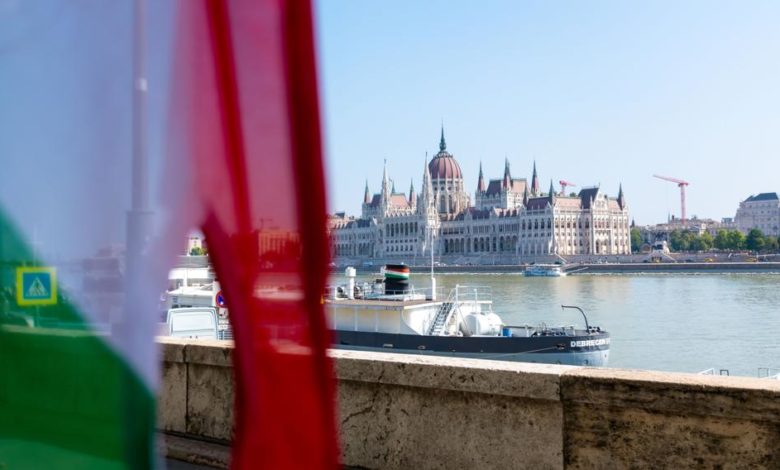
Sunday's parliamentary elections in Hungary will decide the fate of the EU, say German publicists. Brussels hopes for a change of power and the lifting of the blockade used by Prime Minister Viktor Orban for years. According to commentators, it is necessary to abolish the unanimity rule in the EU.
“It's time for a change of power,” writes “Handelsblatt” on Friday. According to the newspaper, the parliamentary elections in Hungary will be a referendum on Orban. In the election campaign, the Prime Minister uses the well-known tactic of looking for an enemy. This time he is allegedly defending the country against Ukraine. “Fewer and fewer people fall for this trick,” said Carsten Volkery, the author of the comment.
In his opinion, the possible victory of opposition leader Peter Magyar will not be an ordinary change of government. “During his 16-year rule, the autocrat Orban changed the state and society so much that his defeat will be a turning point comparable to 1989,” we read in the largest German economic newspaper.
As Volkery writes, the elections will determine Hungarians' attitude towards the European Union. Their results will determine whether the country will cooperate constructively with the Community or remain isolated, cut off from EU funds.
According to the commentator, Orban has grown fond of the role of a “troublemaker” in the EU over time. An example is the blocking of a loan for Ukraine in the amount of EUR 90 billion. Orban's goal is to paralyze the Community, which is in line with the policies of US President Donald Trump and Russian leader Vladimir Putin.
“The elections will decide the fate of Europe,” writes “Handelsblatt”. Orban's defeat will mean abandoning the current anti-EU course. It is not known how Magyar will fare, but one thing is certain – “it cannot be worse than under Orban.”
After the elections, Europeans must make sure that no one can use a permanent blockade in the European Council like Orban. The German government is right to seek to limit the range of topics in foreign policy on which unanimity is necessary. “The EU must decide by qualified majority voting if it wants to be able to act on the world stage. This is a lesson from the Orban era,” we read in the conclusion of the commentary in Handelsblatt.
“Frankfurter Allgemeine Zeitung” points out that “Orban's services” to Putin have been a serious problem for the EU for a long time. Leaks probably coming from Eastern European intelligence sources show “how low Orban stooped to Putin.” It is no coincidence that information about this surfaced shortly before the elections. “It gives the whole thing an unpleasant aftertaste,” said the commentator. The decision to remove Orban from power should be left to Hungarian voters. All the more so because such intelligence stories provide little benefit and may even cause harm – we read in “FAZ”.
“The EU hopes for a change of power in Hungary,” writes “Tagesspiegel.” “Viktor Orban has no inhibitions. In the decisive days before the elections, the Hungarian Prime Minister attacks the EU mercilessly – he insults politicians, shouts about an alleged dictate from Brussels and does not hesitate to repeat conspiracy theories about Ukraine. EU representatives remain stoically silent,” we read in “Tagesspiegel”.
The EU has little to offer people: it is paralyzed by the economic crisis, is under pressure from Trump and has no common response to the threats from Russia. The responsibility lies with the Hungarian Prime Minister, who has been blocking Brussels' decisions for years, explains the commentator.
“Tagesspiegel” points out that all previous attempts to tame Orban have ended in failure. “Now Brussels hopes for Orban's defeat in the elections and the rejection of his autocratic system. By limiting freedom, democracy, the rule of law and the protection of minorities, Orban has struck at the very foundation of the EU,” we read in the article.
The defeat of right-wing populists in Hungary would also be a “signal to France and Poland.” “If the extreme right wins in these countries, it will probably be the beginning of the end of the EU in its current shape,” warned the commentator.
“Mismanagement, corruption and fighting with the EU have turned a country that was once a role model into a country of special concern,” writes Mathias Brueggmann about Hungary in “Tageszeitung.”
“Hungary is a mafia country, with Orban at the head,” the author quotes Magyar, the leader of the Hungarian opposition. Orban's economic policy has led to an increase in food prices by 80% since 2019. – writes the author, citing Hungarian experts.
According to Brueggmann, Hungary is the leader only in terms of the number of suicides and corruption. For the fourth year in a row, Transparency International ranks Hungary as the most corrupt EU country.
Brueggmann draws attention to the increasing problems of German companies operating in Hungary.
“We actually don't know of any German companies that operate in strategic areas in Hungary and don't have problems,” the author quotes Philipp Hausmann, deputy head of the Eastern Commission of the German Economy. “Under Orbán, Hungary has gone from being a country of miracles to a country requiring special care,” sums up the commentator of “Tageszeitung”.
“Wirtschaftswoche” confirms that the EU is counting on a change of power in Hungary, stipulating that the EU blockade and Russia's influence in Eastern Europe will not disappear automatically after Orban's departure.
“Orban's election campaign is characterized by dirty tricks, espionage and corruption in the structures of the state and economy. Orban is trying to use threats and slander to tip the scales in his favor at the last minute,” writes the weekly's commentator.
In his opinion, Sunday's elections are “about more than just the government in Budapest.” The Czech Republic and Slovakia are also moving towards right-wing nation states. They are run by “Moscow-friendly autocrats” who block the EU and limit its ability to act. Open Russian influence in Eastern Europe is being watched with concern in Brussels.
Brussels' hopes for a turnaround after the change of power in Budapest are overshadowed by the fear that Orbán's place will be taken by other politicians. Slovak Prime Minister Robert Fico has already announced that if Orbán loses, he will continue his policy.
In order to weaken the front of countries hostile to the EU, Brussels, Berlin and other capitals are thinking about abolishing the veto. “We should abolish the principle of unanimity in the EU in foreign and security policy before the end of the current term in order to be able to act better in the international arena,” Wirtschaftswoche quotes the head of the German Ministry of Foreign Affairs, Johann Wadephul, adding that “the current system of unanimity does not work.”
Jacek Lepiarz (PAP)
lep/ap/