Iran increases its missile accuracy 9 times. The key is Russian special forces doctrine, not satellites

Satellites alone do not explain the ninefold increase in the accuracy of Iran's strikes — according to InformNapalm, the key is the doctrine of Russian special forces.
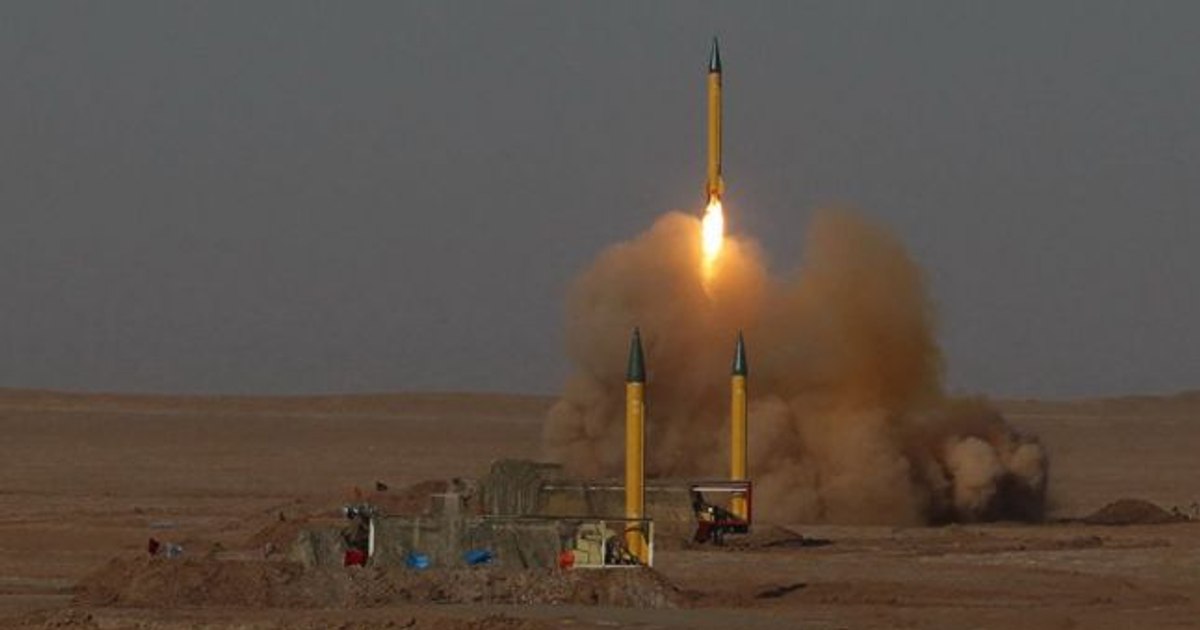
Iranian missiles/PHOTO:X
The hit rate of Iranian missiles increased from 3% to 27% in just a few weeks. The data transfer was real, but without the intervention of the Russian special forces, which linked the reconnaissance with the execution of the fire, such a rapid evolution would not have been possible.
The accuracy of Tehran's missile strikes against American and Israeli targets has increased ninefold in the weeks since the start of the conflict between the US, Israel and Iran — not as a result of better weapons, but due to the transfer of military doctrine from Russia, claims the voluntary intelligence community InformNapalm. Her analysis correlates confirmed intelligence transfers, battlefield data and Russian special operations forces doctrine to explain an increase in the effectiveness of Iranian strikes that mere sharing of satellite imagery cannot account for.
Military cooperation between Russia and Iran has steadily intensified since the start of Russia's invasion of Ukraine in 2022. Since then, collaboration has expanded on multiple fronts: Moscow reportedly provided Iran with information on the positions of US ships and bases, and delivered upgraded Shahed drones — known as Geran-2 — in March 2026. In parallel, Iran continues to support Russia with combat-tested drone technology in Ukraine, including against Western defense systems aerial.
Information sharing alone does not explain the jump in accuracy
InformNapalm notes that Russian satellites monitored at least 46 locations in 11 Middle Eastern countries between March 21 and 31, including US military bases and critical infrastructure. At the same time, other reports indicate that Russia has provided Iran with data on the positions and movements of US troops, ships and aircraft, as well as a list of 55 Israeli energy targets considered critical.
However, the images represent only raw material. According to InformNapalm, the success rate of Iranian ballistic missiles increased from about 3% in the first weeks of the conflict to about 27% by mid-March. Other analyzes show that the intensification of strikes coincides exactly with this period. Although cluster munitions can increase the area of impact, they do not explain target selection, timing of attacks, or the ability to overcome anti-aircraft defenses—elements that require a complex command and control system.
Special forces, the missing link
According to the analysis, Russian military doctrine is based on two interconnected systems: the reconnaissance-strike complex, intended for long-range high-precision weapons, and the reconnaissance-fire complex, which integrates tactical intelligence with artillery and close air support. Both work as a continuous cycle that includes identifying the target, transmitting coordinates, making decisions and executing the strike.
At the heart of these systems are Russia's special operations forces. Their role is to confirm targets, update coordinates, transmit data to command systems, adjust strikes and evaluate results. Without this link, InformNapalm claims, even the most accurate information cannot produce the desired results.
The analysis also mentions an offer attributed to Moscow during cease-fire negotiations: Russia would have offered to stop the transfer of information to Iran in exchange for limiting the intelligence support provided to Ukraine by the United States — an indication that such transfers exist.
Ukrainian model, exported
Russia tested this approach in Syria starting in 2015, where special forces coordinated air and missile strikes. Later, the doctrine was widely applied in Ukraine, including in repeated attacks on energy infrastructure.
The purported list of 55 Israeli energy targets follows the same logic: strikes on electrical infrastructure can generate chain effects at the state level, while parallel attacks on air defense systems reduce protective capacity and increase the effectiveness of subsequent strikes.
“We are witnessing a mutual integration, in real time, of the combat capabilities of authoritarian regimes“, concludes InformNapalm. “It's not just about exchanging data, it's about transferring a complete logic of war.”
The model of war that Russia now shares with Iran was built over four years of conflict in Ukraine. At the same time, Kiev's experience in countering it — from interceptor drones to layered air defense systems — has turned Ukraine into an increasingly sought-after partner by states interested in modern defense technologies.