How the increase in the price of metro travel could be avoided. Metrorex pays 186 employees who sell cards, even though it has hundreds of machines and a dedicated platform

Starting on May 1, a trip on the Bucharest metro will cost 7 lei, compared to the current 5 lei. It is the second significant increase in less than a year and a half, given that, in January 2025, the price had already increased from 3 to 5 lei. Officially, Metrorex justifies the price increase by the insufficient subsidy received from the budget. Unofficially, the company's figures raise the question: how much of the operator's financial shortfall is actually the result of its own inefficiency?
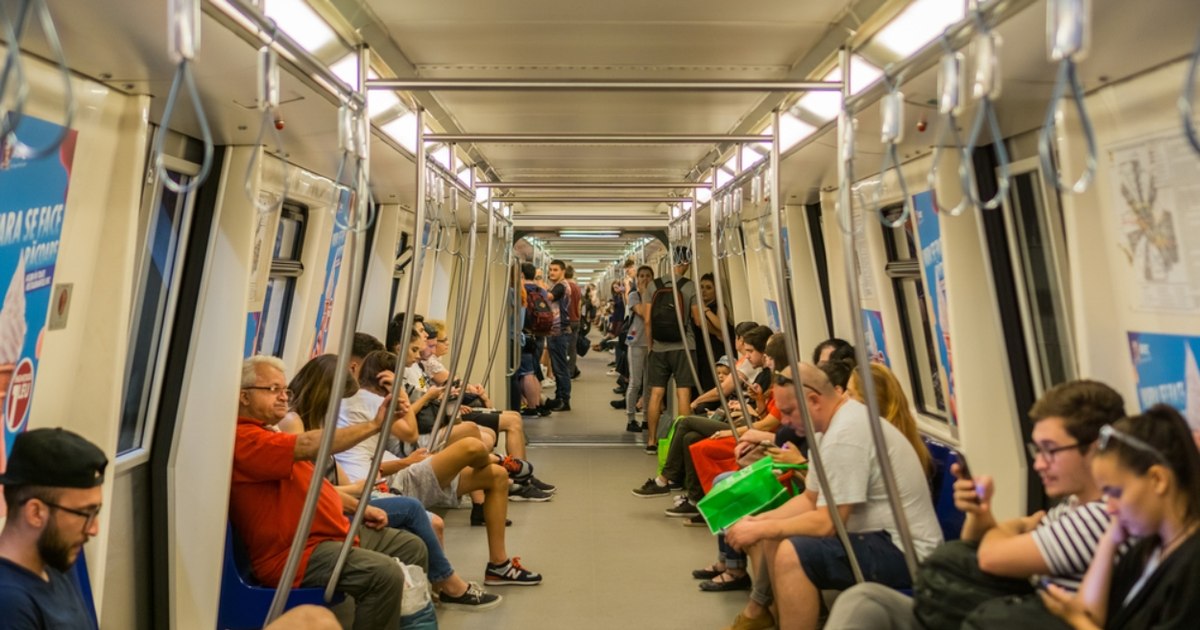
Metro travel has become more expensive. Photo: Shutterstock
Metrorex requested a subsidy of 1.2 billion lei from the Ministry of Transport for 2026. He received 761 million lei, i.e. 62% of the requested amount. The resulting funding shortfall, of over 451 million lei, was used as the main argument for increasing tariffs by approximately 40%.
According to the draft Order of the Minister of Transport, the new rates will be: single ticket 6.50 lei (compared to 4.5 lei), monthly subscription 126 lei (compared to 90 lei), annual subscription 1,170 lei (compared to 810 lei). The Metrorex-STB joint transport tickets will also be more expensive: a trip will cost 7 lei, the monthly subscription 140 lei, and the annual subscription 1,300 lei.
The company estimates that the increase will generate additional revenues of around 10.2 million lei per month from the sale of tickets.
Average gross salary in Metrorex
Metrorex's financial context is broader, however. The company, with approximately 5,000 employees, has budgeted personnel expenses of over 1 billion lei. The average gross salary of an employee is approximately 15,400 lei per month, i.e. approximately 9,000 lei net.
Of the 5,000 employees, 186 are solely responsible for selling cards at the counter. Their annual cost is approximately 35 million lei.
The problem is not that these people exist, but that they exist alongside an infrastructure that makes them redundant. Metrorex currently operates 269 card vending machines, last year launched an online platform for purchasing season tickets and installed new turnstiles that allow direct payment by card or mobile phone.
Adrian Negrescu: “A successive rise in price without any precedent at all”
The decision adopted by Metrorex and validated by the Ministry of Transport is harshly criticized by economic analyst Adrian Negrescu:
“Metrorex wants to increase the price of a metro ride from 5 to 7 lei. This extremely controversial decision comes just one year after the fare was suddenly increased from 3 to 5 lei. We are talking about a successive increase in price without any precedent on the passenger transport market in Romania. All these decisions are happening under the apparently passive eyes of the Ministry of Transport”.
Traveling by metro will become more expensive from May 1. How much will the tickets cost?
The price increase is not accompanied by any visible improvement in services, the analyst points out:
“Travelers face daily congestion, old trains without air conditioning and major delays in the delivery of new gaskets from public contracts. Thus, the only explanation for the price increase seems to be covering the salary level within the company”.
How travelers see the price increase
Metrorex's decision ignited discussions on Reddit, where Romanian users reacted sourly. One of the most appreciated comments is aimed precisely at the problem of sales employees:
“Those air pushers selling tickets, 3-4 per station, even though there are ticket machines? Those security guards who are retired and don't move anything? The bosses and bosses who have salaries as much as all of them put together? Don't they have to live too?”, writes one user, capturing in a few lines the widespread dissatisfaction with the oversizing of the company.
Another recurring theme in the comments is that of the subsidy from national public money for a service that exclusively serves Bucharest. “Exactly, only Bucharest has a metro. So why? does the Romanian pay it all from the Consolidated Budget?”asks a user, who also draws a parallel with the thermal agent in other cities. Another answers him simply: “The point is that the metro is supported by money from the national budget, not by money from the budget of Bucharest.”
The debate quickly degenerated into an exchange about who subsidizes whom at the national level, with arguments and counter-arguments about the share of Bucharest in the GDP and in the consolidated budget, without a clear consensus.
Beyond the Bucharest-province tension, several users proposed concrete solutions. One listed three alternatives to simply raising the price of tickets: reducing redundant stations, expanding advertising contracts and introducing corporate subscriptions concluded directly with private companies, whereby employees would receive transport settled at negotiated rates. “More cheap subscriptions not paid for directly by individuals = more $$ collected without affecting individuals” he argues.
What other cities are doing
The trend in Europe's major metropolitan transport systems is clear and has been for years. In Marseille, the entire metro network operates with only two points where passengers can interact with human staff, exclusively for card issues. All stations are equipped with vending machines. A similar restructuring has also progressively taken place in the large European airports, which have gradually given up human staff in the check-in and baggage claim areas.
If Metrorex followed the same model and resized the number of sales employees in relation to the already existing digital infrastructure, the savings would amount to tens of millions of lei annually. Not enough to fully cover the deficit of 451 million lei, but enough to temper the pressure on tariffs.