40 days after his father's death, Mojtaba Khamenei comes with a cryptic message about the Strait of Hormuz

Iran's new Supreme Leader Mojtaba Khamenei said in a written message on Thursday that Iran does not want war with Israel and the United States, but that the country will defend its “legitimate rights,” state television reported, according to AFP, CNN and The Guardian.
“Iran does not seek war and we do not want it,” Mojtaba Khamenei said in the message, read on television 40 days after his father, Ayatollah Ali Khamenei, was killed on the very first day of joint US-Israeli attacks on February 28.
“But we will by no means give up our legitimate rights, and in this regard we consider the entire resistance front as a united whole,” added Mojtaba Khamenei, apparently referring to the conflict in Lebanon, where Israel is at war with Hezbollah, the Tehran-aligned Shiite militant group.
Iran this week ended a fragile two-week truce with the United States and is set to begin negotiations with the Americans in Pakistan on Friday after US President Donald Trump backed off his threats to annihilate “an entire civilization”.
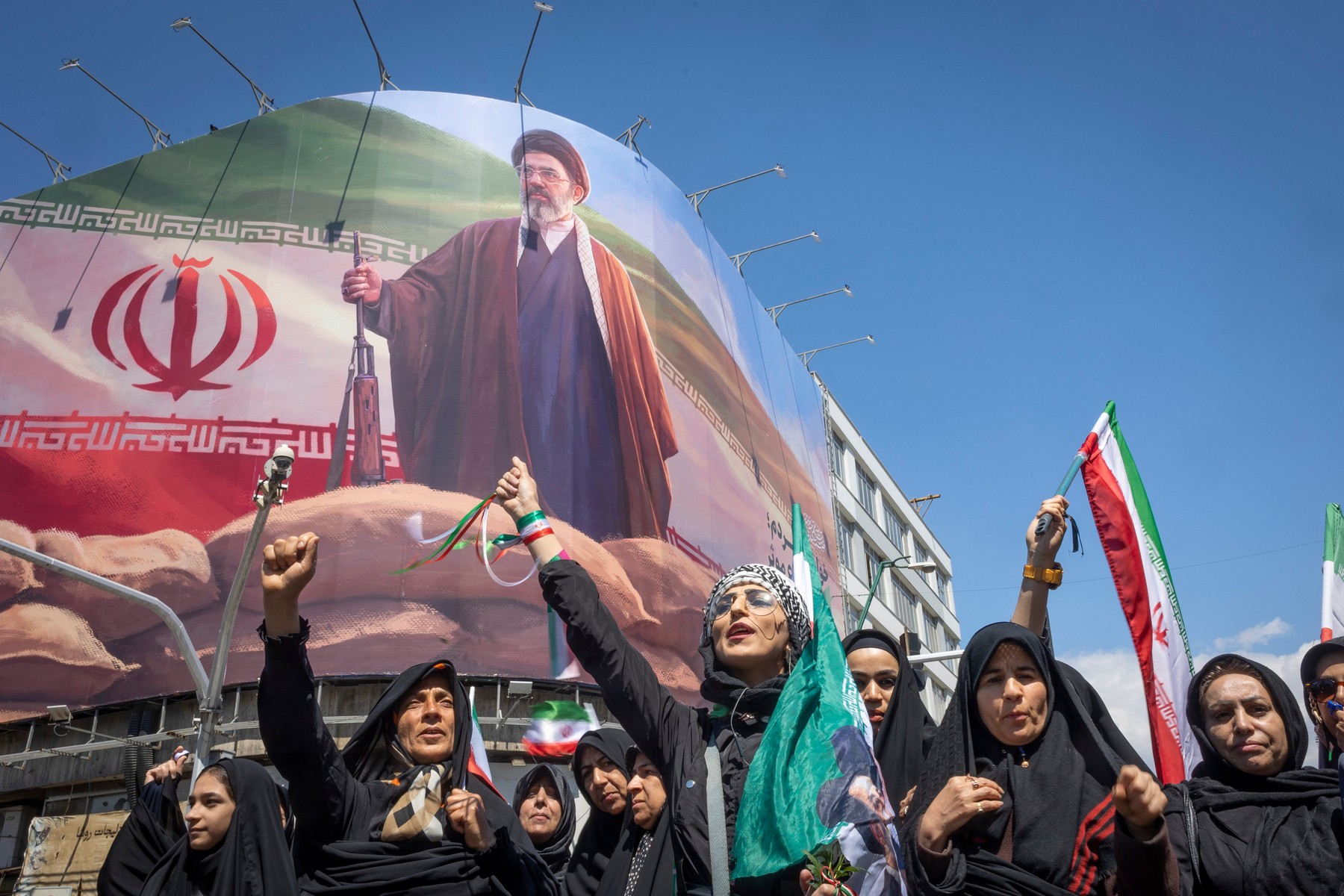
Mojtaba Khamenei, who has not appeared in public or on television since the start of the war, urged Iranians on Thursday “not to imagine that it is no longer necessary to take to the streets after the announcement of negotiations with the enemy.”
“Your cries in the public markets certainly have an influence on the outcome of the negotiations,” he assured.
In his statement read on state television, Mojtaba Khamenei also said Iran would take control of the Strait of Hormuz “to a new stage,” but did not elaborate on what that would mean.
Mojtaba also said Iran remains determined to “take revenge” for the assassination of Ayatollah Ali Khamenei and all those killed in the war.
“We will certainly demand compensation for every damage caused, as well as the price of the blood of the martyrs and compensation for the wounded of this war,” according to the statement attributed to Khamenei.
He also urged Iran's southern neighbors – the Arab states of the Persian Gulf – to beware of the “false promises of the devils”, adding that his country is still waiting for a “proper response” from them to demonstrate their goodwill and spirit of brotherhood.
In retaliation for the war launched by the US and Israel on February 28, Iran has since allowed only selective passage of ships through the Strait of Hormuz, but has agreed to reopen it following the ceasefire announced by Donald Trump.
On Wednesday, Tehran threatened to withdraw from the ceasefire agreement and block the strait again if Israel continued its bombing of Lebanon.
Only 5 ships crossed the strait on Wednesday, compared to 11 the previous day, before the armistice was announced.
The United Arab Emirates (UAE) says around 230 oil tankers loaded with crude oil in the Persian Gulf are ready to lift anchor as soon as the Strait of Hormuz is reopened.
Iran will allow only 15 ships a day to pass through the Strait of Hormuz
Iran will not allow more than 15 ships a day to pass through the Strait of Hormuz under the ceasefire agreement with the United States, a senior Iranian source said on Thursday, speaking on condition of anonymity, as quoted by Russian state news agency TASS.
The strategic strait, a strip of water just 34 kilometers (21 miles) wide between Iran and Oman, provides passage from the Persian Gulf to the Indian Ocean and is the main route for about a fifth of the world's supply of oil, liquefied natural gas (LNG) and other vital goods, including fertilizers, Reuters notes.
The strait has been de facto blocked by Iran since the Middle East conflict began, leading to a sharp rise in world oil prices.
Two maritime routes through the Strait of Hormuz, announced by the Revolutionary Guards
Earlier on Thursday, Iran's Revolutionary Guards Navy announced that ships passing through the Strait of Hormuz must use two alternative routes close to Iranian coasts, citing the possibility of “mines” on the usual route offshore, AFP and Agerpres reported.
“To be protected from possible collisions with me, in coordination with the Navy of the Islamic Revolutionary Guard Corps (…), until further notice, (vessels) will have to use alternative routes for traffic in the Strait of Hormuz,” Iranian media said, citing a military statement accompanied by a maritime map showing the itineraries south and north of Larak Island.
To enter the Gulf from the Arabian Sea, ships must pass between the Iranian coast and Larak, an area dubbed “Tehran's transit fee” by the maritime reference publication Lloyd's List. The route out of the Gulf passes south of this island, avoiding the usual route closer to the coast of Oman.
Recent crossings appear to have used this alternative route through Iranian territorial waters.
Between March 1 and April 7, there were 307 transits of ships carrying raw materials, according to data from Kpler, owner of the MarineTraffic website, which represents a decrease of about 95% from the peacetime.