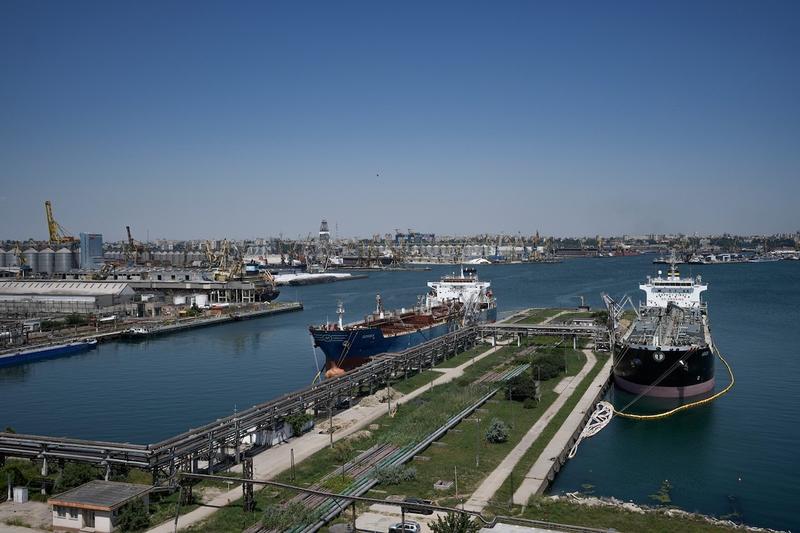
Russia will see revenue from its largest single oil tax nearly double to $9 billion in April as a result of the oil and gas crisis triggered by the United States and Israel's attack on Iran, according to Reuters calculations published on Thursday.
The Reuters tally is one of the first concrete evidence of a windfall for Russia, the world's second-largest oil exporter, as a result of the Middle East war.
The conflict that erupted on February 28 triggered the worst oil crisis in history, according to the International Energy Agency.
Tehran closed the Strait of Hormuz – a route through which about a fifth of global oil and liquefied natural gas (LNG) flows normally pass – after US and Israeli airstrikes on Iran pushed Brent crude well above $100 a barrel.
Russia's main source of income from its vast oil and gas industry is based on production. The customs duty on crude oil exports has been removed from the beginning of 2024 as part of the so-called “extended fiscal maneuvers”, a fiscal reform of the sector carried out over several years.
According to Reuters calculations, based on preliminary data on production and oil prices, the mineral resource extraction tax on Russian oil production will rise in April to about 700 billion rubles ($9 billion) from 327 billion rubles in March. Revenue is up about 10% from last April.
For the entire year 2026, Russia has budgeted revenues of 7.9 trillion rubles from this tax on the extraction of mineral resources.
High demand for Russia's energy exports
The average price of Russia's Urals oil rose to $77 a barrel in March, the highest level since October 2023, according to data from Moscow's economy ministry.
This was up 73% from the level of $44.59 per barrel in February and above the $59 threshold considered in the state budget for this year.
The Kremlin said on Tuesday that there is a huge demand for Russian energy from various regions, amid a severe global energy crisis that is shaking the fundamentals of oil and gas markets.
There are limits to this windfall for Russia, however, and economists inside the country have repeatedly warned that 2026 could be a difficult year.
The Ministry of Finance in Moscow announced on Wednesday that Russia recorded a budget deficit of 4.58 trillion rubles, equivalent to 1.9% of the Gross Domestic Product.
Also, Ukraine's attacks on Russian energy infrastructure, aimed at affecting Moscow's finances, have helped reduce revenues and threaten to lead to declines in oil production.
The size of this windfall for Russia will ultimately depend on the outcome of negotiations to turn the US-Iran truce into a lasting peace agreement.