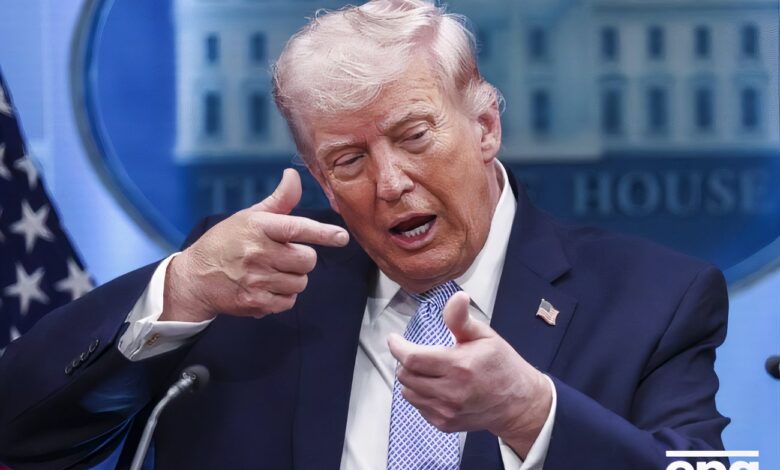
“How about we charge a toll on passage? I'd rather have that than let them do it. Why not? We're the winners. We won, okay? They were defeated militarily,” Trump said.
Trump insists that “free trade in oil” must be part of any potential deal with Iran. “I would say this is a very important priority,” he stressed.
Earlier, media reported that Iran was developing a plan to levy fees for passage through the strait for “neutral” countries. Free passage will supposedly be provided for friendly ones, while passage for hostiles will be prohibited altogether.
Context
Against the backdrop of the war between the United States and Israel with Iran, the shipping through the Strait of Hormuz is one of the most important routes for the world oil trade, through which millions of barrels of crude oil and petroleum products pass every day from the Middle East to Asia, Europe and the United States. Oil prices began to grow sharply.
On March 10, information appeared in the media that Iran allegedly began mining the strait. US Treasury Secretary Scott Bessent stated that the Navy The United States will escort tankers from companies that cooperate with the Americans through the Strait of Hormuz.
On March 14, Trump called on China, France, Japan, South Korea, the UK and other countries to send their ships to create conditions of openness and security in the Strait of Hormuz.
On March 17, White House adviser Kevin Hassett said that Tanker traffic through the Strait of Hormuz is being restored, and Iran's attempts to restrict shipping on this route have not harmed the US economy. On the same day, the head of European diplomacy, Kaya Kallas, proposed introducing an analogue of the “grain agreement” concluded during the Russian-Ukrainian war to unblock the Strait of Hormuz.