Trump keeps the world in suspense with his changing messages on the progress of the war with Iran

Global leaders are struggling to manage the uncertainty surrounding the end of the US-Israeli war against Iran, while conflicting signals from US President Donald Trump heighten fears of a possible escalation, keeping the world in a state of tension, the NYT reports.
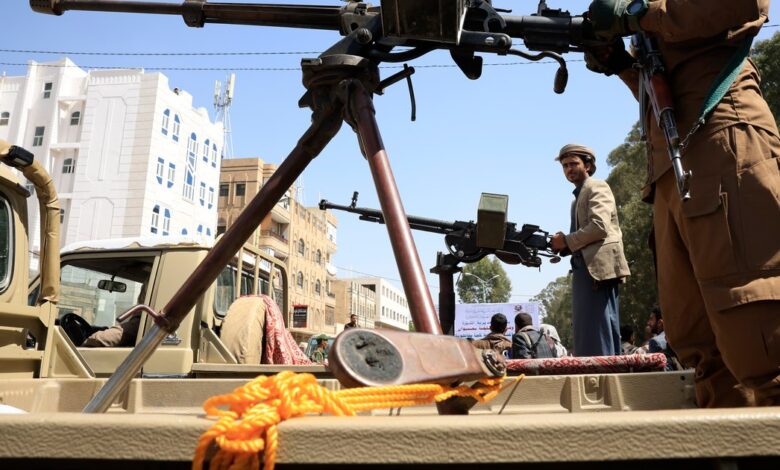
Houthi rebels mobilized forces to support Iran PHOTO EPA-EFE
At the heart of the concerns are the US president's wavering messages. Within days, sometimes even hours, Trump sent conflicting messages, alternately declaring the conflict almost over and warning of an escalation. He claimed that Iran had been “eviscerated”, but also suggested that the fighting could continue for weeks. He indicated that a major bombardment could begin in five days, then in 10 days, and finally at 8 p.m. EDT on Tuesday, highlighting a pattern that has puzzled allies about U.S. intentions.
This unpredictability has put governments around the world on high alert. If the US president's latest threats against Iran come to fruition – and the US strikes critical civilian infrastructure – the conflict could escalate rapidly in less than 24 hours. The suspense, perhaps deliberately created by Trump, is at an all-time high, and the world is anxiously awaiting what might come next.
Efforts to coordinate an international response. intended to prevent an uncontrolled escalation of the war, have so far produced limited results. A virtual meeting of diplomats from more than 40 countries, convened by Britain, ended without concrete proposals, highlighting the difficulty of reaching consensus in an ever-changing context. Leaders in Europe and Asia have expressed frustration and concern over both the progress of the war and the uncertainty over Washington's decisions.
International reactions
South Korean President Lee Jae Myung warned that “the scars of war are expected to linger for a long time,” adding in another speech that “the order of peace and prosperity that has sustained the world is weakening.”
In Japan dependent on Middle Eastern oil exports, Prime Minister Sanae Takaichi signaled a more active diplomatic approach, saying he would try to initiate direct talks with Iran. European leaders, meanwhile, have been more openly critical of Washington's shifting stance. French President Emmanuel Macron noted that serious leaders “don't say every day the opposite of what they said the day before,” a jab at Trump's inconsistency.
Other officials took a firmer stance. Austria's Vice Chancellor Andreas Babler has rejected alignment with US strategy by refusing to allow US planes to use Austria's airspace: “We take no part in Trump's chaotic politics,” he wrote on social media, underscoring the country's commitment to neutrality.
Despite these criticisms, Trump and his advisers believe that unpredictability is a strategic advantage. However, in the current crisis, this approach seems to amplify anxiety amid a risky bet on the end of the war. His recent statements illustrate this tension: after asserting that Iran's military capabilities were all but destroyed—claiming that “their navy is gone, their air force is gone” and that their radar systems are “100 percent annihilated”—Iran shot down two US military jets, casting doubt on those claims.
Trump threatens to destroy Iran's power plants and bridges in four hours and says Iranians want to be bombed by US for freedom
Trump takes a threatening tone
The president's rhetoric has also intensified in tone. In a social media post, he threatened to target civilian infrastructure, including power plants and bridges, if Iran did not reopen the Strait of Hormuz, warning: “You will experience Hell — JUST WATCH!” In another statement, he said, “If we don't make a deal, I'm going to destroy everything there,” and then threatened to bomb “every power station and every other facility in the entire country.”
Such threats have drawn harsh international criticism. António Costa, president of the European Council, said: “Any targeting of civilian infrastructure, especially energy facilities, is illegal and unacceptable,” adding that “escalation will not lead to a ceasefire and peace.”
Iran responded with its own warnings, promising retaliation that would be “much stronger and far-reaching,” according to state-affiliated media.
Behind the scenes, diplomatic efforts continue. US media reported on Monday that Pakistan had proposed a 45-day ceasefire and reopening of the Strait of Hormuz, but neither Washington nor Tehran responded immediately.
Talks between allied states focused mainly on limiting the economic impact, particularly on global energy supplies
However, concrete actions remain limited. British Foreign Secretary Yvette Cooper stressed the need for “diplomatic pressure” and “coordinated economic and political measures” so that Iran fails to “hold the global economy hostage”, without detailing specific steps.
Using the often ambiguous language of diplomacy, an official statement only emphasized the intention to “continue discussions”.
At the same time, many countries, including Britain, ruled out military involvement.
In the following days, British Prime Minister Keir Starmer held talks with the leaders of Germany, Italy, Kuwait, Ukraine, as well as representatives of the European Union and NATO. According to British government communiqués, all these discussions had similar conclusions, focused on continued cooperation and coordination.
A truce seems unlikely under Iran's “maximalist” peace plan. Trump ups the ante: Threats to destroy power plants
“The Prime Minister and the Crown Prince welcomed yesterday's meeting convened by the Foreign Minister on a viable plan to reopen the strait,” said a statement referring to the conversation between Keir Starmer and the Kuwaiti Crown Prince. “They agreed to continue to collaborate in this direction and to maintain close contact in the coming weeks.”
Trump has made a series of contradictory statements regarding the Strait of Hormuz. In a speech on Wednesday, he gave the impression that he was not too worried about the closure of this strategic route “When this conflict ends, the strait will naturally reopen. It will simply open naturally.”
Just days later, on Sunday, the US president posted a 44-word profanity-laced message on social media in which he threatened to bomb Iran's power plants and bridges, attacks that in most cases would constitute war crimes under international law. Trump called Iran's leaders “crazy bastards” and demanded they reopen the “damn Strait” to international shipping by Tuesday or risk hell.
These developments show a gap between the need to quickly defuse the crisis and the ability of global leaders to respond in a way that tips the balance.
For now, the world is in a state of tense wait-and-see amid uncertainty over whether the coming days will bring negotiations, escalation or another abrupt change in strategy.