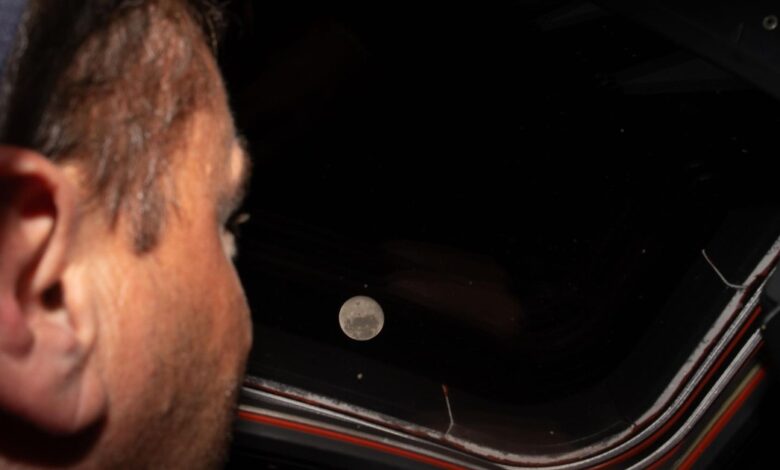
On the sixth day of the Artemis II mission, April 6, 2026 at 00:47 Polish time, the Orion capsule with a four-person crew on board disappeared behind the Moon. Commander Reid Wiseman, pilot Victor Glover, Christina Koch and Jeremy Hansen entered a zone where no radio wave or laser could reach or return from Earth.
Read also: Donald Trump talked to the crew of Artemis II. There is an invitation
For the astronauts, it was a moment of profound isolation. Each of them was left alone with their thoughts, gliding through the darkness of space, hundreds of thousands of kilometers from the nearest group of people. Even before takeoff, pilot Victor Glover spoke thoughtfully about this experience: “When we are beyond the Moon, out of contact with the rest of the world… let it be an opportunity for prayer, hope and good thoughts.”
Astronaut Christina Koch looks out from the deck of the Orion spacecraft.
|
NASATV
On Earth, at Goonhilly Station in Cornwall, the team tracking the flight reacted with a mixture of tension and excitement. Technology chief Matt Cosby openly admitted: “We'll be a little nervous when they go away… and then very excited when they come back.” This was no ordinary communications blackout – it was the first time in half a century that humans had experienced such complete silence during a manned flight.
Michael Collins of the Apollo 11 mission had a similar experience in 1969. He remained alone behind the Moon for 48 minutes and described it as “real loneliness” but also unusual peace. The Artemis II crew repeated this experience, only in the era of modern technology and with a completely new crew.
Why was there radio silence?
The radio silence during the Artemis II mission was not a system failure or error. It was created for a purely physical reason – the Moon completely blocked the line of sight between the Orion capsule and the Earth. No radio waves or laser signals could penetrate the rock mass of our natural satellite or orbit it. When Orion was behind the Moon, communication was cut off for 40 minutes.
Read also: They set out for the Moon. A moment later, a very mundane problem appeared
Under normal conditions, communication with the crew takes place using an advanced radio system supported by laser, i.e. optical, communication. Signals are received and transmitted by a network of ground stations, including the control center in Houston and the Goonhilly station in the UK. Thanks to this, contact is usually continuous and very stable, giving astronauts a sense of closeness to Earth even at huge distances.
This time, however, physics prevailed over technology. For the team on Earth, these 40 minutes meant a moment of tension. When the signal returned, there was relief and joy in the control center. The situation is expected to change in the future – the European Space Agency is working on the Moonlight program, which involves placing relay satellites around the Moon. Thanks to them, astronauts will be able to maintain contact almost all the time, also on the far side of the Moon.
The loneliest people – what they felt and what they did in silence
During those forty minutes, the Orion capsule with its four-person crew became the most isolated place humans have ever been. No communications from Earth, no support from Mission Control – just the four of them and the side of the Moon that cannot be seen by the human eye.
Pilot Victor Glover prepared the crew for this moment before take-off. “When we are beyond the Moon, out of contact with the whole world… let it be an opportunity for prayer, hope and good thoughts,” he said. Just before the signal was lost, he added warmly: “We will still feel your love from Earth. And to all of you there on Earth and around the Earth, we love you from the Moon.” These words capture the mix of focus and deep connection the crew felt despite physical isolation.
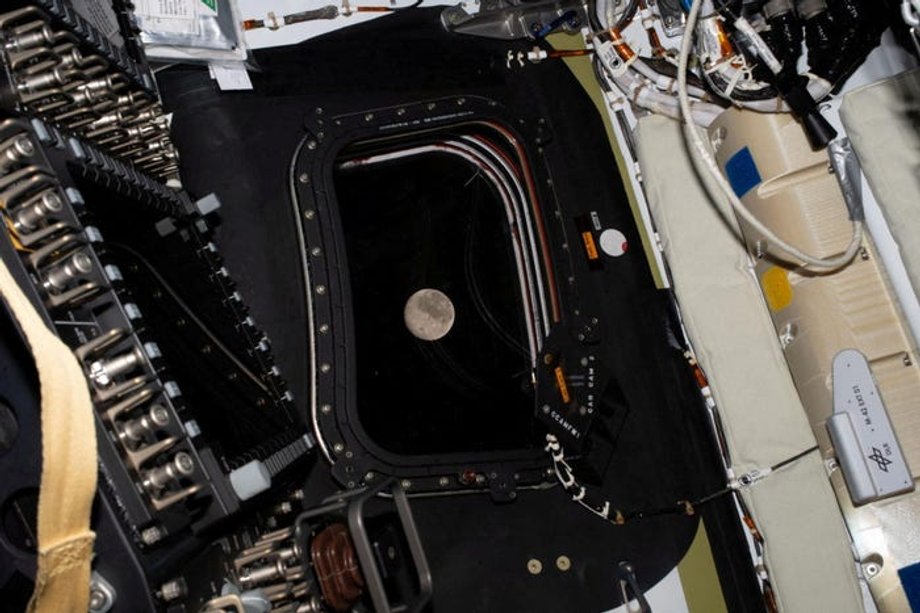
The moon from the window of the Orion capsule
|
NASATV
The team devoted the entire silent period to intense observations of the Moon. They took photos, studied the geology of the surface and gazed at its glow. They described the views as “absolutely spectacular” and approaching the Silver Globe filled them with what they called “lunar joy.” Before approaching the shortest expected distance (less than 7,000 km), they prepared the capsule's windows so that they could freely admire the landscape with the naked eye – from pole to pole – and record details that cannot be captured from Earth.
Read also: Suddenly they saw the Artemis II mission rocket. Footage from the plane is a hit on the Internet
This experience was reminiscent of that of Michael Collins on the Apollo 11 mission half a century earlier. During 48 minutes. beyond the Moon he felt “truly alone,” but at the same time he described an extraordinary peace and quiet that provided a respite from the constant bustle of mission control. There was no fear or loneliness – only deep reflection.
Pieces of the Moon that no one has ever seen before
Thanks to the distant flight at an altitude of approximately 6,000 550 km above the surface of the Silver Globe, the crew of Artemis II could see areas never before seen by the human eye. First of all, it concerns vast fragments of the far side of the Moon – the side that always faces away from Earth. Astronauts admired a thicker crust, higher elevations and much less traces of ancient volcanic activity than on the side visible from our planet. Christina Koch summed it up well: “The Moon we are looking at is not the Moon you see from Earth.”
The crew was the first in history to look directly at the huge Orientale Basin, a 965-kilometer-diameter crater that lies on the border of both “sides” of the Moon. From this perspective, they also saw entire polar regions and details of topography that the Apollo missions missed due to lower orbits and limitations in solar illumination. The higher trajectory allowed the viewer to cover almost the entire disk of the Moon from pole to pole.
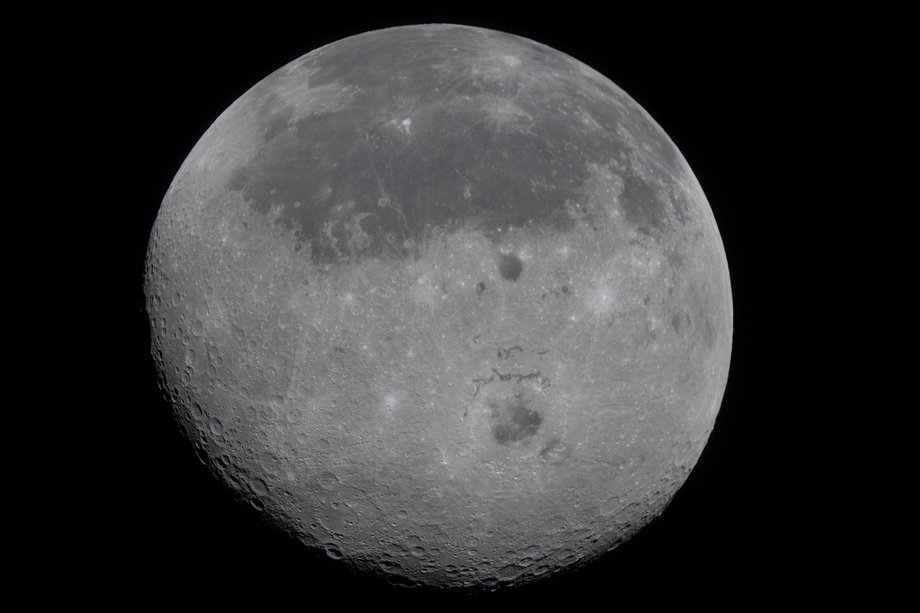
The meeting of the two “sides” of the Moon. From the perspective of the Artemis II crew, the upper part of the image is the area seen from Earth. However, we cannot see the lower part from Earth
|
NASA/JSC
Previously, these areas were only recorded by automated probes such as the Lunar Reconnaissance Orbiter. However, images from orbit do not convey the same as a vivid, three-dimensional impression of color, texture and changing lighting. Astronauts used this time to describe subtle nuances of color and texture that are of great value to scientists. As NASA's Dr. Kelsey Young explained, the human eye can capture details that cannot be easily measured with instruments, and these observations help understand the history of meteor bombardment and the evolution of the entire Moon.
Read also: “Good morning, Earth.” Amazing photos from the Artemis II mission have gone viral on the Internet
These new views provide invaluable information about the differences between the two hemispheres of the Silver Globe. On the invisible side, traces of the oldest impacts have been preserved, which were long ago erased on Earth by erosion and tectonics. Thanks to them, scientists can recreate periods that no longer exist on our planet.
Records broken by Artemis II
The Artemis II mission broke several important records in the history of manned spaceflight. The most important of them concerns the distance from Earth. The Orion capsule reached 406,000. 771 km from the surface of our planet. That's over 6,000. 600 km further than the record set by the Apollo 13 mission in 1970.
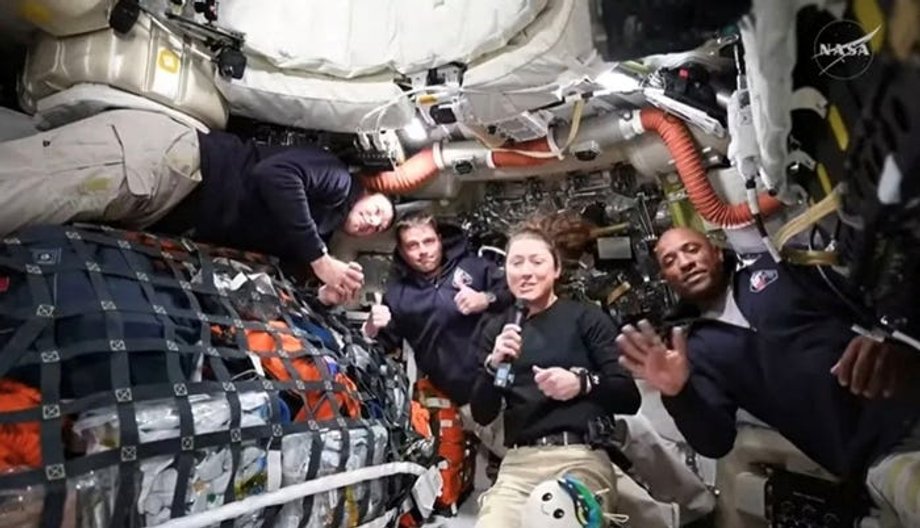
Artemis II crew
|
NASATV
This distance was possible thanks to a specially planned flight trajectory. Instead of taking the shortest route possible, Orion took a more up-front path. Thanks to this, he flew over the Moon at an altitude of about 6,000. 550 km from its surface. This allowed the crew not only to get as far away from Earth as possible, but also to view the Silver Globe from a completely new perspective.
During the entire 10-day flight, the capsule covered a total distance of over 1.1 million km. The crew also had the opportunity to observe a rare phenomenon – a solar eclipse as seen from space between the Moon and the Sun. Together, these elements make Artemis II a mission that in many respects surpassed the achievements of the Apollo program.