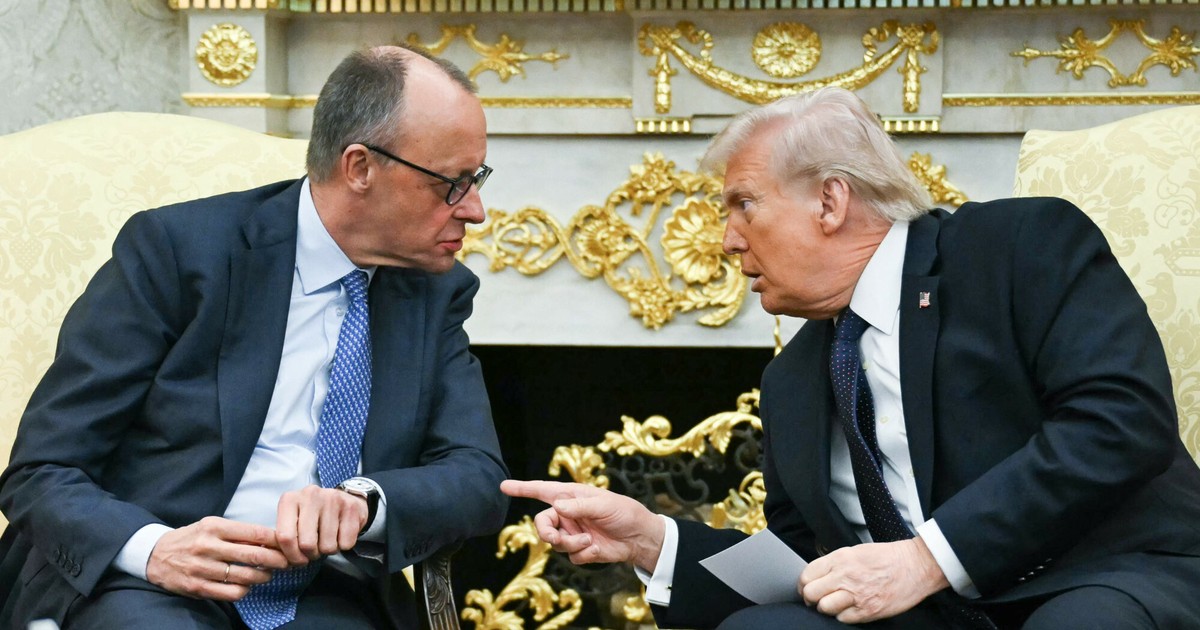
US President Donald Trump's announcement of plans to carry out attacks on bridges and power plants in Iran carries the risk of committing war crimes – told PAP Dr. Hab. Marcin Marcinko, assistant professor at the Department of Public International Law at the Jagiellonian University.
The American leader said on Monday that he would destroy power plants and bridges in Iran on the night from Tuesday to Wednesday if the authorities in Tehran did not respond to his ultimatum, in which he demanded the unblocking of the Strait of Hormuz and the conclusion of an agreement ending the war conflict.
During the press conference, Trump announced that US troops could destroy all bridges and power plants within four hours, from 8 p.m. to midnight Eastern European time (from 2 a.m. to 6 a.m. time in Poland). Asked by journalists whether planned attacks on civilian infrastructure could constitute a war crime, he replied: “no, not at all.” At the same time, he stated that “it is a war crime to allow Iran to have nuclear weapons.”
According to Dr. hab. Marcinko, “attacking bridges or power plants by troops does not necessarily amount to committing a war crime, but there is such a risk because these facilities are often treated as 'dual-use' objects – they serve the civilian population and the armed forces at the same time.”
– It is important to make a preliminary assessment of whether a given object is a military target or not, which is made during the planning of the attack and its duration. The command must carefully analyze the circumstances of the attack, the military benefits that can be derived from it, as well as the side effects that may occur as a result of the destruction of the facility. It must also react during the operation, because, for example, during an attack on the bridge, civilians may appear on the bridge and be used as human shields – emphasized the PAP interlocutor.
The lawyer reminded that in the art of war and in the law of armed conflicts there is a model of a reasonable commander, understood as a model of a person who rationally uses available information and avoids unjustified risks. It is therefore a hypothetical standard of behavior, judged not by actual actions, but by reference to what a reasonable and competent commander should have done in a given situation.
– The commander must also take into account other principles governing the conduct of hostilities, such as the principle of proportionality, which involves assessing whether the expected collateral damage to the civilian population will not be excessive in relation to the expected military benefit from the attack. (…) According to the law, a military benefit must not only be expected, but also direct and specific, i.e. it must be real in the context of a given military operation, Marcinko said.
– Let's imagine a bridge that is occasionally used by the army, for example for transport, but serves the local civilian population on a daily basis. An attack on such an object brings little military benefit, but causes significant side effects on the civilian population. In such a case, we are dealing with a violation of the principle of proportionality, he explained.
Asked whether this also applies to attacks on power plants, he replied that in such cases “one should take into account, among other things, the issue of long-term consequences, which may be tragic for the civilian population.”
He added that the commander must also take precautions to minimize losses among the civilian population, including: by prior warning of an attack, enabling evacuation, and by selecting appropriate types of weapons to avoid or limit collateral damage.
Marcinko emphasized that “a war crime is a serious violation of the law of armed conflict, in particular a deliberate attack on the civilian population or civilian objects, i.e. an action contrary to the rules of war, accompanied by the knowledge or intention of the perpetrator.”
Answering the question of who could judge American commanders if they committed war crimes, he pointed out that in practice such crimes could be assessed by national courts, internal mechanisms of the United States and international commissions and expert organizations. He added that the International Criminal Court would have a very limited role here because neither the US nor Iran is party to its statute.
By law, war crimes have no statute of limitations.
The Rome Statute of 1998, on the basis of which the International Criminal Court operates, is the international document that most fully defines war crimes.
Marta Zabłocka (PAP)
mzb/ bst/ mhr/