EU officials are urging national governments to avoid excessive support to offset rising energy prices and warn that the shock triggered by the Iran war could degenerate into a fiscal crisis. The economy commissioner says a raft of overspending to cushion the rise in prices would have “serious fiscal implications”.
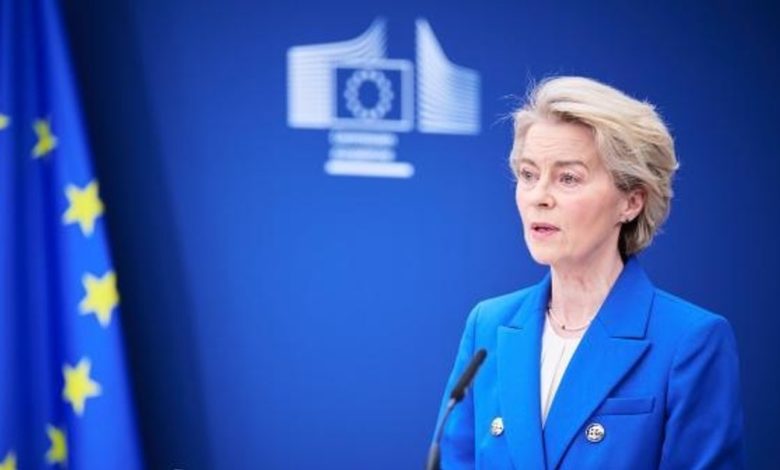
Ursula von der Leyen PHOTO: European Commission
The European Commission is insisting in discussions with member states that proposed energy subsidies, tax cuts and price caps be limited in time and scope, according to Financial Times sources.
Brussels is trying to avoid a repeat of the 2022 energy crisis, which fueled runaway inflation and rapidly growing deficits. “This is a unified effort from the Commission,” said the EU energy commissioner, Dan Jørgensen, to the FT, writes Mediafax.
“What happens in one sector of the economy can spread to the rest of society.”
Italy, Poland and Spain reduced fuel taxes. Other states are calling for the relaxation of EU state aid rules
Several countries, including Italy, Poland and Spain, have cut fuel taxes, while others have called for EU state aid rules to be relaxed. Rome is also pressuring Brussels to ease fiscal constraints to give capitals more leeway. The commission offered “technical advice and help to countries to develop these instruments and the policy instruments they wish to use within their fiscal leeway”said Jørgensen.
Attacks increased prices by 60%
US attacks on Iran have driven up oil and gas prices in Europe by about 60 percent and raised fears of diesel and jet fuel shortages. conflict “has a huge risk, unfortunately, of leading to higher inflation, with all the negative effects”, he said. The commission urged “coordination and caution” regarding any measures aimed at reducing pressures on energy prices, officials briefed on the talks between Brussels and national finance ministries said.
The third economic crisis for the EU in 6 years?
Officials fear this conflict will trigger the EU's third economic crisis in six years, after the Covid-19 pandemic and Russia's full-scale invasion of Ukraine in 2022, both of which prompted sweeping stimulus programs that drove up the national debt. The EU's gross public debt-to-GDP ratio rose from 77.8% at the end of 2019 to 82.1% in the third quarter of last year, according to the latest available data.
The first country in the world to declare a state of energy emergency: It only has oil reserves for a month and a half
“Specific government policies can help cushion the shock by reducing energy demand and compensating low-income households“, the President of the ECB, Christine Lagarde, said last month.
However, she cautioned that “broad-based and long-term measures' could backfire on them because they could feed “excessive” demand and could lead to inflation. She urged policymakers to focus on actions “temporary, specific and adapted”.
The EU calls for coherent and short-term measures
EU Economy Commissioner Valdis Dombrovskis told national finance ministers that only emergency measures should be adopted “coherent” and in the short term. He warned that excessive spending “would have serious tax implications“, given that the Covid-19 and Ukraine crises, along with a sharp increase in defense spending from 2022, have left governments with less fiscal firepower.”We have limited fiscal leeway, so whatever member states do must be temporary and precisely targeted.” Dombrovskis said late last month. Italian Finance Minister Giancarlo Giorgetti said last week that it is “inevitable” for Brussels to be more lenient in applying the rules that limit countries' budget deficits to just 3% of GDP. Rome has extended an excise “temporary” of 20 percent on fuel by May 1, and the country's official statistics agency said the 2025 deficit was 3.1 percent of GDP. “It is clear that, if the situation does not change, discussions at the European level will be inevitableGiorgetti stated.
Several states are calling for the EU to impose an EU-wide tax on energy companies
Finance ministers from Germany, Spain, Italy, Portugal and Austria urged Brussels on Friday to impose an EU-wide tax on energy companies to ease “the burden on the European economy and European citizens”. The letter to the EU called for a cap on electricity companies' revenues until 2022 amid rising gas prices caused by Russia's invasion of Ukraine. “Given the current market distortions and fiscal constraints, the European Commission should rapidly develop a similar contribution instrument at EU level”said the dignitaries.
Poland has reduced VAT and excise duties on fuel, which represents a monthly tax revenue loss of 1.6 billion zlotys (370 million euros).
The government plans to compensate for this with an exceptional tax on the profits of energy companies. The details of this new tax have not yet been published. Governments considering subsidies and other state aid to support affected sectors have been warned they must still comply with EU rules aimed at greening the economy and reducing dependence on fossil fuels, officials said. “The problem in a crisis like this is that sometimes we have to support and subsidize things that we wouldn't normally dream of, but it has to be done in the short term.” said Jørgensen. “Otherwise, people will freeze or production will stop.”