Even if in theory cash is being replaced by plastic and cashless payments, there are plenty of banknotes and coins in circulation. The National Bank of Poland constantly “prints” money so that Poles can make transactions.
The central bank does not physically print means of payment. This is a completely different institution, and the money production process is very complex and technologically advanced. From design, through advanced security, to quality control – each stage requires precision.
How is money created in Poland? The process of producing banknotes and coins
As NBP reminds, the National Bank of Poland is the central bank of the state responsible for monetary policy and price stability. “NBP has the exclusive right to issue, i.e. put into circulation, Polish currency notes. In Poland, currency notes are banknotes and coins whose denomination is expressed in zlotys and groszy,” explains NBP.
Polish banknotes are produced by Polska Wytwórnia Papierów Wartościowych SA “The entire production process is confidential, even such information as the shade of paint used or its manufacturer,” explains NBP.
Who really produces Polish money? Not everyone knows this
Money production is not only a matter of aesthetics, but above all, security and trust in the currency. Advanced security measures protect against forgeries, and quality control ensures that only high-quality items are put into circulation. Production costs also influence decisions regarding the issuance of individual denominations.
See also: Do you have money in your account? This is what the bank does with them
As the e-kursy-walut.pl website explains, the National Bank of Poland, as well as experts from the Polish Security Printing Works, are responsible for the graphic design and security of Polish money.
Production of banknotes at PWPW
|
pwpw / PWPW
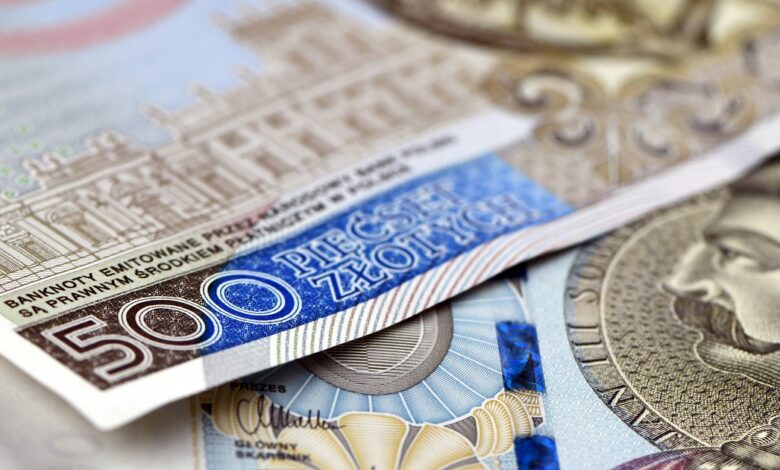
Currently, the banknotes we use to pay are from the “Polish Rulers” series, designed by the late Polish graphic designer Andrzej Heidrich. He was also the author of the earlier series “Great Poles”, which operated until the denomination in 1996.
The production of money by the National Bank of Poland is confidential. We reveal the secrets of PWPW
NBP explains that the banknote production process at PWPW is based on special paper. They are printed on cotton fiber paper with a security thread and a watermark. Printing is carried out using several techniques, and each banknote undergoes strict quality control. After cutting and packaging, they go to NBP warehouses, and from there to banks and ATMs.
The coins are produced by Mennica Polska SA. The process begins with the design, through the production of dies, preparation of metal discs, and ending with minting coins in mint presses. Each coin is checked for quality and defective pieces are destroyed.
How much does it cost to produce money in Poland?
As e-kursy-walut.pl explains, the cost of printing one banknote is 20-35 groszy, and producing a one-cent coin can cost up to 8 groszy – which is much more than its nominal value. In 2024, almost PLN 24 million was spent on minting one-grosz coins.
See also: How do banks create money out of thin air? We explain in simple words
The high production costs of the smallest denominations have been controversial for years. Despite this, hundreds of millions of new coins enter circulation every year, even though their production is unprofitable.
Not all Poles are aware that the Polish Security Printing Works (PWPW) also prints banknotes for other countries. The company carried out orders, among others: for Paraguay, Guatemala, Georgia, Honduras, Peru and the Dominican Republic, providing ready-made banknotes and secured paper for their production.