At first glance, Kherson looks like a completely ordinary large city in the heart of Eastern Europe. Soviet-era skyscrapers line the streets, and yellow buses drive people to work and home. There are theaters, a large cargo port, four hospitals and even a first-league ice hockey team. But appearances are deceiving.
The journey to Kherson itself is spooky. You have to drive over 10 km through a mesh tunnel stretched over the only highway leading to the city from the north. Burnt cars and trucks lie on the left and right, testifying to the times when this mesh tunnel did not exist yet. Russia attacked the highway with drones every day. Many wanted to see Kherson, but did not reach the city because they died on the way.
After arriving in the city, the destruction is already visible on the outskirts. We talked to people. And the image of Kherson that emerges from these conversations is terrifying.
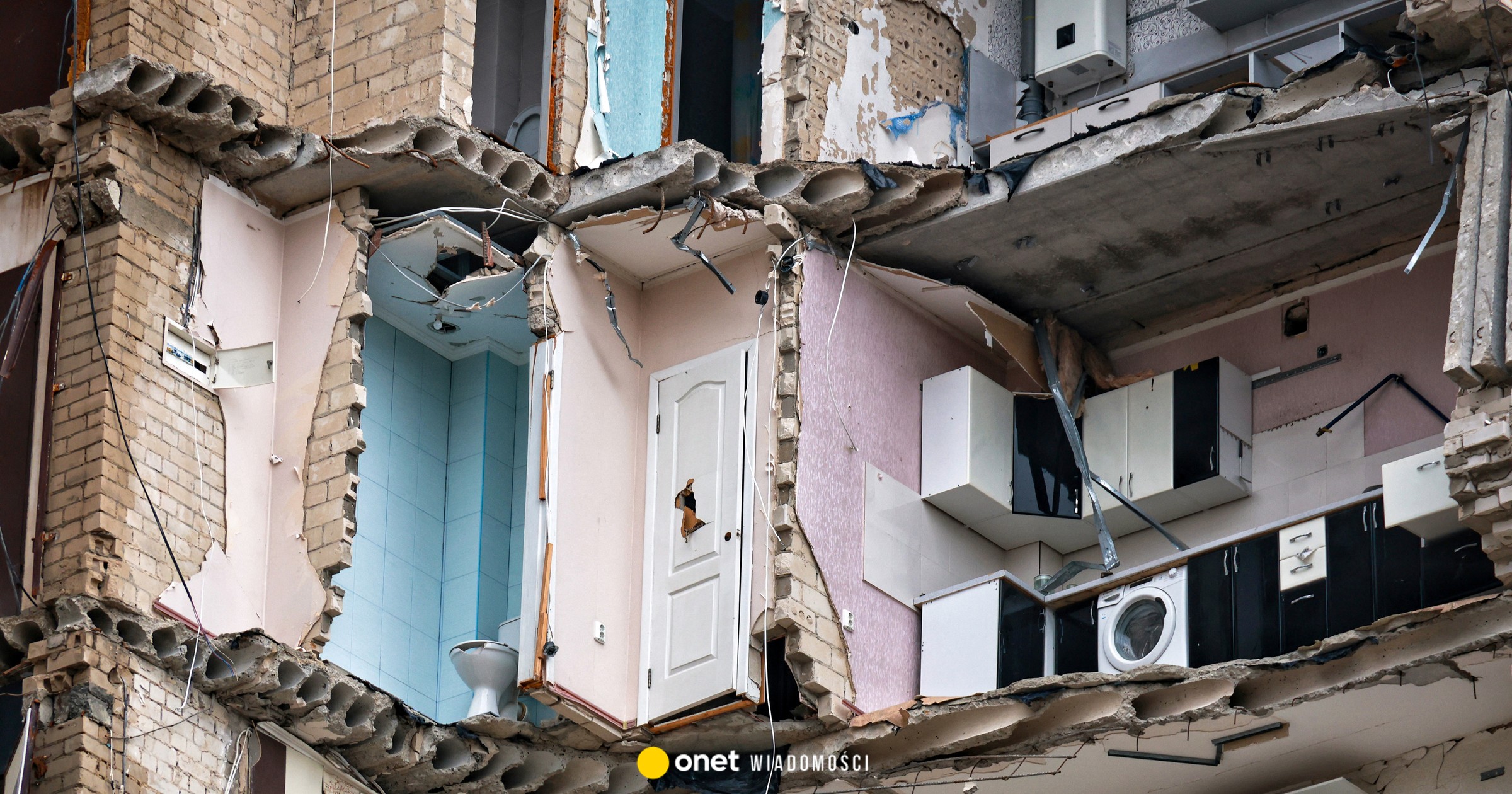
First you see the industrial plants, each of them completely destroyed by up to four Russian glider bombs. Some apartment buildings also have huge holes left by Russian rockets or bombs.
However, in most cases, the army Putina is using another insidious weapon against the city's inhabitants: kamikaze drones. Some are the size of a car, others are no bigger than a pot – but all have the same purpose: to bring death and destruction to everyone in the city.
The article continues below the video
If you look at the walls of the houses, you can see traces of fires, destroyed balconies, holes left by impacts and countless temporarily repaired windows barricaded with wood, in virtually every house.
It doesn't take long for the Russian instruments of death that are responsible for this destruction to appear. It is often the quiet hum that betrays the arrival of the deadly drones that Russia uses here 100 to 600 times a day.
People look up – at bus stops there are often 10 or 20 people in the same direction. They know that if the noise dies down or becomes quieter, they have been spared this time. If it becomes louder and more shrill, they themselves are the target of a Russian attack. Then, often the only chance to save your life is to jump towards the entrance to the building.
Families targeted by drones
Irina is close to tears when she tells “Bild” about the fate of her family. Her husband was killed at the front by a drone. But that's not the worst. Two of her children have also already been injured by drones, and not somewhere far away, but right next to them.
Yesterday I wanted to go out with my 15-year-old son. He hadn't dared to leave the house for several days – and less than five minutes later, Shahid's drone struck in the immediate vicinity and scared us half to death. My son no longer wants to go out on the street and refuses to leave the apartment
– he says, barely holding back his tears.
Sarina also lives here. Her adult children live abroad, but she she doesn't want to leave the city she loves. He shows us his old hairdresser, baker, favorite restaurant and gym. With the exception of the restaurant, which was completely boarded up, all establishments are closed after the buildings in which they were located were hit by drones of various calibers and partially severely damaged. For many, escaping from Kherson is the only chance to regain the meaning of life. Russian terror drove 230,000 people out of the regional capital. from 290 thousand inhabitants – only 60 thousand people still survive here.
The Kherson Regional Military Administration building lies in ruins after a Russian guided bomb attack, October 2, 2025.Nina Liashonok / NurPhoto / NurPhoto via AFP / AFP
A piece of childhood underground
One of them is Aleksandra, who designed clothes before the war. She has also taken her two children to safety in Europe, but she herself does not want to leave the city. Instead, she founded an organization that wants to give children who cannot escape Kherson hope and a bit of a carefree childhood amid this horror. In a secret place, deep underground, children can come to her every day after school, play, paint and even learn English. She calls it “toddler therapy,” although neither she nor her colleagues are therapists.
Here in the shelter, we have gathered children and parents to provide them with a safe place – a place where they can emotionally unwind
– says the 39-year-old in an interview with “Bild”.
Meanwhile, the Russian horror on the surface of the earth continues unabated. To better protect people, authorities have spread nets in many places. Entire streets thus become supposedly safe places – including the market square in the city center.
There we meet an elderly woman who does not want to give her name. He complains that holes keep appearing in the nets through which drones can fly. When, while talking, a huge explosion occurs nearby, he complains: “Look! Nobody will protect us from these big drones anyway.” And yet the Ukrainian military is trying everything: In mobile units of about four soldiers in each group, soldiers of the 34th Marine Brigade are hunting down Russian drones — before they reach civilians in the city.
“Lapa” is one of the drone hunters. — Today we are fighting all kinds of drones. Small quadrocopters, medium Molnija drones, and even large Shahids, he says. The fight against Russian-made fiber-optic-guided kamikaze drones is particularly difficultsays “Lapa”. – They do not appear on our radar, which means that we fight them only by hearing and sight – he emphasizes.
The problem is that even these state-of-the-art Russian killer drones have a range of 20 km, while Kherson is only 7 km by 7 km in size and is less than 5 km from the nearest Russian position. This means that even with the smallest combat drones, Russia can reach any point of the city.
One team – explains the commander of his unit – fights about 10 enemy drones a day. “Bild” accompanied “Lapa's” unit for one day, during which it changed from hunters to prey many times – but ultimately won all the duels.
Born in the shadow of the drone war
Despite all the terror, life in Kherson goes on. In the city's maternity hospital, which also moved its operations to underground shelters after a heavy Russian artillery attack in December 2025, we meet Svitlana, who gave birth to her daughter just 10 hours earlier.
We want to know why she didn't leave town. “I love Kherson,” she says, and in response to our question, she explains with a shrug that she's already used to drones. Still, he doesn't want to give up. She named her daughter Wiktoria – meaning victory. However, it is unclear whether her unwavering will to win will be enough to keep the city alive.
The clinic's chief doctor tells Bild that 23 babies have been born in his hospital so far this year – a 90% drop. compared to the pre-war period. “Someone dies almost every day because of drones, but this is a real disaster,” he says, staring into the void.
I’m Ashley Davis as an editor, I’m committed to upholding the highest standards of integrity and accuracy in every piece we publish. My work is driven by curiosity, a passion for truth, and a belief that journalism plays a crucial role in shaping public discourse. I strive to tell stories that not only inform but also inspire action and conversation.