What happens to the actions of defense companies in the context of the war in the Middle East

Defense companies grabbed the attention of investors at the start of the conflict in the Middle East, but a month after the outbreak, the market is adopting a risk-averse attitude in these sectors as well, sending shares down on both sides of the Atlantic.
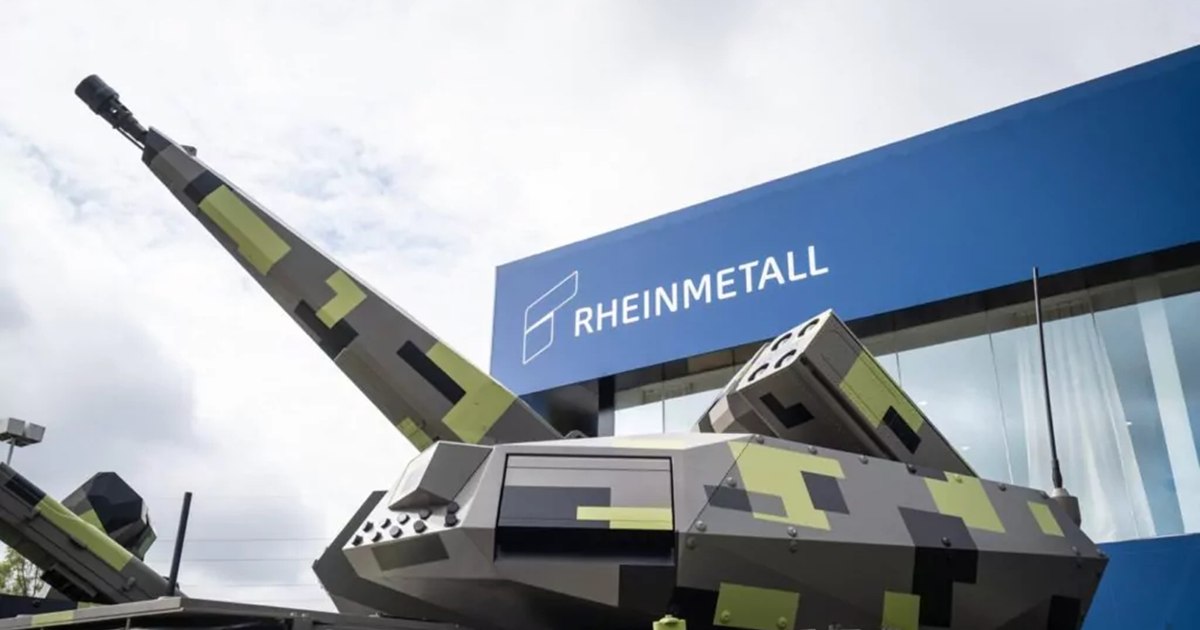
The main risk for investors, however, is the valuation of the companies. Rheinmetall's photo
Immediately after the outbreak of the conflict, the share price of Northrop Grumman rose by 6%, RTX gained 4.7%, L3Harris Technologies advanced by 3.8%, Lockheed Martin registered an increase of 3.3% and Boeing climbed by 2%, points out Bogdan Maioreanu, analyst of the trading platform eToro, stating that, in the initial movement caused by the conflict, investors focused on the companies most exposed to segments such as air defense, radars or electronic warfare.
In Europe, BAE Systems rose 6.1 percent, Hensoldt more than 5 percent in a broader defense sector rally, while Leonardo shares climbed more than 2 percent in the first few days since the conflict broke out. Markets anticipated higher military spending and more sustainable procurement growth across Europe, reinforcing the idea that demand expectations could remain high long after the immediate phase of the conflict.
However, the analyst says, as the conflict, which was initially hoped to be short-lived, reached almost a month, investor enthusiasm cooled. “In fact, since the start of the conflict, both European and US defense sector indices have lost initial gains and are now in negative territory. The STOXX Europe Targeted Defence, which brings together the most important European companies in the defense sector, has lost more than 7% since February 27, 2026. On the other side of the Atlantic, the similar index, the S&P Aerospace & Defense Select Industry Index, has lost more than 9% in the same period. Investors may have factored in long delivery times, but also growth in the sector over the past year, and this, combined with a risk-averse attitude in financial markets worried about the prospect of higher inflation, the oil crisis and weak economic growth, led to a correction“, points out the analyst.
Defense companies have orders for many years
Regardless of the current situation, the fundamental arguments in favor of the defense sector remain intact even if this conflict ends. An armistice or the end of the war would probably remove some of the short-term urgency, but would not remove the structural change in procurement priorities today. US and European governments are focusing on modern defense technologies and faster replenishment of depleted stocks. This could support multi-year orders for companies such as Lockheed Martin, RTX, Northrop Grumman, General Dynamics, BAE Systems, Rheinmetall, Leonardo, Thales, Saab and Hensoldt.
The main risk for investors is, however, the valuation of the companies. The largest defense stocks trade at a forward price-to-earnings ratio of between 21 and 39 times. In this range, Lockheed Martin has the lowest value of the ratio, and Rheinmetall has the highest. Another risk is that a quick cessation of hostilities could temper short-term trading dynamics. Year-to-date, however, both indexes are in positive territory, with STOXX Defense up 3.77% and S&P Aerospace and Defense up 7%. By comparison, the STOXX 600 has lost more than 3% since the start of the year, while the S&P 500 has lost more than 5%.
According to the latest eToro Retail Investor Beat survey, 22% of individual investors globally and 15% of Romanians consider international conflict to be the biggest threat to their investments. So far, the overall market message is clear: the defense sector could be not just a hedge against crises, but also a strategic growth theme linked to higher military spending and rearmament in an unstable geopolitical environment.