US has reached bottom of list of strategic targets in Iran, US officials warn: 'We will be caught in a conflict with no way out'

The Pentagon is running out of strategically important targets to hit in Iran as US President Donald Trump insists the United States will continue its military campaign against Tehran for three weeks, according to former and current defense officials cited by Politico.
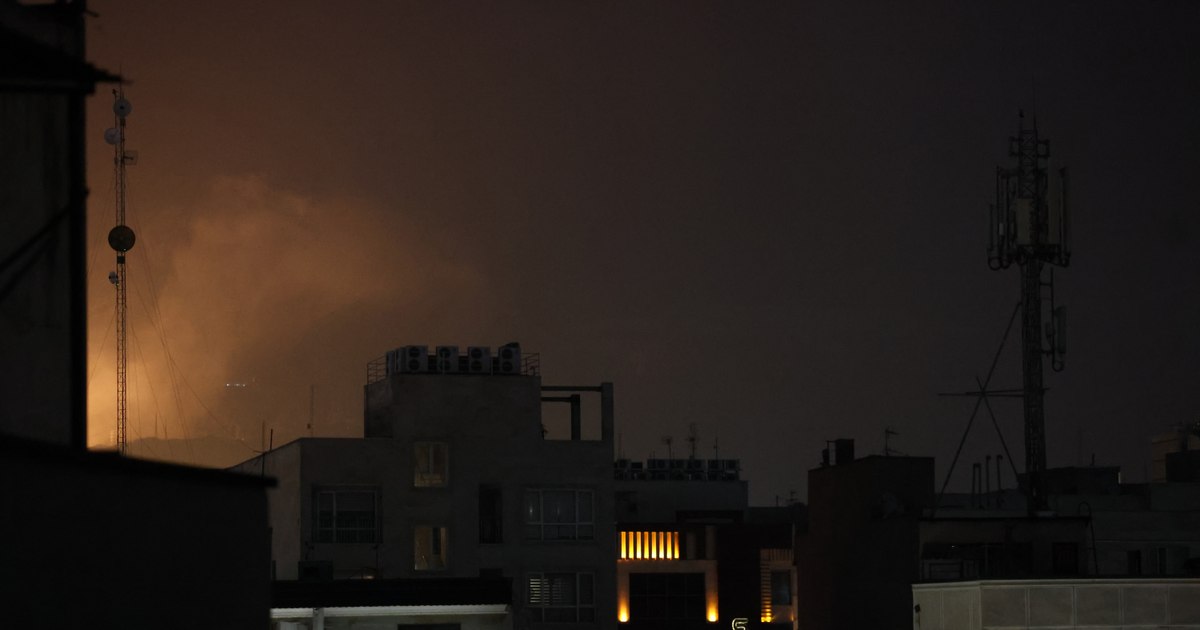
The US and Israel continue to bomb Iran PHOTO EPA-EFE
In an address to the nation on Wednesday, Trump said Iran's military forces, its defense industrial base and political leadership had been “absolutely decimated” by sustained US airstrikes. However, he promised to expand the bombing, saying US forces would “hit them extremely hard” in the coming weeks, without elaborating on the remaining objectives or targets.
That timetable is raising concerns within the defense establishment. Two current and one former Trump administration officials have warned that the US is rapidly running out of viable targets for airstrikes, complicating efforts to destroy Iran's remaining ballistic missile stockpile.
“The ones that are left are probably in fortified bunkers,” said a former Trump administration official, speaking on condition of anonymity to discuss sensitive military plans. “Otherwise they would have already been destroyed.”
The challenge reflects the waging of a different war. Instead of a conventional military confrontation, officials describe Iran as adopting a strategy based on economic pressure and resistance — seizing control of the Strait of Hormuz, a critical point for global oil shipping, as leverage that can be exploited as U.S. options shrink.
These dynamics could encourage Tehran to refuse negotiations on its nuclear program, regional security or the reopening of critical sea routes, potentially prolonging the conflict indefinitely.
“We can keep going through a list of less and less important targets and annoy them to the point that [Gardienii Revoluției] to have solid control of the government and feel entitled to wage a holy war against the US indefinitely,” said one defense official. “Under no circumstances can Trump simply walk away. He will be humiliated if he leaves; and we will be locked in a deadlock if he stays.”
But Trump shows no signs of giving up. On Thursday, he posted a video on social media showing the aftermath of an airstrike on what he called “Iran's biggest bridge,” adding that “many more” bombings are coming.
Still, officials warn that remaining options are limited without an escalation of the conflict. Many of Iran's most valuable military assets are now either destroyed or inaccessible short of a ground invasion, a step the administration has not publicly supported.
How the US changed its fighting tactics in the war with Iran
Tehran's strategy appears to be yielding some results. Energy prices have risen amid the instability, increasing political pressure on the White House to end the conflict and avoid domestic backlash.
The risk of a war without a deadline
Some officials fear the US could be locked into a long-term pattern of episodic military strikes – similar to Israel's approach to its regional adversaries, often described as “cutting the grass”. This strategy risks leaving Iran in control of key strategic assets such as the Strait of Hormuz, while the US consumes resources, with limited long-term results.
The administration's hope, according to another defense official, is that sustained pressure will force Iran to make concessions at the negotiating table. But, he says, if Iran gives in and accepts substantial concessions, “how do you force them to stick to the deal?”
The White House did not respond to requests for comment. The Defense Department referred questions to US Central Command, which also declined to answer questions about the remaining targets.
Trump also hinted at expanding the list of targets. In recent social media posts, he has indicated that US forces could strike civilian infrastructure, including power plants and water treatment facilities, if Iranian leaders do not speed up negotiations.
However, in Wednesday's speech, the US president stressed that US forces had avoided targeting Iran's oil infrastructure, “although that is the most accessible target of all”, on the grounds that the revenue would be needed for the country's reconstruction by a new leadership.
Operations around Kharg Island, Iran's main oil export hub, could be stepped up without directly hitting energy infrastructure. However, capturing or securing this site would likely require ground troops, a move fraught with risk.
“Iran will cause casualties, and that will be even more painful for the US,” a defense official warned.
The Pentagon has already pre-positioned tens of thousands of troops in the Middle East, which would make ground operations possible, especially to secure the strategic islands in the Strait of Hormuz. Such a move could help reopen vital sea routes but would almost certainly trigger negative political backlash in Washington, as elected officials in both parties remain reluctant to face another protracted conflict in the region.
Concerns about the administration's strategy are already beginning to surface in Congress.
“There's still no clear plan for what's next,” said Rep. Gregory Meeks (D-New York), a member of the House Foreign Affairs Committee. “The American people deserve more than vague declarations of success. They deserve a comprehensive strategy that prevents escalation, protects our interests, and pursues a lasting path to peace.”
As the air campaign continues, officials warn that the US is approaching a turning point, where military options are narrowing, risks are rising and the way forward is becoming unclear.