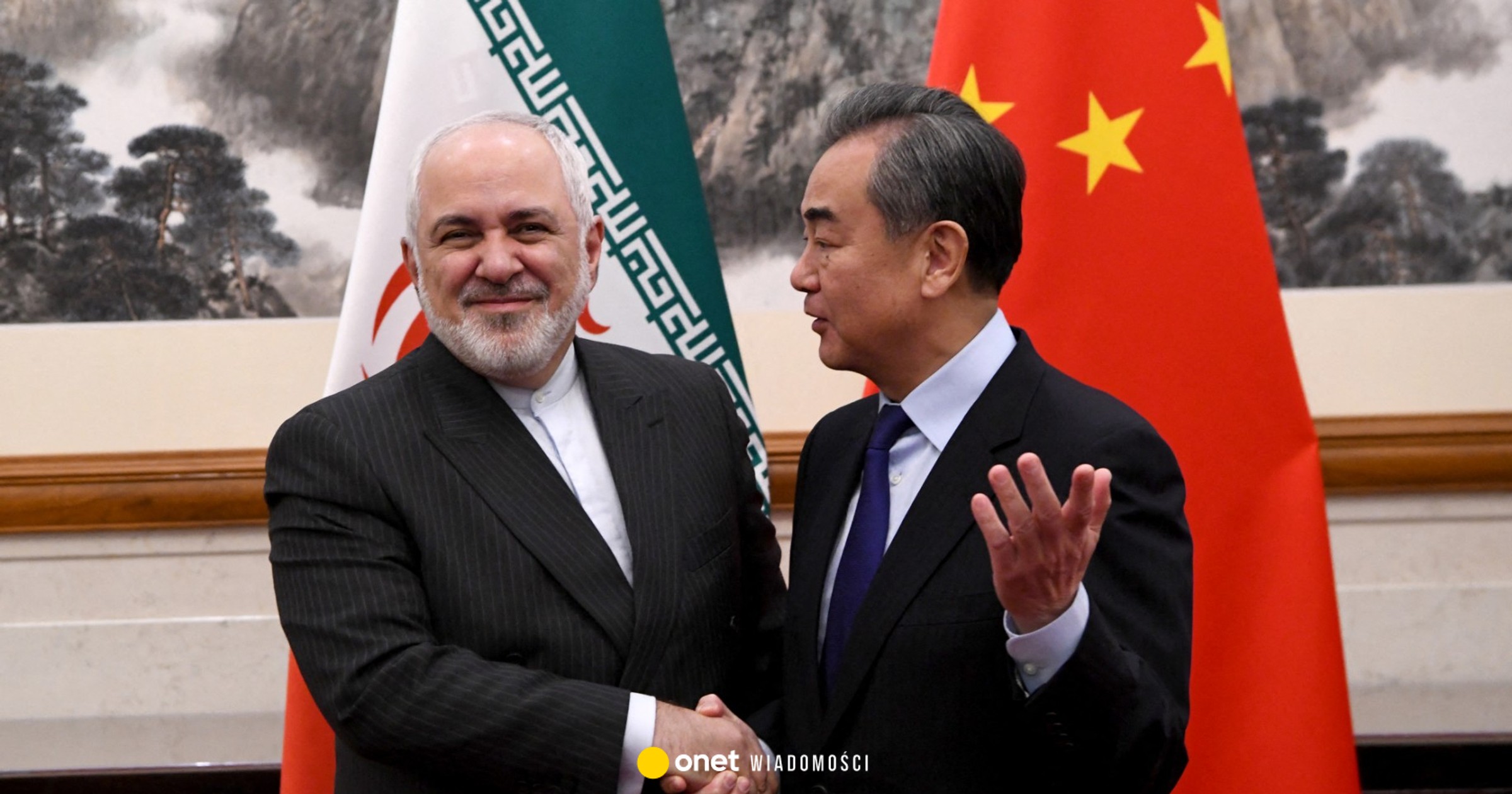
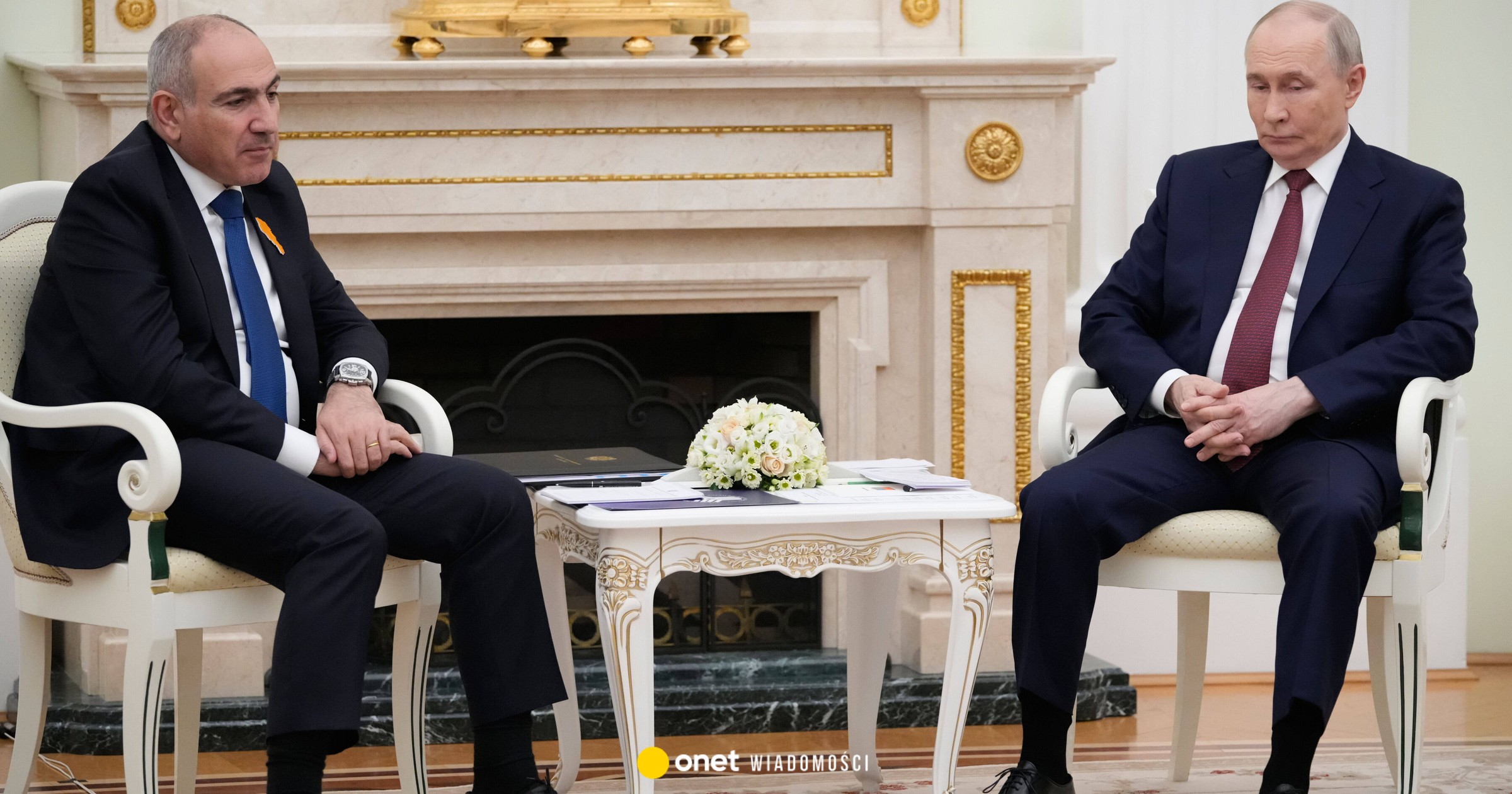
Five years ago, the Chinese communists and the Iranian ayatollahs entered into a strategic partnership for 25 years. As part of it, China pledged to invest USD 400 billion in Iran. (PLN 1.5 trillion). During the great autumn military parade in Beijing, the president of Iran was among the honored guests. Some analysts classify both countries — along with Russia and North Korea — as part of the “autocratic axis” that is challenging the democratic world.
Ayatollah Ali Khamenei, who was killed a month ago, visited China during his last trip abroad in 1989, where he was photographed at the Great Wall of China.
But what happens when the Iranian regime faces an attack by much stronger armies and an existential threat? The Chinese Minister of Foreign Affairs said that an attack by the United States and Israel is “unacceptable” – and even more unacceptable is “the murder of the leader of a sovereign state and an attempt to change the regime.”
Moreover, the authorities in Beijing remain silent and appeal mainly to end the fighting and restore stability. Why don't they help the ayatollahs? And what does their behavior actually say about China today?
Transactional alliance
First of all, it is worth noting that of the promised billions for investments, only a small part of this amount actually flowed to Iran. According to Yun Sun, who heads the China branch at the US think tank Stimson Center, “Tehran fears that China's influence [na Iran] may threaten Iran's sovereignty and independence, Beijing, in turn, is frustrated by the regime's lack of credibility and the low quality of state management.
Military cooperation between the countries is also limited, according to available information. In recent years, American secret services have been paying attention to Chinese supplies of components for Iranian missiles, drones, radars and to Chinese training of Iranian missile engineers. However, Beijing does not want to clearly violate the international sanctions imposed on Iran.
Even though Iranian oil is flowing to China, two basic indicators show the nature of this relationship. Iran exports 90 percent to China. its oil, but for China it constitutes only 12 percent. oil imports. “This is not a breakthrough partnership, but a very unequal relationship. For the regime in Tehran, China is of key importance. For Beijing, Iran is only useful: as a supplier of oil at preferential prices, as a diplomatic partner within the non-Western alliances BRICS and the Shanghai Cooperation Organization,” writes Stefan Messingschlager, a China expert from the Helmut Schmidt University in Hamburg, in an analysis published in the weekly “Die Zeit”. The Middle Kingdom is not that dependent on Iranian oil. Its lack can be compensated with oil from Russia.
Moreover, the main interest of the Chinese in the Middle East is not to support one particular regime. “What is decisive for them is not Iran itself, but the stability and functioning of the entire regional system, including the oil monarchies and the sea routes between them,” writes Messingschlager. The Middle East is an important hub on the so-called The New Silk Road, a global network of roads, railways and ports created by Beijing.
The article continues below the video
Therefore, China is tightening cooperation with many countries in the region. They signed an economic agreement with Saudi Arabia and buy more oil from them than from Iran. They built an industrial park in Oman, ports in Israel and the United Arab Emirates, and with Qatar, the state-owned company Sinopec concluded a gigantic contract for the import of liquefied gas for decades. Helium and other raw materials also flow through the Strait of Hormuz to East Asia.
You must also bear in mind the fact that Chinese alliances are different from Western ones. They do not contain mutual security guarantees that would force China to intervene to help its partners. Unlike Mao Zedong's time, China today does not seek to support groups with related ideological views. They adhere to China's basic principle of non-interference in the internal affairs of other countries. However, in practice this leads to a paradox, which Ahmad Syarif from Johns Hopkins University draws attention to in “The Diplomat” magazine, specializing in events in the Indo-Pacific region. Beijing protects authoritarian regimes against US-style regime change policies, but does not provide them with real military protection.
Chinese alliances are rather transactional — Beijing offers its partners market access and promises investments, but avoids taking responsibility for their security, which could involve it in distant wars. This approach also significantly limits Beijing's ability to influence the decisions of its partners — and to shape their governments, as the United States, for example, managed to do with its allies after World War II. A consequence of this approach is also the fact that the Chinese partners have not united into a unified strategic bloc.
Schizophrenic situation
For now, China is rather monitoring the development of the situation and rejecting Donald Trump's request to send warships to protect shipping in the Strait of Hormuz. Instead, they are negotiating with Iran for freedom of navigation for their ships. On Monday, Beijing confirmed that three Chinese ships had passed through the strait in consultation with Iran. The question is – what will happen if the war lasts a long time?
According to the already quoted Yun Sun, the pressure will increase on China to help the allied Iranian regime at least to a slightly greater extent and thus show the world that partnership with them works when their allies are in need. For example, by supplying technology and components that can be used to produce drones and other military equipment.
The war in Iran, as well as the US intervention in January in Venezuela, which became a key Chinese ally in the Western Hemisphere under Maduro, exposed China's inability to help allies in need. They have shown that they are not yet a superpower comparable to the United States, which can deploy its army anywhere in the world. As a result, this puts China in a schizophrenic situation.
On the one hand, they present themselves to the world as a guarantor of stability at a time when US policy under Donald Trump's leadership is turning into a source of threats that are difficult to predict. They are trying to take advantage of the American chaos, which puts Beijing in a better light and reduces concerns about it. On the other hand, this chaos is making Beijing very nervous. As Zongyuan Zoe Liu of Columbia University writes on the Foreign Affairs website: “The Trump administration's mistakes do not bring many benefits to China. Rather, they destabilize the system on which it still depends.”
According to her, Chinese leaders fear an unstable superpower that will be increasingly tempted to use force because this is the last sphere in which it has complete dominance.
I’m Ashley Davis as an editor, I’m committed to upholding the highest standards of integrity and accuracy in every piece we publish. My work is driven by curiosity, a passion for truth, and a belief that journalism plays a crucial role in shaping public discourse. I strive to tell stories that not only inform but also inspire action and conversation.