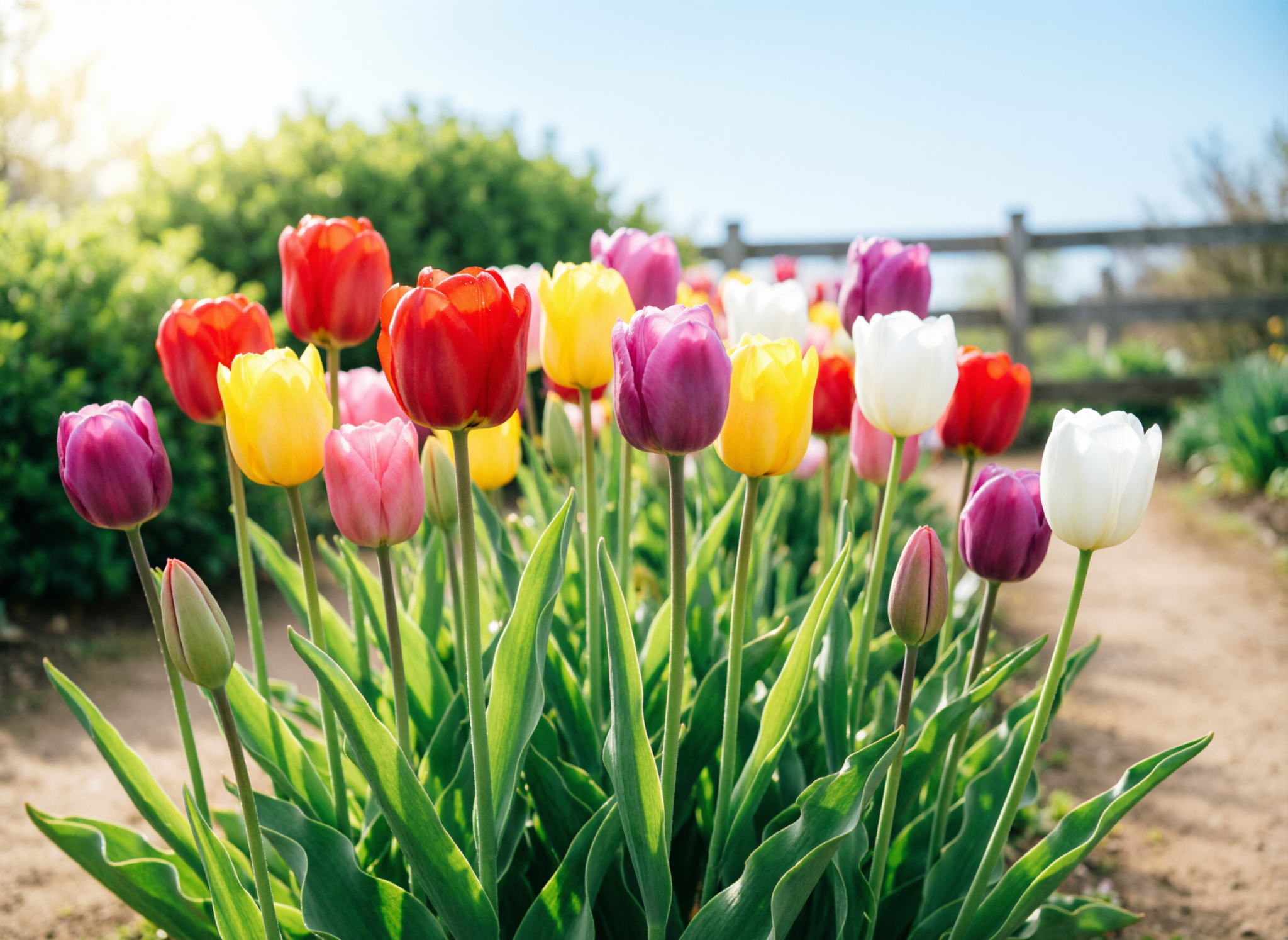
The snow has melted, the temperature is above zero, the first green sprouts of tulips, daffodils and other primroses have appeared in the flowerbeds. At this time, it is important not to miss the moment and help the plants start the season right. Four simple steps will help your tulips bloom brighter, longer and without disease. The author of the Zen channel “Sadoezh” (12+) talks about this.
1. Remove old mulch
As soon as sprouts become visible, remove the covering material or organic mulch from the flower bed. This will speed up the warming of the soil, reduce the risk of rotting of the bulbs and will not prevent lagging shoots from breaking through. Light frosts down to minus five degrees are not scary for tulips. If more severe frosts are expected, cover the bed with agrofibre.
2. Gently loosen the soil
After winter, the soil is compacted and does not allow air to pass through well. When the sprouts reach 3-5 cm, carefully loosen the surface between them. Do not touch the ground while the seedlings are very small; you can damage neighboring bulbs. At the same time, remove the first weeds, they compete for moisture and nutrition.
3. Prevent fungi
Moist soil and warm air create ideal conditions for the development of infections. It is better to treat the plants in advance. In cool weather, Hom, Skor or Bordeaux mixture are suitable. When the soil warms up, you can switch to biofungicides – phytosporin or trichoderma. Prevention will protect plants and preserve strength for flowering.
4. Feed with nitrogen.
Now tulips need nitrogen to grow green. The best choice is ammonium nitrate. It works even in cold soil and contains two forms of nitrogen: one is absorbed immediately, the other gradually. An alternative is ammophos, which also contains phosphorus for future flowering. Do not use urea yet, as it is only effective at soil temperatures above +10°C. It is better not to give organic matter to bulbous plants; they do not tolerate it well.
These four steps will take a little time, but will help your tulips bloom magnificently, for a long time and without disease.