A study published in August 2025 in Frontiers in Nutrition, titled “Lifestyle Interventions and Biological Aging: A Systematic Review of Dietary, Exercise, and Stress-Reduction Pathways,” shows that the way we live is directly reflected in the body's rate of aging. Diet, exercise, sleep and stress levels produce measurable changes in the processes by which the body maintains its vitality or, conversely, begins to fail.
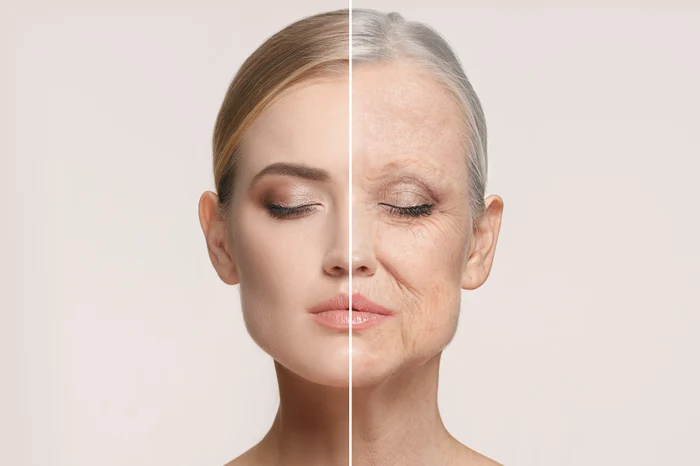
Photo credit: Shutterstock
The authors explain that daily habits can alter the way the body's internal systems work. A diet rich in vegetables, fruits, polyphenols and healthy fats supports metabolic and immune balance. Low-calorie diets or scheduled meals at fixed times change the way the body manages energy and influences biological lifespan.
The movement has equally clear effects. Regular exercise, whether moderate or short and intense, increases the efficiency with which the body produces and uses energy. In the studies included in the 2025 analysis, these changes appeared quickly, even after a few sessions, a sign that the body reacts promptly when it receives the right stimuli.
The psychological perspective: safety as a driver of longevity
“Today, science shows us that aging is not a program written in our genes, a calendar that runs automatically. We do, however, have a body that records every emotion, every relationship, every story told and untold in the family. We have a nervous system that makes its own calculations about how safe the world is. And these calculations shape how fast or how slowly we age. Those who age gracefully are, more often than not, those whose bodies he learned not to live in fear, but to stay safe,” says clinical psychologist Alina Anghelescu for “Adevărul”.
Polyvagal theory, she says, shows that each of us has an internal radar that is constantly scanning the environment. Radar does not use words and does not take into account reason, it perceives the sound of the voice, the gaze of the other, the atmosphere of a room, the rhythm of its own breathing. If this system perceives safety, the body enters the ventral vagal state, in which it regenerates, inflammation decreases, digestion works, and the heart relaxes. If it detects danger, real or transmitted through family stories or through its own traumas, the body goes into survival modes: fight, flight, freeze or collapse.
“And so begins, in silence, accelerated aging. Not through wrinkles. Not through age. But through the fatigue of a nervous system that has not known enough security. The people who age slowly are not the ones without stress. They are the ones who always return home to their bodies.” explains this.
In therapy, the psychologist says, the way one ages has its roots much earlier, sometimes generations before. Old age can be associated with retirement, decline, shame or, in some families, rebirth and freedom: first trips after 70, rediscovered passions, late creativity. All of these become inner maps that can limit or enable transformation.
“Meaning can be an emotional and biological anti-inflammatory,” says Alina Anghelescu. His observation brings to mind what Carl Gustav Jung noted, who considered the lack of meaning as one of the greatest diseases of modern man. A life without meaning gets old quickly, because the organism gets stuck in survival instead of staying in creation.
People who age slowly are the ones who know, in very different ways, what they live for. Those who remain curious, who allow themselves to transform, who maintain relationships that nurture and not hurt. Of course habits matter: good sleep, walking, regular meals, slow breathing, time spent in nature. But all this really works only when the nervous system has a minimum of safety.
“Aging is not the end of vitality. It's another chance,” says the psychologist. “Actually, aging is the pace at which we rewrite our story. It's when we can renegotiate old loyalties, leave behind scripts that no longer belong to us, and create a freer version of ourselves. Aging is not about loss, it's about reconfiguration. It's not the end of vitality. It's the beginning of another vitality. And maybe that's the real secret of those who seem to age more slowly, not fighting time but transforming it with meaning in friend.”
Alberto Villoldo's perspective: the “longevity experiment”
In the holistic area, Dr. Alberto Villoldo, anthropologist and shaman, talks about the fact that there are three species of mammals that “would not have death programmed into their DNA”: humans, whales and dolphins. His explanation starts from the observation that these species live long after they can no longer have offspring, and that this long period of post-reproductive life has a social role: knowledge transmission, coordination, community survival.
In an interview given “The Truth”Villoldo says that “humans, whales and dolphins are an exception because they can live another 40-50 years after they can no longer have children, precisely because they become keepers of wisdom.” He interprets this peculiarity as a “biological experiment of longevity”, in which these three species would be participants, unlike the rest of the mammals who live only as long as is necessary for reproduction.
Alberto Villoldo calls this difference “experiment” and suggests that conscious participation in it depends on how the brain works. From his perspective, the “control group” would be the usual way of aging: a lot, but with long years of decay and disease. Conceptually, he uses the metaphor of an alternative: a long, functional life followed by a short decline.
It states that psychosomatic health occurs when we activate neural networks in higher areas of the brain associated with calmness, collaboration, and the ability to regulate. Instead, remaining in a state of mind dominated by stress, fear, deprivation or self-criticism would reinforce old survival circuits, which “makes us sick” over time.
He sees here a convergence between neuroscience and shamanic traditions: man's ability to train his attention, breathing and inner state to move from fear to safety. This idea overlaps with what clinical psychologists describe and the results of recent studies on stress and inflammation: a properly regulated nervous system reduces the biological pressure of stress, which directly influences the rate of aging.
Villoldo is not talking about “immortality” but about a choice between two trajectories: a long and functional life or a long life accompanied by years of decay. The difference, in his interpretation, is related to how we use the brain's capabilities to create safety, meaning, and inner stability, components that medical research also shows influence long-term health.
“I do not regret getting old. It is a privilege denied to many”
In an article published in Clean Eating Magazine, American author Ann Louise Gittleman, a pioneer of the wellness industry with nearly 50 years of experience, explains why aging can become a manageable and strategic process. Her book, Radical Longevity, also published in Romania by For You Publishing House, relies on the idea that health is actively built, on several biological and behavioral levels.
Gittleman, now 76, says: “I do not regret growing old. It is a privilege denied to many.” And behind that statement are the seven rules of radical longevity they promote, a framework in which prevention, detoxification, cellular structure, the microbiome, and fascial flexibility work as an ecosystem.
A central chapter in the book looks at immunity as biological infrastructure, not as a motivational slogan. Gittleman argues that the body becomes more vulnerable to inflammation with age and cites recent research, including a Harvard review linking dry air to an increased susceptibility to respiratory infections, to argue for the role of micronutrients. She insists on vitamin D for immune and bone function, zinc and vitamin C for the anti-inflammatory response, quercetin for antiviral effects, and melatonin, which she calls “the master hormonal antioxidant.”
It also talks about exposure to heavy metals and their documented effects on the body. Gittleman cites research on the impact of aluminum, cadmium, and lead on cognitive function, bone density, and digestion. In this framework, checking the ingredients of antiperspirants, antacids, supplements or hygiene products becomes a reasonable practice to limit the toxic load.
Compounds called AGEs (Advanced Glycation End Products), formed when food is exposed to very high temperatures, are associated in his book with diabetes, kidney disease and cognitive decline. Nutrition research places them among the dietary factors that accelerate inflammation and oxidative stress. Reducing fried and ultra-processed foods, combined with a high intake of antioxidants and phytonutrients, lowers the AGEs load and supports metabolic function.
At the same time, the author discusses the balance between omega-6 and omega-3 fatty acids and states that a 3:1 ratio, present in hemp seed oil, supports the flexibility of cell membranes and hormonal communication. Along with this nutritional detail, he insists on hydration, sleep, and circadian rhythm as pillars of internal repair, no gimmicks and no quick promises.
In fact, Gittleman cites Dr. George Brewer of the University of Michigan, who discussed a possible association between the increasing use of copper in plumbing and the increase in Alzheimer's diagnoses in the 20th century. The author also warns about iron intake in postmenopausal men and women: “Iron overload with age is at least as worrisome as youth deficiency and just as dangerous.”
The practical recommendations they suggest range from testing drinking water to adjusting diets rich in copper or iron by adding zinc, IP6 or curcumin to reduce excess of these minerals in the body.
At the same time, Gittleman talks about the inclusion of probiotics in fermented foods and extends the discussion to the social realm: the quality of relationships, community, and support networks become predictors of longevity as important as nutrition.
Note: Article includes affiliate links. Commissions earned help support this site.