Government announces changes after wave of complaints about electronic ballot. The first measure

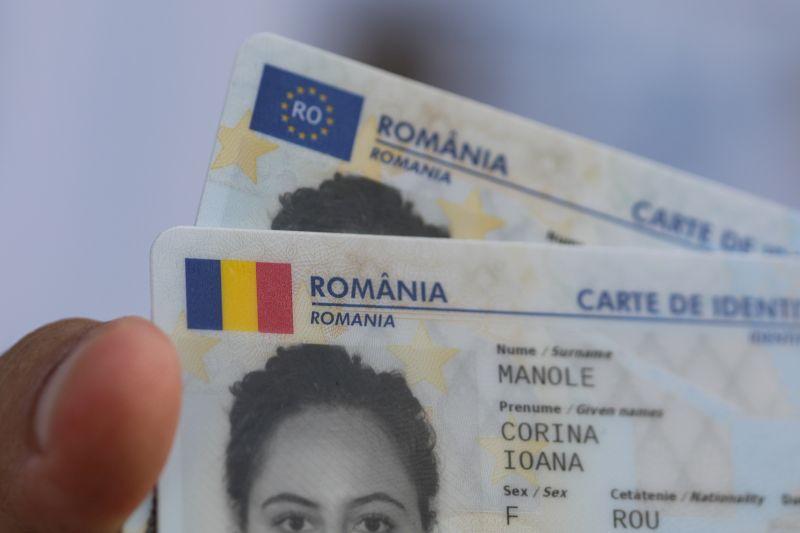
The government announced the first measure after the notifications received from citizens on the “Paperless” platform regarding the issuance of the Electronic Identity Card (CEI), in the context of more than 300 complaints from the “Passport and Identity Card” category.
The measure consists of a guideline issued by the General Directorate for Personal Records (DGEP), by which officials are obliged to check civil status data directly in computer systems, without requiring physical documents from citizens, the Government sent in a press release. The decision applies from March 25, 2026.
This comes after citizens complained that they were asked for documents such as birth certificates, marriage certificates or divorce decrees every time they renewed their ID, even though they had already been submitted previously and existed in the state's databases.
The government claims that it has solutions for 21 reported problems, double the number compared to the initial objective, but most of them do not yet have a concrete solution.
Some early stage changes
In the case of the residence certificate, a document frequently requested by banks and notaries in the absence of direct access to the database, the Government says that the banks have already received access to the records of individuals and no longer require the certificate. For notaries, a similar mechanism is being tested.
The problem arose in the context where, on the new electronic identity cards, the address is no longer printed, but stored on the chip.
For the land deed extract, required for proof of residence, although the information exists in state systems, another guidance states that officials must query the ANCPI database directly. The electronically generated document is considered sufficient, and the paper version can only be requested if the systems are not working.
An online service for establishing residence is being developed and could be available by the end of May 2026, according to the Government. In parallel, the Ministry of Internal Affairs is analyzing the possibility of online expression of the “taking into space” agreement.
This measure comes after citizens indicated that they are obliged to appear physically at the counter, sometimes together with the owner of the home, including in situations where he cannot move or lives in another locality.
Why does it take 5 times longer to change your address than to make a new bulletin
HotNews reported this month the wave of complaints that Romanians are making on the “Paperless” platform, recently launched by the Government, regarding the problems encountered when changing the address on electronic identity cards. For security and flexibility, the address no longer appears on the card, but is stored on the chip.
In theory, the change of address should be done in a few minutes by updating the information on the chip, without having to change your electronic bulletin. Practically, however, rewriting the address is currently only possible in one place in Bucharest, and the DGEP/MAI claimed that it would take “at least 5 times longer” than getting a new electronic identity card.
What citizens reported
The main reported problems highlighted:
1. Adults are required to provide a birth certificate at each ID renewal, although the document was submitted and registered in the system when it was first issued and does not undergo changes over time.
2. When issuing the child's first identity document upon reaching the age of 14, officials request the birth certificate regardless of the date it was issued, although for recent documents the data is available directly in the system.
3. Divorced citizens are obliged to present the original divorce decree at every change of the identity document, including decades after the pronouncement, although the document was previously submitted.
4. Married citizens are obliged to present the marriage certificate at each renewal of the identity document, including when there have been no changes in name or marital status.
5. Citizens are required to present the death certificate of their spouse, a property owner or another relevant third party for the file, even though the death is an event registered by the Romanian state and available in its own computer systems.
6. The land deed extract is required from citizens to prove their home address, although this document is directly available through the database of the National Agency for Real Estate Cadastre and Publicity (ANCPI).
7. Citizens who are not the owners of the building at which they wish to establish their domicile are obliged to bring the physical owner to the counter, including when he is elderly, sick or lives in another locality.
8. Some registration desks require the presence of both parents to issue a minor's identity document, although the law states that the presence of only one parent or legal representative is sufficient.
9. Citizens note that picking up the new Electronic Identity Card is done exclusively at the counter, without the possibility of delivery by post, as is the practice for other documents.
10. The working hours of the registration desks, usually between 8:00 a.m. and 4:00 p.m., are inaccessible to citizens with standard working hours, who have to use vacation days for administrative procedures.
11. People with mobility difficulties, the elderly and those from isolated localities cannot access the services for issuing identity documents, as there are no alternative procedures or sufficiently developed mobile services at the county level.
12. When issuing a new CEI, the series and number of the document change, which generated blockages in the relationship with the banks, which did not recognize or could not automatically update the new identity document.
13. When issuing a new CEI, company administrators are obliged to manually update the data in the National Trade Register Office (ONRC), with time and financial costs.
14. The digital certificate for advanced electronic signature incorporated in the Electronic Identity Book is not recognized by the Private Virtual Space (SPV) of ANAF for authentication and signing tax returns.
15. When issuing a new CEI, employers are forced to manually update employee data in the Electronic Register of Employees (ReGES).
16. Electronic Identity Card holders cannot establish or update their residence visa online, having to physically present themselves at the counter.
17. Changing the address on the Electronic Identity Card requires physical presentation at the counter with a complete file of documents.
18. Citizens cannot read the data stored on the Electronic Identity Card chip with their mobile phone, limiting access to the document's digital functionalities.
19. Citizens who have acquired or reacquired Romanian citizenship are subject to additional checks with each request for an identity document, without a clearly communicated deadline and without any notification during the process.
20. Local public authorities — town halls, tax departments, county institutions — require citizens holding CEI for a certificate of attestation of domicile, even though the address is entered electronically on the chip of the document.
21. The notaries request the certificate of attestation of the address of the holders of the Electronic Identity Card, due to the lack of access to the database that allows the automatic reading of this information.