On Thursday at On the 18th, an extraordinary meeting of the Council of Ministers began, during which decisions on reducing fuel prices will be made. The government plans to reduce the VAT rate on fuels from 23%. at 8 percent and reducing excise duty on fuel to the minimum required by EU regulations. The bill has already been submitted to the Sejm.
“The government has adopted a bill that is already on its way to the Sejm,” he wrote on the X platform government spokesman Adam Szłapka.
As we read on the Sejm website, the Chamber has received a “Government bill amending the Excise Duty Act”. This project will introduce a legal basis for reducing excise tax rates by way of a regulation.
Advertisement
As reported, the new regulations also provide for enhanced market supervision. The National Tax Administration will monitor compliance with the regulations, and violations may result in financial penalties of up to PLN 1 million.
According to the Sejm's schedule, between 8:35 p.m. and 10 p.m. on Thursday, the first reading of the government's draft amendment to the Act on stocks of crude oil, petroleum products and natural gas and the rules of conduct in situations of threat to the state's fuel security and disruptions on the oil market, as well as the Act on the National Tax Administration, and the first reading of the government's draft amendment to the Excise Duty Act are scheduled.
Tusk: We have decided to radically reduce VAT and excise duty
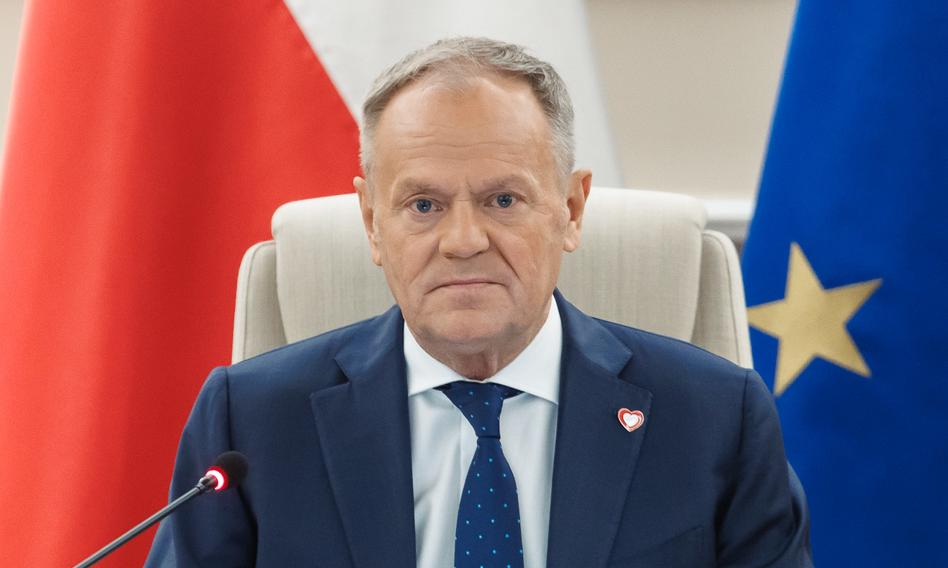
Prime Minister Donald Tusk announced an extraordinary government meeting regarding fuel price reductions at a press conference on Thursday. – We have prepared a reduction in the VAT rate on fuels from 23%. at 8 percent and reducing the excise tax on fuels to the minimum required by EU regulations, i.e. the excise tax on petrol by 29 groszy and on diesel oil by 28 groszy – said the head of government. He also announced that the parliament would discuss the proposed statutory solutions on Friday.
– We decided to radically reduce VAT on fuels and excise duty, as well as to introduce (…) a maximum price, i.e. a regulated price at gas stations, so that all our decisions (…) would actually be positively felt by the end user at the gas station – said Tusk.
He added that it is necessary to ensure “the lowest possible fuel prices” from the point of view of the end customer at the station. As he said, it is necessary to make sure that in the current situation no one earns money “from the pockets of Poles.” Earlier, at the afternoon conference, Tusk announced that further solutions were being prepared, such as a tax on excess profits, the so-called windfall tax for oil companies that benefit from high oil prices.
The situation is so paradoxical that the higher prices on world markets, the more people pay at gas stations. But those who are in this business have higher profits. So we will also react in such situations by introducing a tax on excess profits of corporations, said the Prime Minister.
Opening the extraordinary government meeting, the Prime Minister declared that “Poland is secured” and “there is no risk of running out of fuel.”
Big tax cuts. European governments are fighting against high prices at gas stations
Many European countries have taken action in connection with the increase in fuel prices caused by the conflict in the Middle East. On Thursday, the German Bundestag passed a bill aimed at limiting the rise in fuel prices. In Spain, the parliament adopted a social shield reducing VAT on fuel and energy from 21 to 10 percent.
Domański: The cost of reducing VAT and excise duty on fuels amounts to a total of PLN 1.6 billion on a monthly basis
The cost of the VAT reduction on fuels is PLN 900 million per month, the excise tax reduction is PLN 700 million per month – said Andrzej Domański, Minister of Finance and Economy. As he pointed out, these solutions are temporary and the government will flexibly adjust the rates to the changing situation.
“In the case of VAT reduction, we are talking about a cost of approximately PLN 900 million per month, for excise duty this cost reaches approximately PLN 700 million per month,” Domański said during his speech before the government meeting.
These are serious expenses from the budget's point of view, which is why we are working to introduce a special tax on excess profits, commonly known as windfall tax, so that entities that have excess profits due to the market situation, high oil prices, high margins, pay a higher tax – he added.
As Domański pointed out, the solutions regarding reducing the VAT and excise tax rates are temporary and the government will flexibly adapt them to the changing situation.
“Importantly, these actions are of a temporary nature. We will flexibly adjust excise duty and VAT rates to the very dynamically changing market situation,” Domański said. He added that on Thursday, wholesale diesel prices dropped by 0.30 groszy, and at the same time oil prices increased.
Project: the Minister of Finance will be able to reduce excise duty on fuels by regulation until June 30
The Minister of Finance will be able to reduce the excise tax rate on fuels by regulation until June 30, 2026 – according to the government's draft amendment to the Excise Duty Act, which was submitted to the Sejm on Thursday. The reduction is to be introduced for the time necessary to limit the effects of the war in the Middle East.
“The proposed amendment to the Act of December 6, 2008 on excise duty will enable the minister responsible for public finance to introduce – by way of a regulation – a reduction in the excise duty rate on certain motor fuels by June 30, 2026.” – it was reported in the Regulatory Impact Assessment for the project.
As indicated in the justification, the project is to introduce a legal basis for reducing excise duty rates by way of a regulation, so that the minister can quickly respond “to the urgent need to reduce excise duty, due to the current situation on the fuel markets related to the war in the Middle East and the resulting effects in the form of an increase in the prices of fuels subject to excise duty”.
According to the bill, the Minister of Finance will be able to reduce excise duty “for a specified period, necessary to limit the negative effects of the conflict in the Middle East on the fuel market (…) taking into account the economic situation of the country.”
The project is intended to contribute to improving the situation of households and enterprises operating in the transport, logistics and agriculture sectors – it was also indicated in the justification. “Reducing fuel costs may also reduce financial pressure in many sectors of the economy,” it added.
The Act is to enter into force on the day following its announcement.
Motyka: The maximum retail fuel price is derived from the wholesale average from the largest sellers
“We are introducing a mechanism related to… the maximum price determined by announcement of the Minister of Energy, which will be the price derived from the wholesale average from the largest sellers, plus operating costs, which are the costs of business” – said Miłosz Motyka, Minister of Energy, during his speech before the government meeting.
We are doing this so that these tax issues (…) are fully recognized in the reduction of retail fuel prices so that the price at gas stations is fully consumed – he added.
As indicated by the Minister of Energy, the actions that have been taken so far in terms of special promotions and margin reduction will be maintained.
“The actions we are talking about, from their scale, are the strongest and largest actions from the point of view of all European countries. This is the strongest action that Poland has taken among all countries. From the point of view of the steps taken so far, we have clear declarations – those actions that have been taken so far in the field of special promotions and also in terms of margin reduction will be maintained,” said Motyka.
From March 12, Orlen introduced a promotion for gasoline and diesel oil and reduced the margin on diesel from 25 groszy to “almost zero”, which is intended to limit the effects of a sharp increase in global fuel prices caused by military operations in the Persian Gulf and the blocking of the Strait of Hormuz.
Reduction of VAT and excise duty on fuel. Drivers will be happy, but companies will face a cold shower
VAT reduction from 23%. at 8 percent will be clearly felt by drivers, but in the case of entrepreneurs its effect will not be so obvious. For this group, the key will be a reduction in the excise tax rate and security in the form of a maximum price at gas stations.
Balczun: Orlen will play a key role in stabilizing the fuel market in Poland
“From the very beginning of this crisis, a whole range of actions were taken to protect consumers' interests by minimizing the retail margin, through promotions that were carried out at stations. The Orlen Group, after the entry into force of new regulations on VAT reduction, will play a key role in stabilizing the fuel market in Poland and supporting the implementation of state policy goals in terms of consumer protection,” said Wojciech Balczun, Minister of State Assets, during his speech before the government meeting.
The market leader actually sets trends here. (…) We are calm – these changes will translate into real price reductions. (…) We do it consistently, we will stabilize prices and we will be a benchmark for other market participants – he added.
Full mobilization of the Sejm and Senate
The Speaker of the Sejm, Włodzimierz Czarzasty, said during a briefing in the Sejm on the same day that a convention of seniors would meet on Thursday evening, which would decide on extending the program of the ongoing Sejm session to include the solutions proposed by the government. – These bills will be processed today (Thursday) from 8.30 p.m. to 22 – said the Speaker of the Sejm.
He also informed that a request had been sent to the chairman of the Parliamentary Public Finance Committee, Janusz Cichoń (KO), to convene a meeting of the committee urgently. – The Finance Committee will prepare these bills for second reading. The second reading will take place tomorrow (Friday) at 9.30. The third reading will take place at 11.30 and decisions will be made at this Sejm – Czarzasty noted.
Immediately after the declaration of the Speaker of the Sejm, the Speaker of the Senate, Małgorzata Kidawa-Błońska, announced during a briefing in Berlin that she was convening an additional session of the Senate for Friday at 14, in order to work on laws regarding the reduction of excise duty and VAT on fuels.
– We, as the Senate, are prepared to start working with it tomorrow (Friday), immediately after this bill is passed from the Sejm. We know that time is of the essence here. The holidays are approaching and Poles deserve safety and reasonable prices in this area, emphasized Kidawa-Błońska.
BPL/PAP
The publication contains affiliate links.