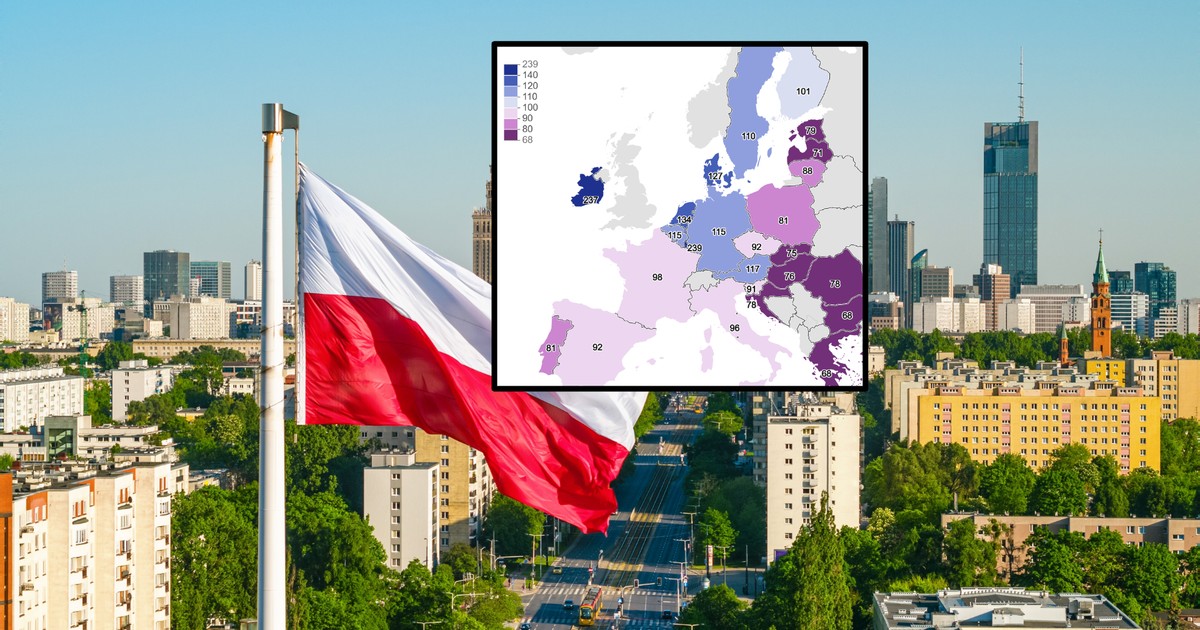
Eurostat published preliminary estimates of GDP per capita at purchasing power parity (PPP) for 2025. The results ranged from 68%. EU average in Bulgaria and Greece to over 230 percent In Luxembourg and Ireland. Poland achieved 81 percent. EU average and took 19th place in the ranking.
Further part below the map:
They are behind Luxembourg and Ireland, which lead the rankings Netherlands and Denmarkwith GDP per capita by over 20 percent. higher than average.
Austria, Germany, Belgium, Sweden, Malta and Finland These are the next EU countries with GDP per capita above the EU average.
France, Cyprus, Italy, Czech Republic, Spain and Slovenia were below this average by less than 10 percent, and then Lithuania, Portugal and Poland with GDP from 10 percent up to 20 percent below the EU average (Poland's result is 81%).
GDP per capita Estonia, Romania, Croatia, Hungary, Slovakia and Latvia it was by 30 percent lower than the EU average. Greece and Bulgaria recorded GDP per capita by 32%. below the EU average in 2025
In 2025, the EU's GDP per capita averaged around €41,600 according to purchasing power standards, which is a common reference point for all EU countries.
In international comparisons of national accounts data such as GDP per capita, it is desirable not only to express data in a common currency but also to take into account differences in price levels. Otherwise, GDP levels will be overestimated in high-price countries compared to low-price countries.
Luxembourg has by far the highest GDP per capita of all 27 countries included in this comparison, up 139%. higher than the EU average. This is partly due to the fact that the country employs a large number of foreigners who contribute to its GDP, even though they do not constitute part of Luxembourg's population. Their consumption expenditure is recorded in the national accounts of the country of residence, explains Eurostat.
Ireland ranks second among EU countries, with a rate of 137%. higher than the EU average. Ireland's high level of GDP per capita can be partly explained by the presence of large multinational companies that own intellectual property. The associated contract manufacturing involving these assets contributes to GDP growth, and a significant portion of the revenues from this production are returned to the ultimate owners of the companies abroad.
Source: Eurostat