Energy crisis in Italy and resignations in the Government. “Dear Giorgia, I'm used to paying my bills and often other people's too”

QatarEnergy declared a state of “force majeure” on Tuesday for certain liquefied natural gas (LNG) supply contracts signed with Italy, Belgium, South Korea and China, writes Euronews. The decision of the Qatari state company – reported by “Reuters” and “Al Jazeera” – comes in the wake of the serious Iranian missile attacks on March 18 and 19 on the Ras Laffan production facility.
The news had been somewhat anticipated by the company's CEO in interviews in recent days, in which Saad al-Kaabi had spoken of the need to cancel some deliveries following damage to the facility working at the North Field, the world's largest gas field, which Qatar shares with Iran, where it is called South Pars, which has also been hit by Israeli raids.
Consultancy firm Kpler estimates a reduction of around 5 million tonnes in LNG exports from Qatar and the United Arab Emirates in March alone, with significant consequences. According to Kpler estimates, about 19 million tons of gas could be out of call by the end of May in the Gulf region.
This scenario forces Europe into a fierce competition with the Asian giants (China, Japan and South Korea) for the remaining cargoes, while European stocks are causing concern.
“Dear Giorgia, I'm used to paying my bills and often other people's too”
After confirming her agenda for Wednesday, March 25, to demonstrate her reluctance to resign as Minister of Tourism, Daniela Santanché submitted her resignation, writes Corriere della sera.
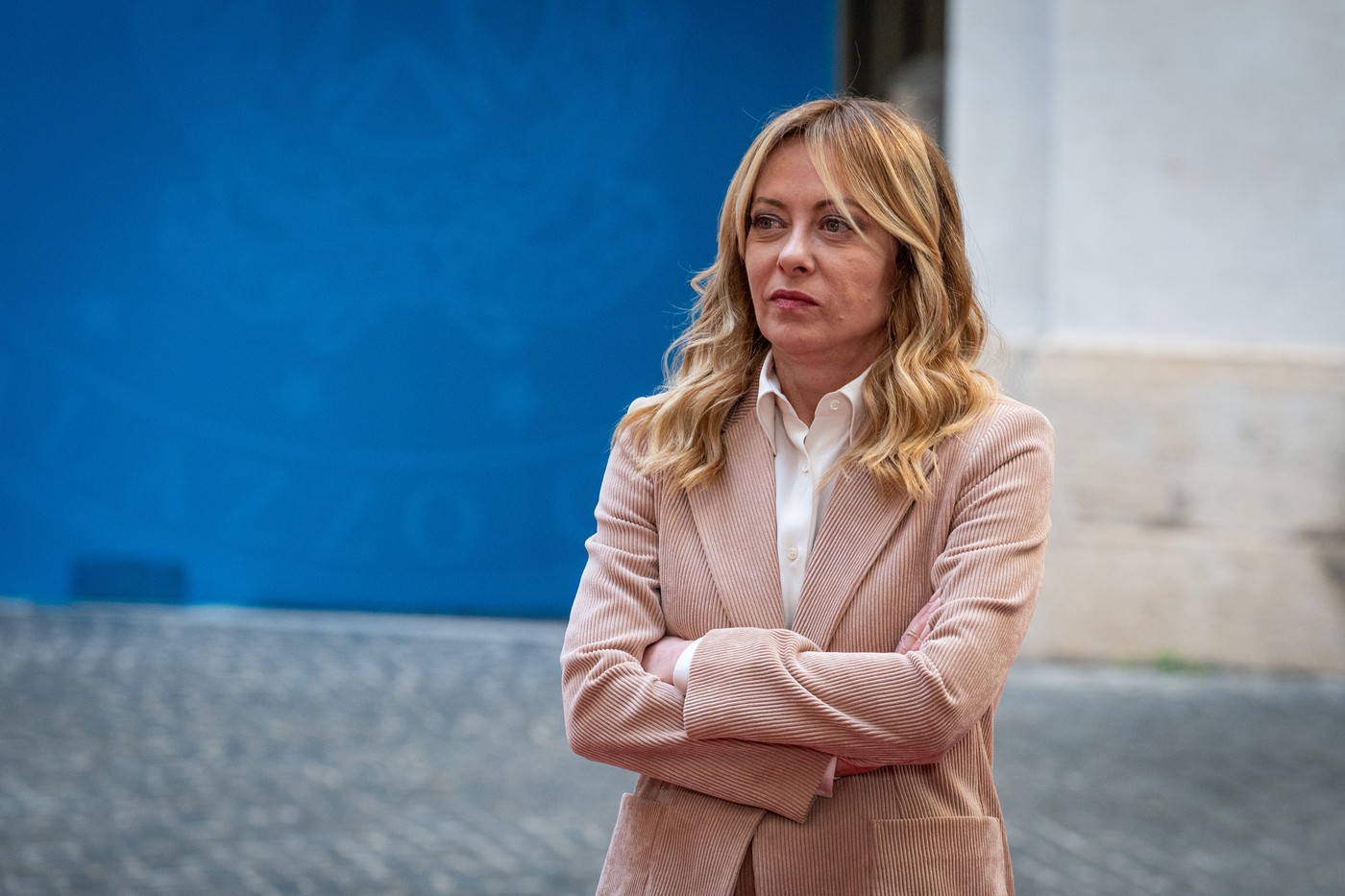
Following the “no” vote in the justice referendum, Prime Minister Giorgia Meloni wanted to “do a spring clean” and Giusi Bartolozzi, chief of staff at the Ministry of Justice, and Undersecretary of State for Justice Andrea Delmastro Delle Vedove resigned.
On Tuesday evening, the Chigi Palace requested in a statement that “following the same line of institutional sensitivity, the Minister of Tourism, Daniela Santanché, should take a similar decision”. Santanché, which until now has always been protected by the government, despite its legal problems (three motions of no confidence presented by the center-left), ignored this statement.
Only then, it is very likely that the prospect of a resignation in Parliament, with a motion of no confidence already scheduled for Monday, March 30, and approved by the majority, has changed his opinion. The possibility of being publicly removed from government in Parliament, with the support or abstention of her friends in the coalition on the motion of the opposition, must have seemed unacceptable to her. A difficult fiasco for her, Briatore's former business partner and queen of high society circles, always sitting on 12-centimeter heels. Better, then, to resign and leave before it becomes a case.
Santanché's missive (destined to make waves): “I don't want to be a scapegoat.”
“Dear Giorgia, I present to you, as you officially requested, my resignation from the position of minister that you entrusted to me and which I believe I have carried out to the best of my ability and without any inconvenience. Thank you for the recognition and trust you have shown me during these years of leadership of the Ministry of Tourism. I wanted (and I hope you will understand) to state publicly that it was you who asked me to leave this position, because, as I have always said, I would only resign at your explicit and public request. I wanted to make it clear that I am resigning, not just because of a request that my party leader deems useful and appropriate. I want to emphasize that my criminal record to date is unblemished and that my dismissal record has not even been referred to court.
Perhaps yesterday I was a little too abrupt (I think you understand my mood) when I explained to you my reluctance to resign immediately, because I wanted this gesture to be separated from the comments about the referendum, because I do not want to be the scapegoat for a defeat that was certainly not my fault, given the result obtained in Lombardy and even in my own municipality.
I also wanted my resignation to be separate from the contingent and very different matter involving the Honorable Del Mastro, who is also paying a high price. After making that clear, I have no problem saying “I obey” and doing what you ask.
I won't hide from you that I feel a little bitter about the outcome of my ministerial career, life used me to pay my own bills and often those of others. I care more about our friendship and the future of our movement.
The message ends with a cold and formal formula: “Best wishes”
Climate think tank Ecco calculated that within a year Italy “could replace the equivalent of Qatar's gas volumes through savings
Turning to the energy crisis, Environment and Energy Security Minister Gilberto Pichetto Fratin sought reassurance on Tuesday, saying the country was not directly “threatened” and stressing the reliability of ENI's infrastructure. However, the minister acknowledged that the destruction of Qatar's natural gas liquefaction facilities is forcing Asian buyers to compete with Italy's usual suppliers, fueling price volatility.
In this emergency, climate think tank Ecco has calculated that within a year, Italy “could replace the equivalent of Qatar's gas volumes through savings, renewables, efficiency and electrification, making full use of existing import infrastructure and methane capture along the Algerian gas supply chain.”
The analysis was published on Tuesday, just hours before Italian Prime Minister Giorgia Meloni's visit to Algeria, and explains how Italy can strengthen its energy security and quickly replace missing gas supplies amid a new phase of significant instability in energy markets.
“Recourse to investments in new infrastructure and gas fields is not necessary,” observes Ecco, also excluding the search for new suppliers. “Italy could structurally replace the equivalent of more than 85% of Qatar's gas imports within 12 months on three fronts: renewables, energy efficiency and electrification of consumption.”
According to the experts, “it is essential to preserve the current gas storage reserves (in Italy, 44% against the European average of 29%) through a systematic savings plan, supported by an awareness campaign, to avoid incurring prohibitive filling costs to bring volumes back to the 80%-90% safety threshold needed for next winter”.
At the same time, the signing of new supply agreements with countries such as Algeria should be more transparent to understand the real costs for consumers and businesses, according to the think tank. (Material produced with the support of Rador Radio Romania)