
Transporters ask the Government to subsidize public transport and warn: Any intervention that will reduce diesel at the pump will create chaos

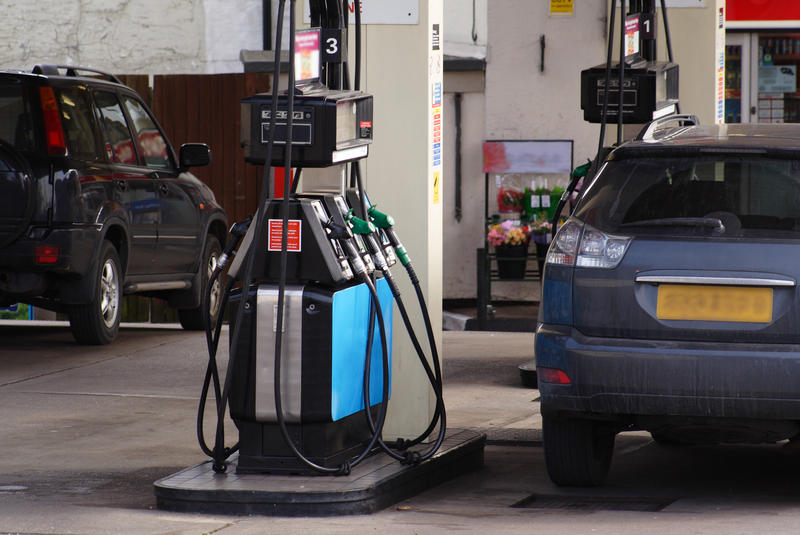
The National Union of Road Transporters in Romania (UNTRR) asks the Government not to take decisions that affect the availability of diesel at the pump, warning that such a measure will create chaos, panic and instantly generate a parallel black market. The reaction comes against the Government's intention to reduce profit margins, a measure that could lead to a shortage in some petrol stations.
“We warn that any administrative intervention that limits the availability of diesel at the pump risks quickly destabilizing the fuel market and generating knock-on effects in the economy, from transport and logistics bottlenecks to panic reactions and the emergence of a black market. Maintaining fuel availability is essential to the functioning of the economy, given that road transport supports internal and external trade flows, and any supply disruption is transmitted directly into costs and final prices,” it says UNTRR.
Road hauliers are calling on the Government to maintain the availability of diesel at the pump, warning that “any intervention that reduces availability will create chaos, panic and instantly generate a parallel black market (see the case of Slovenia)”.
“The impact of the cost of diesel on transport activity is critical, with diesel accounting for approximately 40% of the total cost of national road transport. Under these conditions, any disruption in availability or artificial increase in fuel costs has a direct and immediate effect on transport tariffs and, implicitly, on the prices of goods in the economy”, says the Union.
Transporters are asking for a partial excise duty refund and the removal of ICAS
UNTRR requests the Government to refund the partial excise tax to transporters, given that no payment has been made for the fourth quarter of 2025.
The pressure on the sector has increased since the beginning of the year, with the increase in fuel excise duty, transporters point out.
From January 1, 2026, the diesel excise duty reached 2,804.29 lei per 1,000 liters, i.e. approximately 550 euros/1,000 liters, significantly above the European minimum threshold of 330 euros/1,000 liters, and the gasoline excise duty reached 3,059.8 lei per 1,000 liters, i.e. approximately 600 euros/1,000 liters, significantly above the minimum European threshold of 359 euros/1,000 liters. In Romania, over 8 billion liters of diesel and over 2 billion liters of gasoline were consumed in 2025, says UNTRR.
“In this context, we ask the authorities to adopt concrete measures to support transporters, in order to maintain the competitiveness of the sector, to urgently make payments related to the refund of excise duty for the fourth quarter of 2025, as well as the immediate elimination of the ICAS contribution of 0.5%, without postponing the elimination until the end of the year. We believe that the inclusion of transporters (who have their own diesel fueling stations for use within the company and for subcontractors) in the scope of the contribution ICAS is unjustified, since they do not carry out activities in the energy field, and its application penalizes the operators who contribute to the stability of the logistic chain of diesel supply”, claims UNTRR.
Changes in the price of diesel to be published officially and transparently
UNTRR also requests the establishment of a transparent mechanism for monitoring and weekly publication of the evolution of diesel prices, in order to reflect in real time and with increased accuracy the evolution of fuel prices, following the European EU Weekly Oil Bulletin (European Commission) model and the American system published by the US Energy Information Administration (EIA).
“Such a mechanism would ensure transparency, predictability and an objective reference in the contractual relations between carriers and beneficiaries, including for the adjustment of tariffs according to the evolution of fuel costs.” says the Union.
Aid for road hauliers
In parallel, UNTRR supports the granting of de minimis aid for road transport operators depending on the number of employees and the car fleet.
“Analyze the granting of de minimis aid for licensed road transport operators, depending on the number of employees and the car fleet (e.g.: 1,500 euros/licensed vehicle) – a measure that allows for targeted support for freight and passenger transport companies and, implicitly, for the population”, requested UNTRR.
Subsidies on travel tickets for the population
UNTRR also asks the Government to implement targeted measures for the population, such as the development of public transport and the granting of discounts for vulnerable categories, instead of generalized schemes.
“Ensure the mobility of the population through collective transport – local, regional and national – by subsidizing travel tickets by 30-50%, similar to other developed EU states, such as Germany”, the UNTRR statement also states.
Blockage on the fuel ordinance
Invited on Tuesday evening to Euronews to explain how the meeting in which the emergency ordinance was to be adopted regarding the declaration of a state of crisis in the energy sector was to be postponed, Prime Minister Ilie Bolojan said that in the Economic and Social Council “a reservation” from employers was mentioned.
“There was a discussion related to one of the points limiting fuel surcharges which are proposed to be halved compared to 2025. A surcharge reduction is perfectly acceptable where the chains are integrated, from the refinery to the gas station. Where there are traders who buy the finished product, their markup margin is not very high, and the reduction could put them in a situation where they could not cover their costs. At some stations gasoline, the independents, could lead to a shortage,” explained Bolojan.
For this reason, the prime minister said that a meeting of the Tripartite Council (government-patronage-unions) will be organized on Wednesday at 11.00, followed at 12.30 by the CES meeting in which the draft GEO will be approved so that the Government adopts the normative act on Wednesday afternoon or, at the latest, on Thursday.
The largest trade union confederations in Romania, however, boycotted Wednesday's discussions with the Government and employers regarding the ordinance prepared by the Bolojan Cabinet to counteract the increase in fuel prices. However, the union leaders met with Sorin Grindeanu, the president of the PSD, a party that asks the Government to introduce the reduction of excise taxes in this ordinance.
Contacted by HotNews to explain whether the Tripartite National Council will still take place, given the absence of trade unions, Ioana Dogioiu, the spokeswoman for the Government, stated that the CNT meeting began at 11:00, as announced, with the participation of Prime Minister Ilie Bolojan and employers.


