
The judges of the Constitutional Tribunal are waiting for the president's move. What's next?

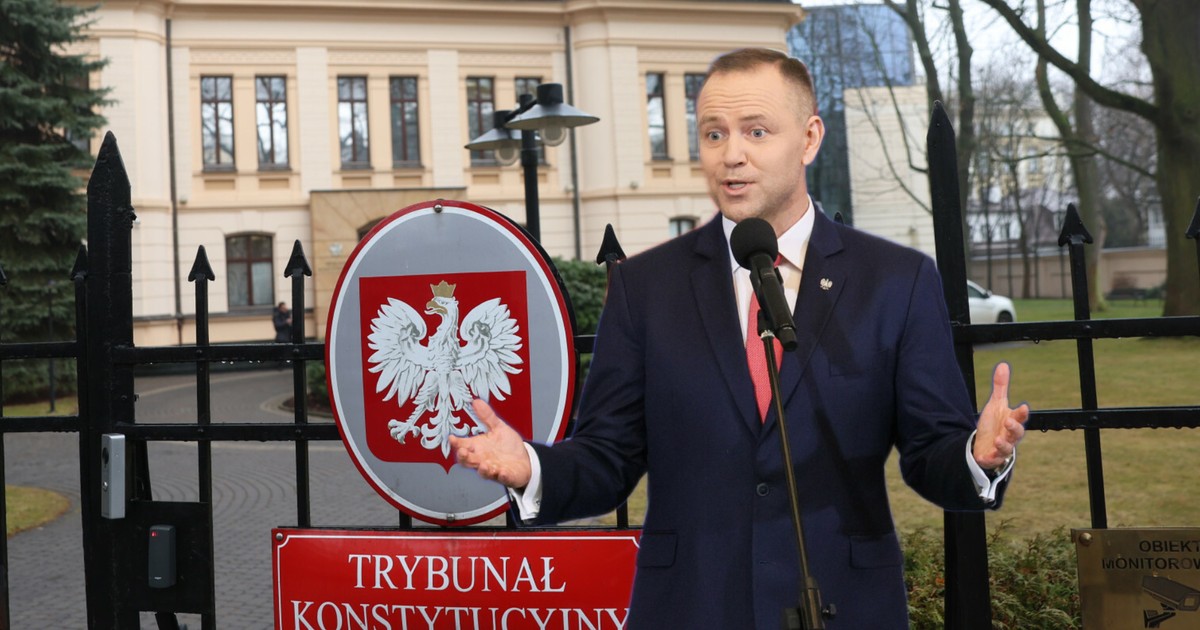
On Wednesday, judges of the Constitutional Tribunal elected by the Sejm sent a letter to the president with an appeal to be notified about the possible date of their taking the oath in his presence. Business Insider asked three of the six selected judges how long they would wait to be invited.
See also: The Sejm elected judges of the Constitutional Tribunal. What will President Nawrocki do?
Preferably next week
— We do not set any specific date, although we know that the oath should take place immediately after the election. So we hope that the president will finally make some move, Krystian Markiewicz, elected by the Sejm as a judge of the Constitutional Tribunal on Friday, March 13, told us.
One of the candidates is also not stubborn about the date. – It doesn't have to be next week, I understand that there has been a hot period in politics recently, but I expect specific information about the date of the oath – he tells us.
However, the next candidate assumes that he will receive an invitation next week. — Soon it will be 14 days since the Sejm elected me as a judge of the Constitutional Tribunal. I think that 14-21 days is adequate to take the oath, he tells us.
What if the invitation is not sent? Here, our interlocutors unanimously answer that they are not considering this option at the moment.
– Then we will think about what to do next. For now, let's hope that we will take the oath in the presence of the president. Each of the six selected people made a declaration that they wanted to take an oath – says Judge Krystian Markiewicz, elected by the Sejm on Friday, March 13, as a judge of the Constitutional Tribunal.
However, our interlocutors emphasize that if the president's calendar does not allow for the meeting, they are ready to take the oath in another form.
Read also: A wave of comments after the CJEU judgment in the case of judges. One is particularly spicy
In front of or in the presence of the president
According to Dr. Marcin Krzemiński, a constitutionalist from the Jagiellonian University, contrary to the Constitutional Tribunal's judgment, the president does not have the competence to “receive” or “accept” the oath in the sense of a decision-making activity. — A necessary condition is that the content of the oath, together with information about the identity of the person taking the oath, is brought to the attention of the head of state, says Dr. Krzemiński.
It is worth recalling that President Andrzej Duda refused to take the oath of office from three judges elected by the Sejm, justifying it with doubts as to the correctness of their selection. In its judgments K 34/15 and K 35/15, the Constitutional Tribunal found that the president is obliged to take the oath immediately and that the provision of the Constitutional Tribunal Act gives him special competence in this respect. Many lawyers share this position, but apparently not all of them. Some believe that the oath does not have to be taken in the presence of the president, but in front of him, e.g. by sending him a statement.
Importantly, the mere election of judges by the Sejm does not mean taking over the office of a judge of the Constitutional Tribunal. It is necessary to take an oath, and refusing to take it means resigning from the position of a judge.
The president has no choice but to wonder
Everything indicates that the oath may be taken in front of, but not in the presence of, the president. The head of the president's office, Zbigniew Bogucki, points out that the simultaneous election of six judges of the Tribunal is contrary not only to the Constitution of the Republic of Poland, but also to the practice of the Sejm.
You may disagree with this practice, but it's hard to blame it. As noted by Dr. Marcin Krzemiński from the Jagiellonian University, the deadline for submitting the application is an instructional deadline and exceeding it does not affect the effectiveness of the selection. And if it were found otherwise, it would mean that it would no longer be possible to complete the composition of the Constitutional Tribunal at all.
Dr. Marcin Krzemiński emphasizes, first of all, that none of the arguments raised by the Chancellery of the President are relevant, because the president has no competence to assess the election procedure in the Sejm.
It is also difficult to accept the accusation that less than seven days passed between the submission of candidates and the voting. From a formal point of view, MEPs voted for the accelerated procedure. In the past, it happened that the entire process took place in one day, this was the case with the election of Jakub Stelina.
Stages of selecting Jakub Stelina as a judge of the Constitutional Tribunal
|
Sejm


