The countries of the Persian Gulf have chosen fighter jets as the main means of intercepting Iranian drones, but this strategy, although effective in the short term, raises serious question marks in the future, analysts warn, also citing the lessons from Ukraine, writes the Financial Times.
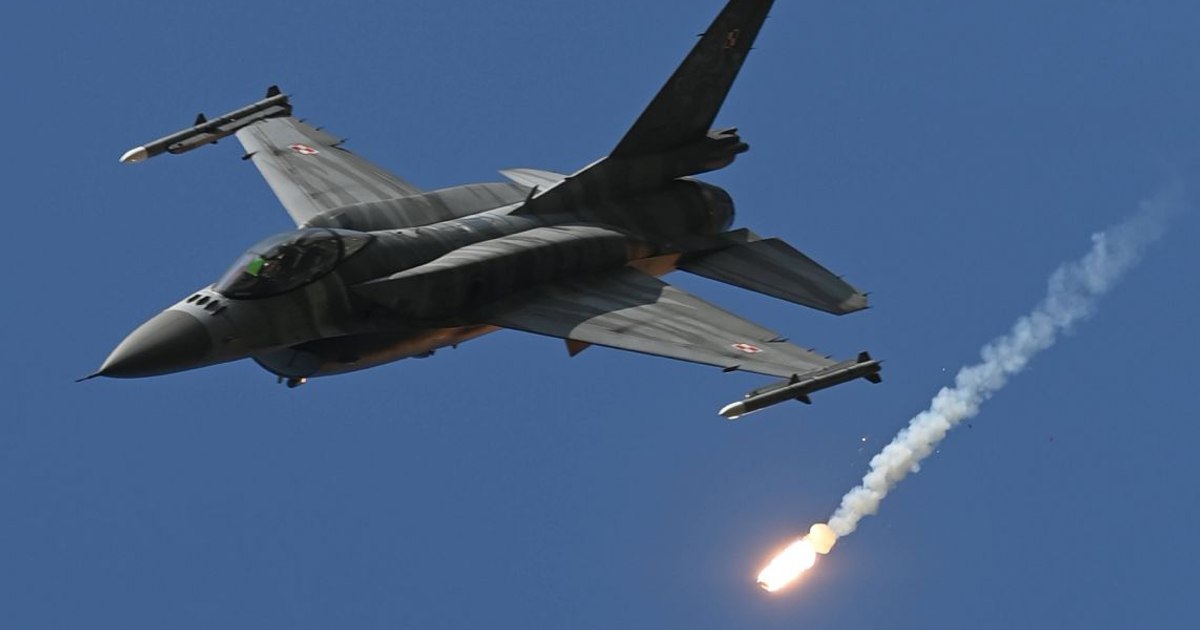
The F 16 planes used to destroy Iranian drones in the Persian Gulf/FOTO:X
Currently, aircraft such as the F-16 Fighting Falcon are used almost non-stop to shoot down Shahed-136 drones. But the costs are considerable: while an Iranian drone can cost between $20,000 and $50,000, keeping a single F-16 in the air costs more than $25,000 an hour.
Even more expensive is the ammunition. Intercepts are frequently carried out with air-to-air missiles such as the AIM-9X Sidewinder or AIM-120 AMRAAM, the cost of which can reach hundreds of thousands or even over a million dollars per unit.
“It's obviously a poor cost-effectiveness ratio to counter a cheap threat”Samuel Bendett explained, pointing out that ideally defense should be based on cheaper means than attack.
An unsustainable solution
Experts warn that over-reliance on fighter jets is not sustainable in the long term. “It's not a reliable solution going forward,” said Lauren Kahn, a former Pentagon adviser.
In addition to costs, there is the issue of attrition: continuous missions overtax both pilots and aircraft. “At some point, these machines will require more and more frequent maintenance,” warns Kelly Grieco.
Even for state-of-the-art aircraft like the F-35 Lightning II, intercepting slow and small drones remains difficult. Their low speed increases the risk of less experienced pilots missing the target.
Operational and tactical risks
In order to reduce costs, some Gulf states have started to use the aircraft's onboard guns. Although ammunition is cheaper, this tactic forces aircraft to come dangerously close to the target, which can increase the risk to civilians, especially in populated areas.
Furthermore, capacity is limited: an F-16 can only fire for a few seconds before running out of ammunition.
Despite efforts, even states like the United Arab Emirates, which announced the interception of more than 1,600 drones, have not been able to completely prevent attacks. Some devices hit military bases and critical infrastructure with remarkable accuracy.
Problems adapting to the new type of threat
According to analysts, the region's militaries were initially trained for ballistic missile attacks, not drones. In contrast, drones are smaller, fly lower and are harder to detect.
Radar systems must be recalibrated to distinguish them from birds or buildings, and effective detection requires arrays of sensors capable of identifying even the acoustic signature of engines.
More efficient alternatives
To conserve resources, the Gulf states also use the jets to save missile systems such as the MIM-104 Patriot, where the cost of an interception can reach nearly $4 million.
In search of more effective solutions, these countries turned to the experience of Ukraine. Defense industry representatives such as Anatolii Hrapcinski argue that one of the most cost-effective methods is to use specialized drones to intercept other drones.
The United States has already announced the deployment of about 10,000 such systems to the region.
“Fighters can be part of the system, but they can't be the basis of it. If you shoot down cheap drones with millions of missiles, the model won't work in the long term“, explained Hrapciynski.
A cost war
Along with interceptor drones, helicopters or anti-aircraft artillery systems are also used, but these are available in limited numbers.
Israel, for its part, has tested a combination of aircraft, systems such as “Iron Dome” and even laser technologies, which promise almost zero cost per interception.
However, some experts, such as Tom Karako, warn that the sole focus on costs can be misleading. In his opinion, more important is the ability to sustain the effort in the long term.
Ultimately, the key may be not just intercepting drones, but reducing Iran's ability to produce and launch them.