One of the most famous battles in European history was completely misunderstood for decades, new study argues

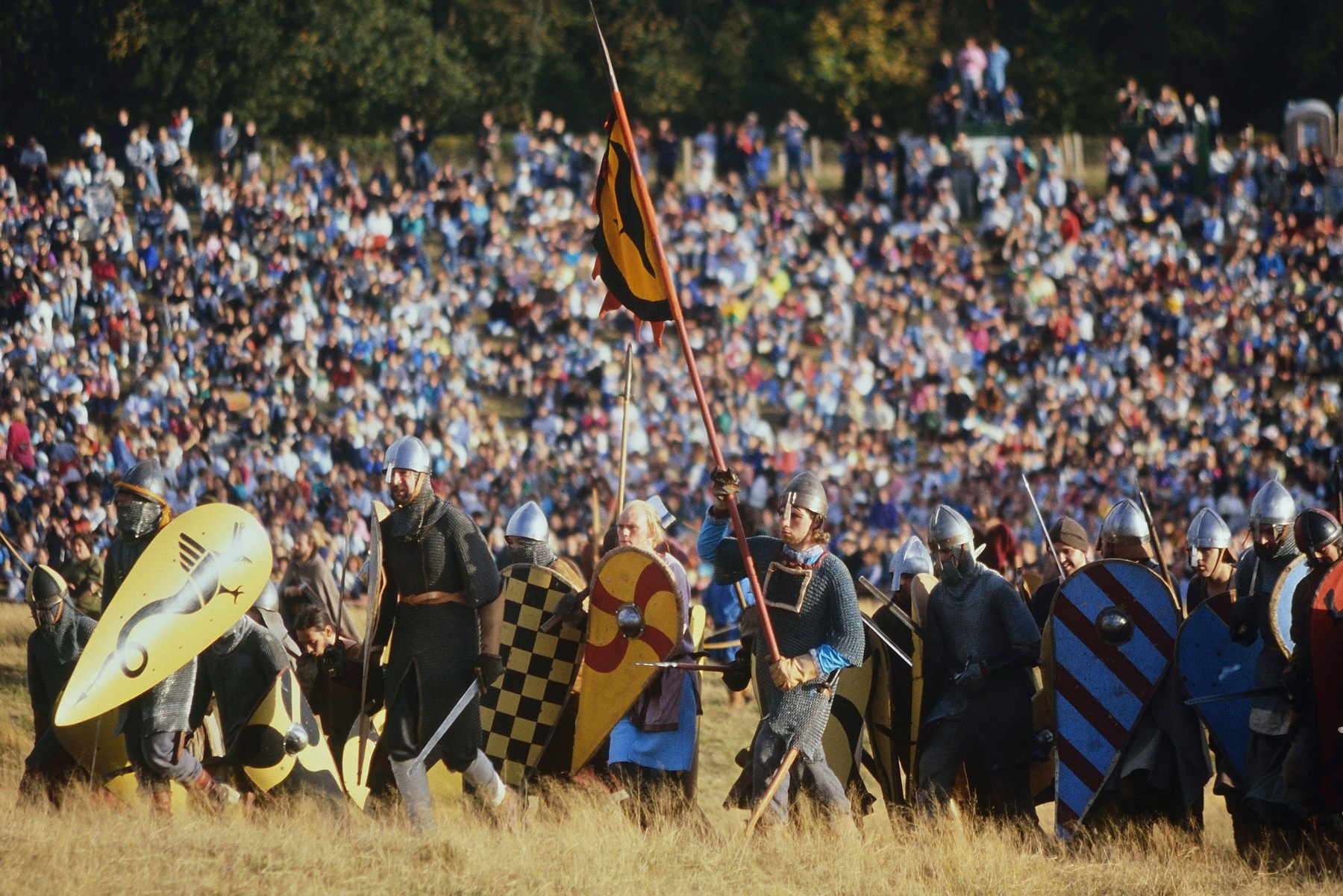
The tragic story of Harold Godwinson, the king who lost England to William the Conqueror in the famous Battle of Hastings in 1066, has been the subject of numerous documentaries over the decades, as well as featured in films and TV series. But this story may need a reinterpretation, according to recent research, reports CNN.
The 11th-century battle ended the short reign of Harold, the last Anglo-Saxon king, and brought William, Duke of Normandy, to England, changing the history of Great Britain and Europe forever. However, new analysis of the manuscripts provides a different perspective on the nature of Harold's devastating defeat.
The grueling 200-mile (322 km) march that King Harold and his men would have made before confronting William's Normans, which is said to have left the Anglo-Saxon soldiers exhausted and unprepared for battle, never took place. At least that's according to Tom Licence, professor of medieval history and literature at the University of East Anglia. Instead, he says, the troops moved south by sea.
“1066 is still one of the few dates that almost everyone knows,” said Rory Naismith, professor of early medieval English history at Cambridge University, who was not involved in Licence's research.
“It is a turning point in English history, when one political regime was defeated and very soon replaced by another, with huge consequences for the cultural and institutional identity of the kingdom. The developments of 1066 are therefore essential to understanding everything that followed,” Naismith points out.
Re-evaluating historical sources related to the battle
The idea that Harold's men traveled nearly 200 miles in 10 days after a hard-won battle at Stamford Bridge in northern England against the Viking leader Harald Hardrada – another claimant to the throne – has long seemed improbable to Licence and other historians, given the distances involved.
Licence states that the story of the dramatic overland march was largely a Victorian interpretation that persisted. Its origin comes from a misunderstood reference in the Anglo-Saxon Chronicle, an account of important events written in Old English by the clergy of the day, to Harold's fleet being “sent home”. In the previous interpretation, the phrase “sent home” was understood to mean “dismantled”, the ships being sent back to their home ports. Analyzing the chronicle, Licence noticed repeated references to “home”, meaning London, where King Harold's base was located.
“I realized that when he says 'the fleet came home,' he doesn't mean that it was sent to its various ports. The fleet was sent to its home, London,” he explained to CNN, referring to one of the chronicle's authors.
Briefly: Harold first led his fleet north, where he successfully confronted Harald Hardrada and his Viking forces on September 26, 1066. He then returned with it to London. “Instead of exhausting his men on that march south—which, of course, was considered the cause of the defeat of the English—he had occasion to give them time to rest,” Licence points out.
Afterwards, Harold and some of his men traveled overland south to Hastings to confront the Duke of Normandy. License claims that Harold also sent ships to Hastings, attempting an encircling maneuver to catch William from the south, but the fleet arrived too late to change the course of the devastating battle that took place on 14 October 1066.
Naismith said he agreed with this new interpretation. “The English had a large navy and there is ample evidence of navigation along the east coast during the Norman Conquest,” he said. “A greater role for these ships in the events of 1066 makes a lot of sense and demonstrates Harold's ability to use the resources at his disposal,” the Cambridge expert pointed out.
A new light on a king with a tragic fate
Duncan Wright, lecturer in medieval archeology at Newcastle University, said for his part that the march of the English army to the south was always part of the image of Harold in the understanding given to him in the romantic period of European literature.
Harold is known as the last Anglo-Saxon king who fought bravely against the invaders, but whose efforts ultimately proved futile. The march has inspired large-scale reenactments, including one in 2016 on the 950th anniversary, which was attended by 1,066 people.
“Indeed, English people today remain very attached to the figure of the 'brave loser,'” Wright said.
“This new interpretation also shows the lasting legacy of how the Victorians understood the past and how fragmentary information can become historical canon; when we question such traditions, we can come to valuable new understandings of the past, as we see here,” he added.
Licence also said that the new interpretation shows that King Harold was a competent commander, not a reckless and impulsive one: “I think it was essentially a matter of luck. It could have been William that day. It could have been Harold.”
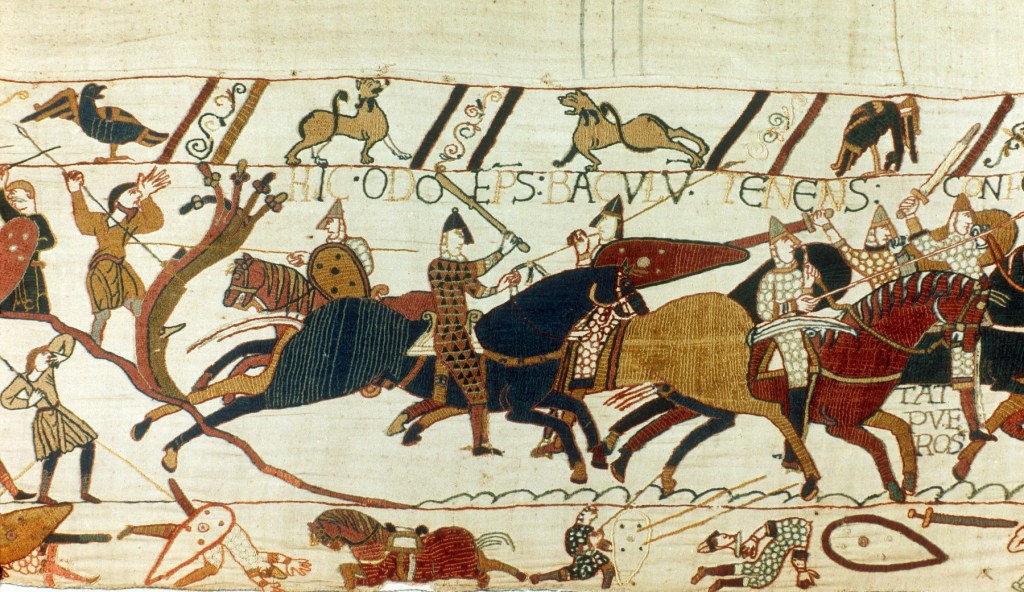
Historians have also debunked another famous story associated with the Battle of Hastings. A famous scene from the Bayeux Tapestry, which shows the battle from a Norman perspective, shows Harold shot in the eye with an arrow. In reality, the earliest sources describe Harold being slaughtered by four Norman knights.
The Bayeux Tapestry will be brought from France and exhibited for the first time in the UK later this year at the British Museum in London.
Licence will present his research at a conference on Tuesday 24 March at Oxford University and will also include his study in an upcoming biography of King Harold, which he has written.