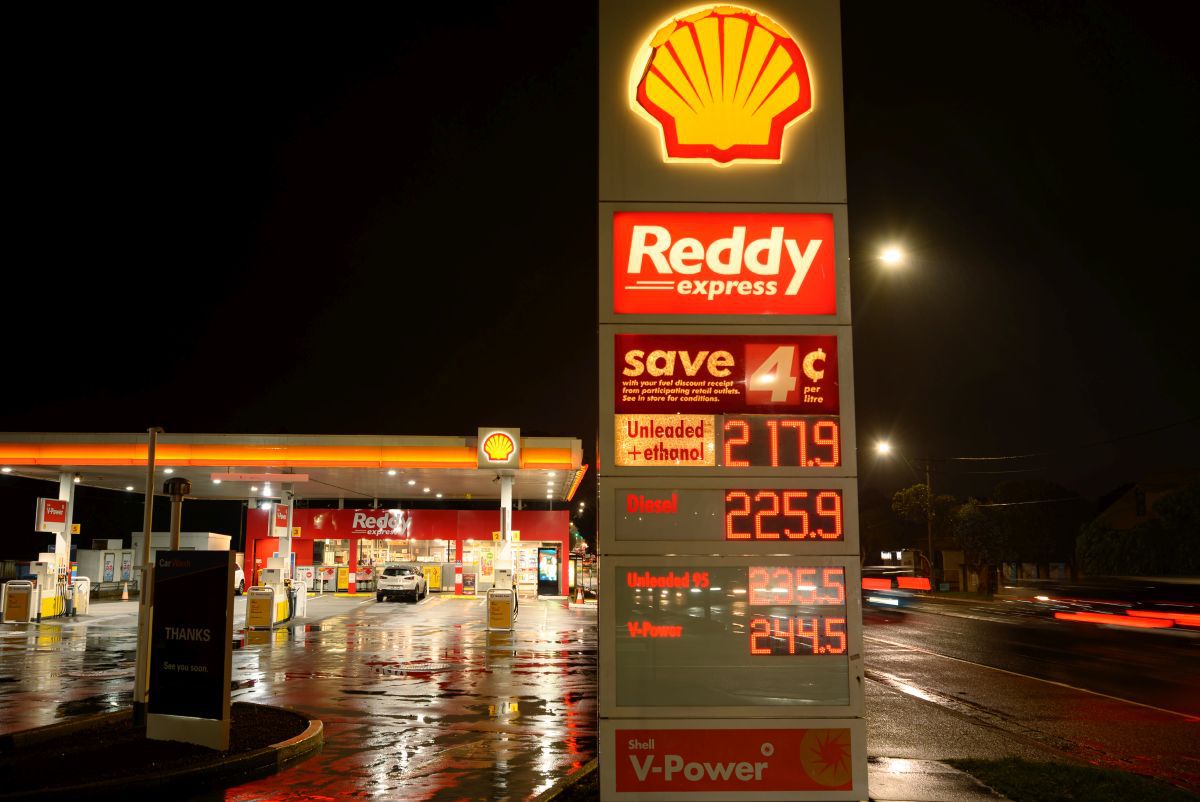
The significant increase in fuel prices, a phenomenon caused by the ongoing war between the US and Israel, on the one hand, and Iran, on the one hand, has become a pressing theme on the world map, in the context in which prices have “exploded” in recent weeks, with the blockade of the Strait of Hormuz. Turkey also does not make a discordant note from the trend of price increases. How have prices evolved here, compared to Romania?
- Turkey – Romania will be played on Thursday, March 26, from 19:00, match broadcast by Prima TV. If we win, we play the qualification final against Slovakia/Kosovo on March 31, 2026.
- Gazeta Sporturilor has 6 experienced reporters in Istanbul who will send the most important information, reports and a series of multimedia correspondence.
Since Iran blocked the transit of ships in the Strait of Hormuz, a strategic point through which about 20% of the world's oil passes, a major fuel crisis has escalated around the globe, causing trade blockades and alarming price increases.
Since the start of the conflict in the Middle East, the price of oil has doubled, rising from $67 per barrel in February to $112 these days!
Important increases in fuels in Turkey as well, but prices remain below Romania
In Istanbul, Turkey's largest city, where the national team plays on Thursday, gasoline has reached approximately 61-62 lira per liter (approximately 6 Romanian lei/l), while in Romania today the price exceeds the threshold of 9 lei/liter.
Gasoline prices fluctuated significantly in Turkey from December 2025 to March 2026. According to official data published by globalprices.com, the average price was around 55.5 TL/liter, with a low of around 51.7 TL in December and a peak of almost 62 TL/liter in mid-March
Compared to winter, gasoline has risen in price by approximately 20-25% in Turkeya sign that the shock in the oil field is felt quite strongly on the local market.
All over the world, the world is increasingly concerned about the prices displayed at the pumps / Photo source: Guliver/Getty Images
On Saturday, at OMV stations in Bucharest, standard gasoline cost between 9.02 and 9.17 lei per liter, and diesel between 9.88 and 9.97 lei, confirming the accelerated trend of the last few days.
Although gasoline arrived in Istanbul at a maximum of approximately 61-62 lira/liter (approximately 6 lei), the level remains noticeably below that of Romaniawhere drivers already pay over 9 lei/litre. Practically, the difference reaches over 40-45%, against the Romanian market.
There are also differences in diesel. If in Romania the price approaches 10 lei/liter, in Turkey it remains significantly lower, even in the context of the recent price increases (around 72-74 Turkish lira/liter, i.e. approximately 7 Romanian lei).
|
Fuel type |
Turkey (Istanbul) |
Romania |
|
Benzine |
61-62 pounds (about 6 lei) |
9 – 9.2 lei |
|
diesel fuel |
72-74 pounds (about 7 lei) |
9.8 – 10 lei |
A full, 150 lei more expensive in Romania than in Turkey
The differences are clearly visible even when full: for a 50-liter tank, a driver in Istanbul pays about 300 lei for gasoline and 350 lei for diesel, while in Romania the cost rises to about 450–500 lei.
Basically, a full tank is up to 150 lei more expensive in the country than in Istanbul! In other words, a driver from Romania pays up to 50% more for the same tank compared to one from Istanbul.
A 50 liter tank costs approximately 300-350 lei in Istanbul, compared to 450-500 lei in Romania, the difference reaching up to 150 lei. / PHOTO: Gulliver/Getty Images
The Turks have implemented a special tax system. The goal? Limiting price increases
However, the economic reality is more nuanced. In Turkey, the price increases are artificially moderated by the intervention of the state, while in Romania the prices reflect much more directly the developments of the international market.
Recently, the Turkish authorities implemented a special system, called “scaling scale”, designed to adjust the special consumption tax (ÖTV) on fuels according to oil price fluctuations. The measure, published at the beginning of March in the Official Gazette of Turkey, aims to prevent excessive price increases at the pump.
Following the new decisions, if refinery exit prices increase, the amount of the ÖTV tax can be reduced by up to 75% of the increase. Similarly, if prices fall, the tax will be increased by the same proportion, notes dailysabah.com.
The decision was taken amid concerns over rising global energy prices amid geopolitical tensions. The measure aims to limit the impact of rising oil prices on inflation and protect citizens from their effects.
Basically, when rates go up, the state cuts some of the taxes to limit the impact at the pump. In contrast, in Romania, where taxation is more rigid and aligned with European standards, such interventions are much more limited.
“In order to limit the impact of geopolitical developments on the economy, we have taken an important step by prioritizing disinflation in public finances. In order to mitigate the oil price shock, which we consider temporary, we are activating the sliding scale system and covering up to 75% of fuel price increases through taxes”, stated the other day, the Minister of Treasury and Finance, Mehmet Şimşek.
The Romanians who come to the match also have the alternative Bulgaria
For fans from Romania who choose to travel to Istanbul by car, a stopover in Bulgaria can mean considerable savings, in the context where fuel prices are lower than in Romania.
On Saturday, March 22, gasoline in Bulgaria was, on average, around 1.42 – 1.45 euros/liter (approximately 7.2 – 7.3 lei), while diesel exceeded the threshold of 1.60 euros/liter (approximately 8.15 lei).
In Bulgaria, standard fuels cost 1.3 lei/liter less, the journalists from Libertatea also explained in a report published over the weekend. All thanks to the lower excise taxes across the Danube, compared to those in Romania.