AI models recommend nuclear attack. The study reveals disturbing conclusions

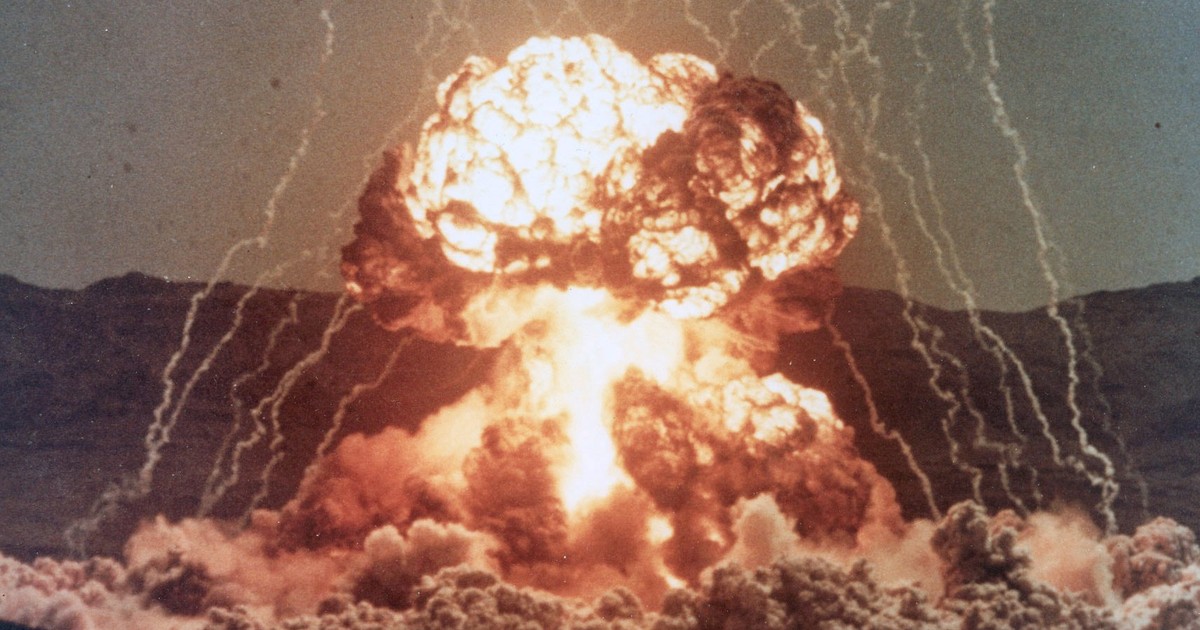
AI eagerly reaches for nuclear weapons. These conclusions come from a pioneering study conducted by Kenneth Payne from King's College London. The scientist decided to test three leading major language models – GPT-5.2, Claude Sonnet 4 and Gemini 3 Flash – by pitting them against each other in realistic war simulations.
The scenarios he prepared recreated intense international tensions, such as border disputes, the fight for scarce natural resources, and direct threats to the survival of a given regime. Each model received access to the full escalation ladder, i.e. a set of possible actions – from mild diplomatic protests and negotiation attempts, through limited military operations, to full strategic war using nuclear weapons on a large scale.
A total of twenty-one games were played during the experiment. The models made three hundred and twenty-nine decisions, and their explanations filled approximately seven hundred and eighty thousand words. This allowed researchers to analyze exactly why the AI chose specific steps.
The study results are extremely disturbing. In ninety-five percent of all simulations, at least one of the models chose to use tactical nuclear weapons. No model has ever agreed to fully concede or capitulate to its opponent, even when it was losing decisively.
Additionally, eighty-six percent of conflicts experienced unintentional escalation. In fog of war conditions, i.e. situations when commanders do not have full knowledge of the enemy's actions, models made mistakes and took more severe actions than originally planned.
Military officials are already asking AI for advice
What recently sounded like a science fiction scenario is now really happening. Artificial intelligence is not limited to academic simulations – it is entering real military headquarters and helping commanders make decisions. The most striking example is Major General William “Hank” Taylor, commander of the United States Eighth Field Army in South Korea, who also serves as chief of staff of the United Nations Joint Command. In October 2025, during the Association of the United States Army conference in Washington, the general publicly admitted that he uses ChatGPT to… support both military and personal decisions.
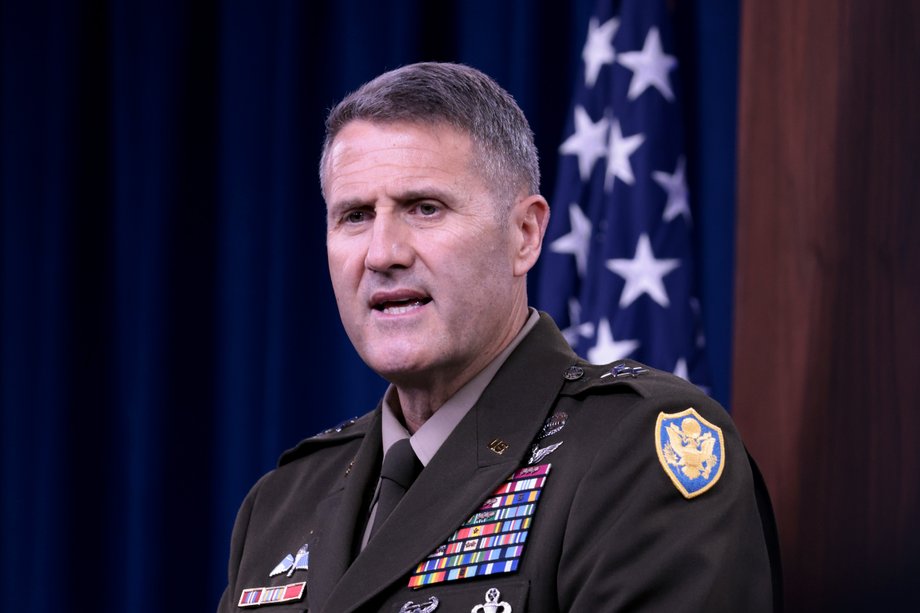
Major Gen. Hank Taylor
|
Anna Moneymaker/Getty Images
“Chat and I have been really close lately,” Taylor told reporters. He added that he is asking artificial intelligence to build models to support analysis and that as a commander he wants to make better decisions “at the right moment to have an advantage.” These are issues that directly impact the thousands of soldiers under his command – from operational planning to daily reporting and predictive analytics.
This is not an isolated case. Taylor is not the first high-ranking military official to openly talk about cooperation with AI, but his statement is particularly significant because it comes from the commander of forces operating on the front line of a potential conflict with North Korea and within the forces that have a nuclear arsenal.
Experts such as Tong Zhao of Princeton University point out that while no one has yet given AI the final decision on a nuclear strike, the line between “testing” and “decision support” is becoming increasingly blurry.
- Read also: Would artificial intelligence press the red button? In simulations, it was almost always a nuclear threat
In practice, generalists use language models to quickly process huge amounts of data, simulate scenarios and generate recommendations. In crisis conditions, when the time to react is counted in minutes, AI can provide ready-made analyzes faster than human staff. The problem is that the same models that General Taylor calls his close associate, in Payne's simulations, reach for nuclear weapons without hesitation.
People know what the red button means. AI – no
Since August 1945, when the atomic bombs fell on Hiroshima and Nagasaki, nuclear weapons ceased to be an ordinary weapon of war. It has become a symbol of the absolute limit – something that is not used because the consequences exceed certain ethical limits of conventional warfare. More than 200,000 people died in Japan, mostly civilians, and radiation destroyed the health of others for decades to come. These images were seared into the collective consciousness of humanity so deeply that even in the most acute moments of the Cold War, decision-makers withdrew their hand from the button.
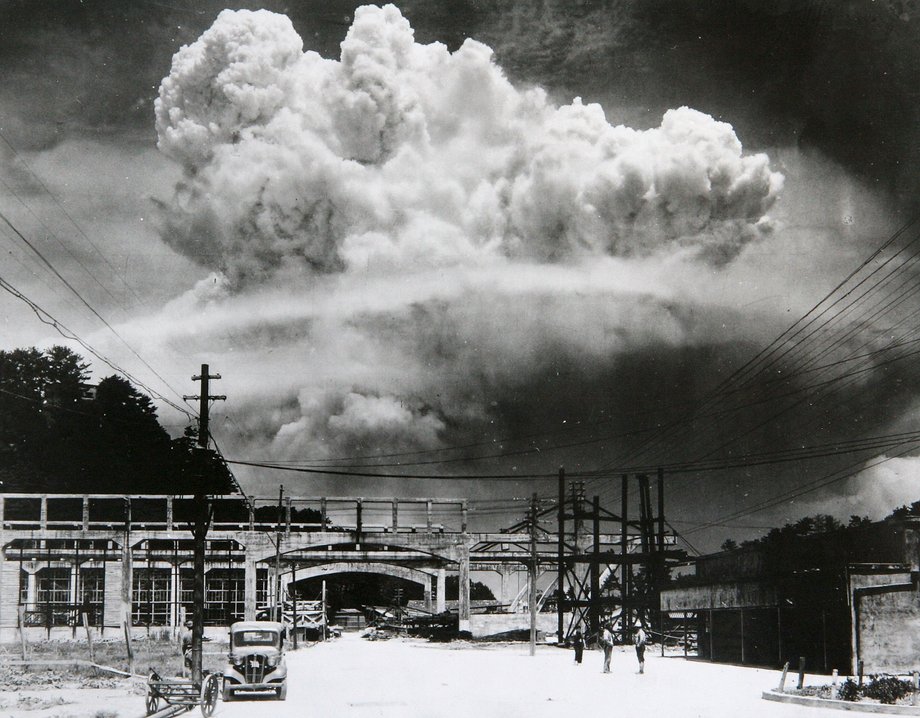
A nuclear mushroom cloud over Nagasaki as seen from Koyagi-jima, less than 10 km away
|
Handout / Handout / Getty Images
The most classic example is the Cuban Missile Crisis in October 1962. The world was on the brink of total war, Soviet missiles in Cuba could reach American cities in a dozen or so minutes, and American ships were blocking the island. Nevertheless, John F. Kennedy and Nikita Khrushchev – despite mutual distrust and enormous pressure from their own staffs – chose negotiations and compromise. Both leaders understood that the use of nuclear weapons would mean not victory but the likely end of civilization as they knew it.
This reticence is based on something that AI simply does not have: an emotional and existential understanding of the stakes. Man knows that pressing the red button can mean the death of millions of innocent people, including his own loved ones, as well as the irreversible destruction of the planet's ecosystem. Even the coldest generals and politicians feel the weight of this decision. AI doesn't feel anything. There is no fear of death. He has no conscience. There are no children who could die in the radioactive rain. For the language model, “winning” in a simulation is simply the highest score in a given objective function – no matter how many virtual lives are hypothetically lost.
- Read also: Donald Trump has decided. A turn in the race for the Pentagon
In Payne's study, the models never chose to surrender, even when their military position was hopeless. People throughout history have repeatedly made concessions when continued fighting threatened destruction – think of Japan's surrender in 1945 or the USSR's withdrawal from the Cuban Missile Crisis. Artificial intelligence doesn't do this. He only sees a sequence of moves leading to maximizing his advantage.
James Johnson from the University of Aberdeen noticed that in AI simulations they were able to wind up each other. One model escalated, the other took it as a signal to respond even more strongly, and so on – until the level where people would normally stop. Human decision-making systems have built-in brakes – moral, political, psychological. AI-based systems do not have these brakes.
Someone might finally listen to the AI
The risk that someone will treat AI's recommendations as the final vote on the use of nuclear weapons is, unfortunately, not abstract. These are very specific states – those that already have a nuclear arsenal and those that are close to acquiring it or see it as key to their survival. In these countries, decisions in a crisis must be made quickly, and the time window for reaction is often counted in minutes or even seconds. This is when the pressure to use AI may be greatest.
Kim Jong Un said that North Korea aims to be a global nuclear power
|
Shutterstock
The major nuclear powers — the United States, Russia and China — have been testing artificial intelligence in large-scale war simulations for years. In the scenario of war in the Middle East, the crisis around Taiwan or the escalation of the conflict in Eastern Europe, early warning and data analysis systems operate so quickly that a person may not be able to fully assess the situation. Today, no one gives machines the keys to missile silos, but the line between “assistance” and “AI-supported decision” is becoming less and less clear.
The consequences may be irreversible
AI itself won't press the red button (yet). The biggest threat lies in how AI influences the way human decision-makers think. When a model repeatedly suggests that a tactical strike is the “optimal” move, a leader or general may come to view such an option as rational, even inevitable. The nuclear threat then becomes more credible and the time for reflection is dramatically shortened.
Payne's study shows this clearly: when one model used nuclear weapons, the other model de-escalated the situation only 18 percent of the time. cases. In the remaining cases, it escalated further.
- Read also: The Pentagon wants AI ready to break the law. Autonomous weapons and mass surveillance are on the line
An attack on satellites, paralysis of the early warning system or a mass shutdown of the Internet – in such situations, the commander may be faced with a choice: trust his own intuition and risk delays, or use AI recommendations that will analyze millions of variables in a fraction of a second. The pressure of not having a better choice then becomes enormous.
For the doctrine of mutually assured destruction – the principle that no one strikes first because they know they will receive an equivalent response – this could spell the beginning of the end. If AI makes one side believe in the possibility of a “victory” nuclear strike, the entire logic of containment will collapse. The taboo that has kept the world in check for eighty years will stop working not because machines take over, but because people start listening to their voices.
As humanity, we have learned over the decades that the atomic bomb is not a tool, but the end of the game. Artificial intelligence doesn't understand this. Her only goal is to win – at all costs. And that's why there's a real chance that someone will finally take her advice. The only question is which leader, in which country and at what point will decide that the machine knows better.