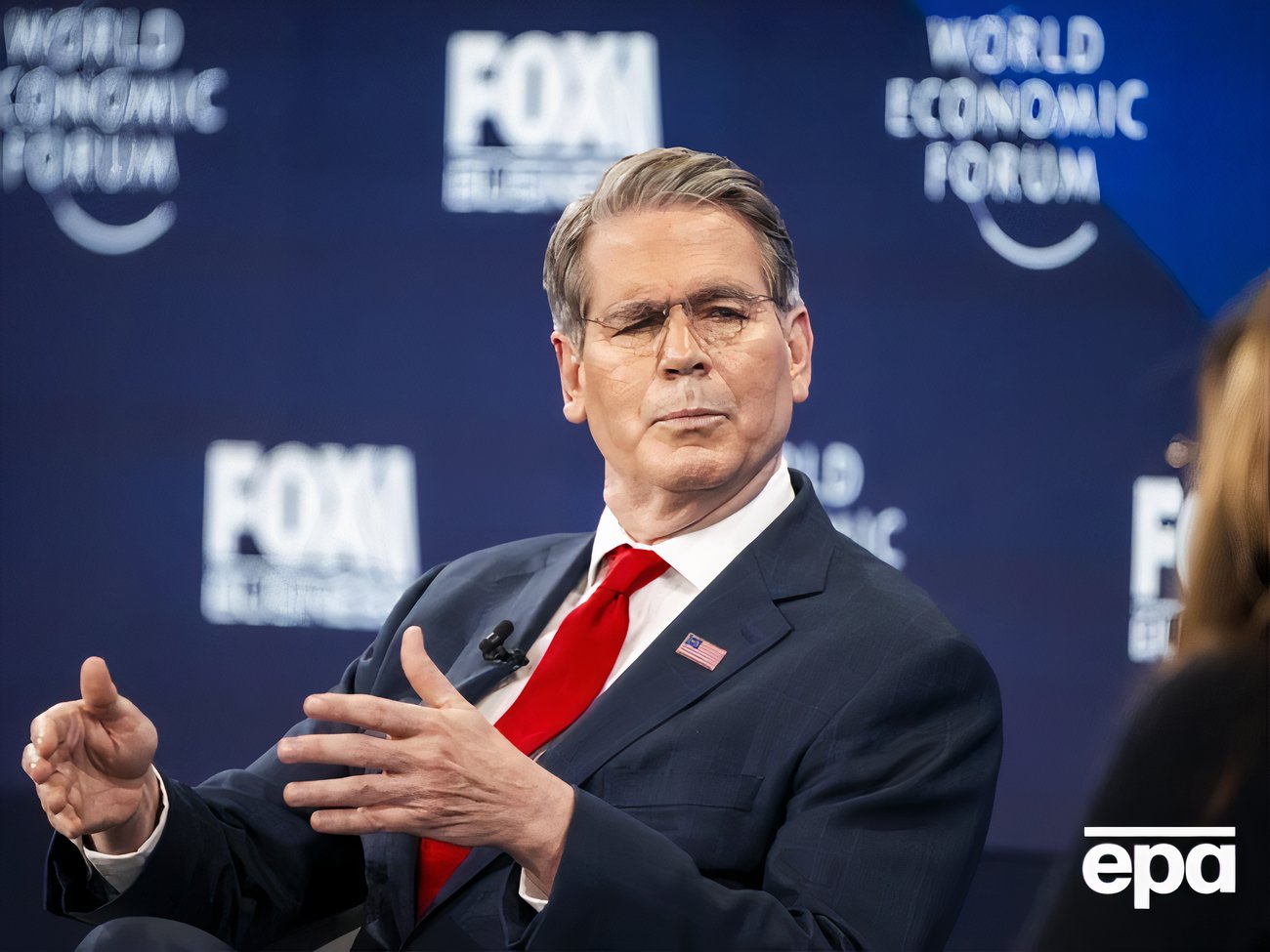
According to the channel, Bessent tried to justify joint US and Israeli strikes on Iran.
“Sometimes you have to escalate to de-escalate,” he said.
The journalist noted that earlier that day, US President Donald Trump announced an ultimatum to Iran on the Truth Social social network, threatening to destroy their power plants if Tehran does not open the Strait of Hormuz within 48 hours.
During the interview, Bessent tried to justify Trump's rhetoric by calling it “the only language Iranians understand.” He also did not rule out sending American troops to the Iranian island of Kharg, through which 90% of Iranian oil exports pass.
Reuters wrote that after Trump’s threats, Iran’s representative at the UN maritime agency, Ali Mousavi, said that ships not related to “Iran’s enemies” could pass through the Strait of Hormuz, subject to coordination of security measures with Tehran. Mousavi did not say what exact conditions he was talking about, however, as Lloyd's List reported, Iran has begun charging ships for “safe” transit through the Strait of Hormuz.
Context
Against the backdrop of the war between the United States and Israel with Iran, shipping through the Strait of Hormuz, one of the most important routes for global oil trade, through which millions of barrels of crude oil and petroleum products pass from the Middle East to Asia, Europe and the United States every day, has practically stopped since March 1. Oil prices began to rise sharply.
On March 10, information appeared in the media that Iran had allegedly begun mining the strait. US Treasury Secretary Scott Bessent stated that the US Navy will escort tankers from companies that cooperate with the Americans through the Strait of Hormuz.
On March 14, Trump called on China, France, Japan, South Korea, the UK and other countries to send ships to create conditions of openness and security in the Strait of Hormuz.
On March 17, White House adviser Kevin Hassett said that tanker traffic through the Strait of Hormuz was supposedly being restored, and Iran's attempts to restrict shipping on this route had not caused damage to the US economy. On the same day, the head of European diplomacy, Kaya Kallas, proposed introducing an analogue of the “grain agreement” concluded during the Russian-Ukrainian war to unblock the Strait of Hormuz.