An investigation by the Bild daily shows that the mothers of Russian soldiers are deceived in terms of compensation for the death of their children. Journalists analyzed tens of thousands of messages from soldiers' relatives from the last six months. They come from support groups run, among others, by: by Putin's “United Russia” party on online messengers such as Telegram.
“We have serious problems. The prosecutor's office is not taking any action. We called everywhere – the necessary documents often arrive only after a year,” wrote a relative of a Russian soldier in mid-March 2026.
“The local authorities want to send gifts to the families of the fallen. They forgot about me. I can come to terms with that. But I have not received payments for my husband for three years,” complained on December 29, 2025, a woman from Russia's Samara Oblast.
The news shows the precarious situation of the families of fallen soldiers, anger, disappointment with their country and urgent financial problems.
Many Russian soldiers fight in Ukraine primarily for money. The pay is high, and if they die, their relatives are to receive compensation of up to PLN 150,000. euro (over PLN 642,000). Putin's unwritten deal for Russians can be briefly summarized as follows: you go to war and in return I will lift your families out of poverty.
When a soldier dies in the line of duty, the families theoretically receive 13.2 million rubles (approximately EUR 133,300 or over PLN 570,000) from the state treasury, and sometimes even further payments from regional offices. In total, it's up to approx. 150 thousand. euro. According to estimates cited by “Bild”, every day, despite great losses on the front, approximately 1,000 Russians volunteer for military service.
The article continues below the video
Analysis of messages from support groups for families of fallen soldiers shows how difficult it is to obtain compensation for death and injuries in Putin's Russia.
In January 2026, A. talks about his problems with the offices: “No compensation for death, no payment for injuries. The certificate only says: 'cause of death unknown'.”
In mid-February, another relative of a fallen soldier wrote a message on one of the groups: “Also from the Ministry of Defense, only a standard refusal – apparently everyone rejects applications. Already in September, I contacted the office for military service, and there has been no response yet.”
The state pays the money only when the man is officially declared dead. However, according to reports by the Russian website Werstka, it is common practice in the Russian army to simply leave the seriously wounded and killed on the battlefield and report them as missing or deserters.
Dealing with the fallen in this way saves the state money and lowers the official number of victims. Meanwhile, the Russian war machine continues to operate and constantly recruits new soldiers.
For the loved ones of fallen soldiers, however, this means that they must endure uncertainty, not knowing exactly whether their husbands are alive or dead. They also do not receive any compensation.
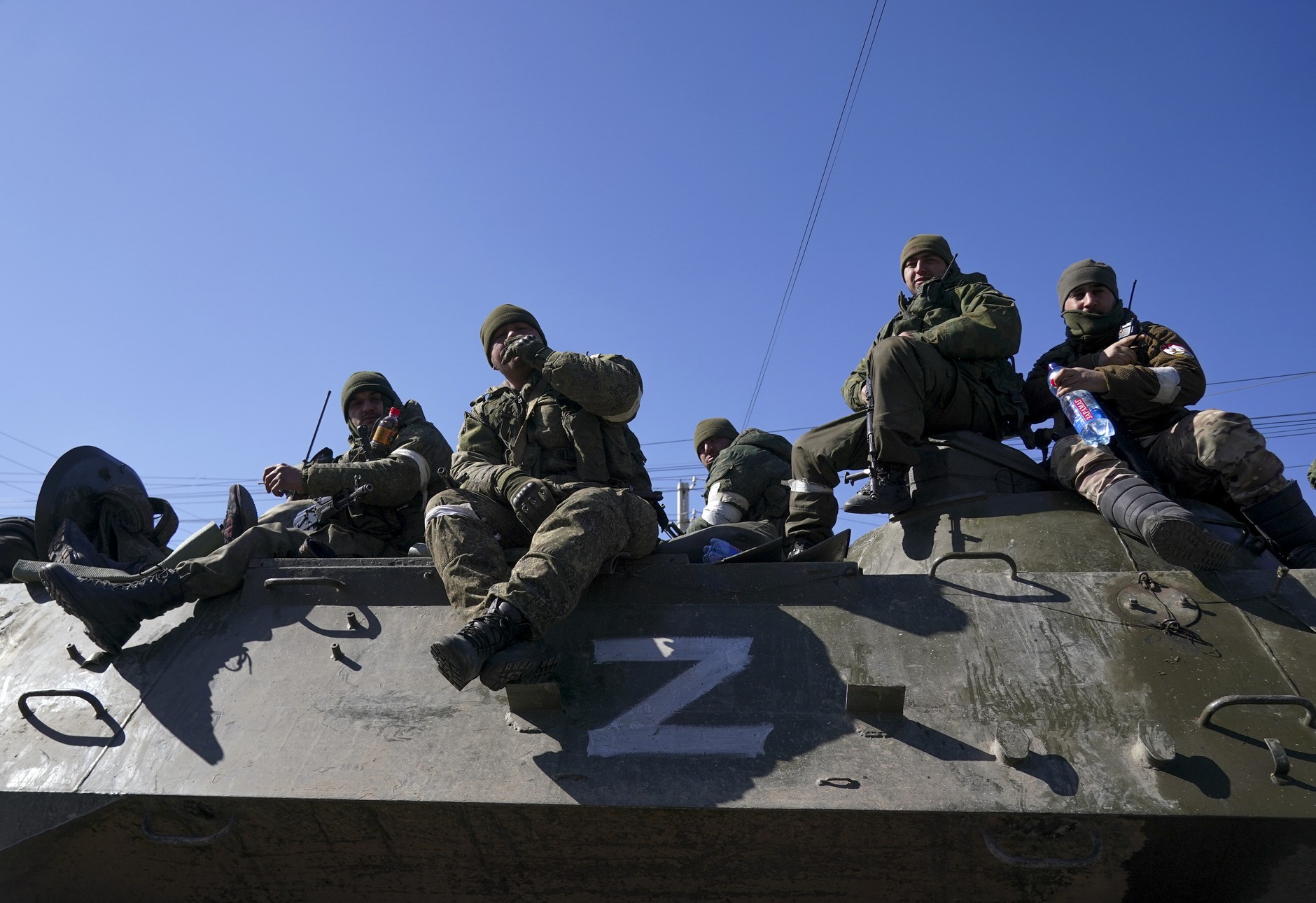
Russian soldiers (illustrative photo)Stringer/Anadolu Agency via Getty Images/Contributor/Getty Images
When a man has been missing for at least six months, families can file a motion in court to have him officially declared dead. There have been at least 2,800 such proceedings since the beginning of the war. However, according to Werstka, courts rarely rule in favor of ordinary Russians. They want to hear the testimony of their comrades in arms confirming the death – or see the corpse.
“The pain is so great, and I'm not young anymore. And now I have to run from court to court and present evidence,” a woman named Ljuba reported on Telegram in early December 2025. According to research by Russian independent website Verstka, wives go to large morgues near the front lines to identify their husbands by tattoos or birthmarks.
I’m Ashley Davis as an editor, I’m committed to upholding the highest standards of integrity and accuracy in every piece we publish. My work is driven by curiosity, a passion for truth, and a belief that journalism plays a crucial role in shaping public discourse. I strive to tell stories that not only inform but also inspire action and conversation.