Article by Alexandru Barbu – Published Friday, March 20, 2026, 5:15 p.m. / Updated Friday, March 20, 2026, 5:15 p.m.
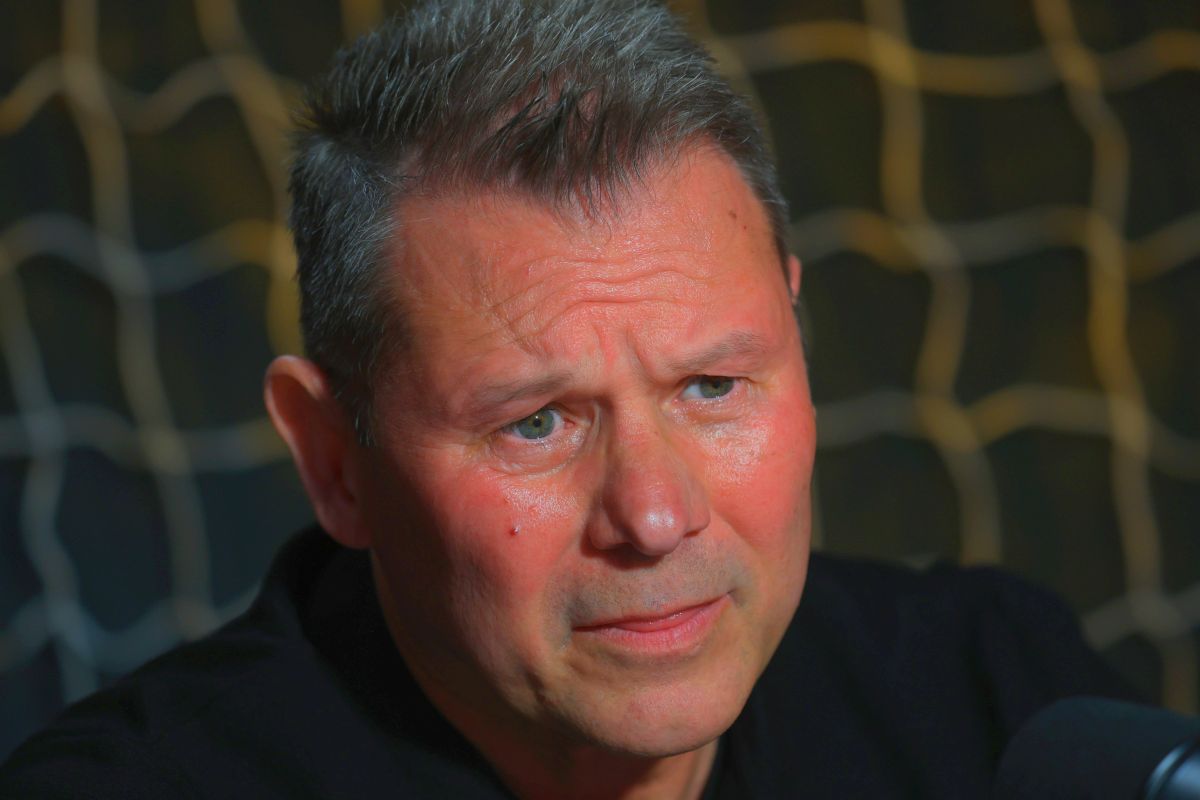
Thomas Neubert, 57, was invited to the GSP podcast “2 to 1”. Faced with doping accusations, the German offered a series of incendiary answers!
Over the years that Neubert has been active at FCSBthe red-blues were suspected of an unusual physical condition. Most recently, Marius Șumudică spoke on the subject.
“There were moments when I felt like Traian Vuia and a supersonic passed me. They also have a very good physical trainer, Thomas Neubert. But I really don't know what to say. There are question marks for me. That's the truth. Seriously, I really don't know what's going on with a team at the level of our championship looking so good in terms of physicality and longevity“, declared Șumudică after a Rapid – FCSB 0-0 in the previous play-off. At that time, Marius Șumudică was the coach of the white and cherry team.
Doping at FCSB? As Thomas Neubert, guest on the GSP “2 to 1” podcast, comments: “If Şumudica said that… it's funny”
“To me, that's funny”says Neubert for the first time. Then he develops: “First of all, who is responsible for doping? The doctors! Only the doctors! They sign a protocol. If Raul Rusescu, for example, has a cold and uses a nasal spray, the doctor should prescribe it. The doctor is responsible. He signs, he is responsible for everything related to drugs. A preparer does nothing with drugs, absolutely nothing.”
“What did I do? I had a discussion with Reghe and I told him: look, we need vitaminization, for recovery we need protein… Everything a professional athlete needs.
I knew a company in Germany that we could work with, and Bayern was doing it, and Stuttgart, and Hamburg, Schalke, everybody. But it's legal, they're not drugs, they're supplements. There is a difference between a drug and a supplement. Supplements are legal: each club can use sodium, calcium, magnesium, electrolytes. Every club does that, 100%,” adds the former physical trainer from FCSB.
“If Şumudică said that he works with Anticàrcel, OK, there is no problem. But Sumi also turns to vitaminization, it's normal. It's very funny to me, I have no problem with Şumudică or anyone else. As far as I know, doping does not exist in Romania. At every doping test, if someone is positive, the media makes a big scandal. There is no such thing“.
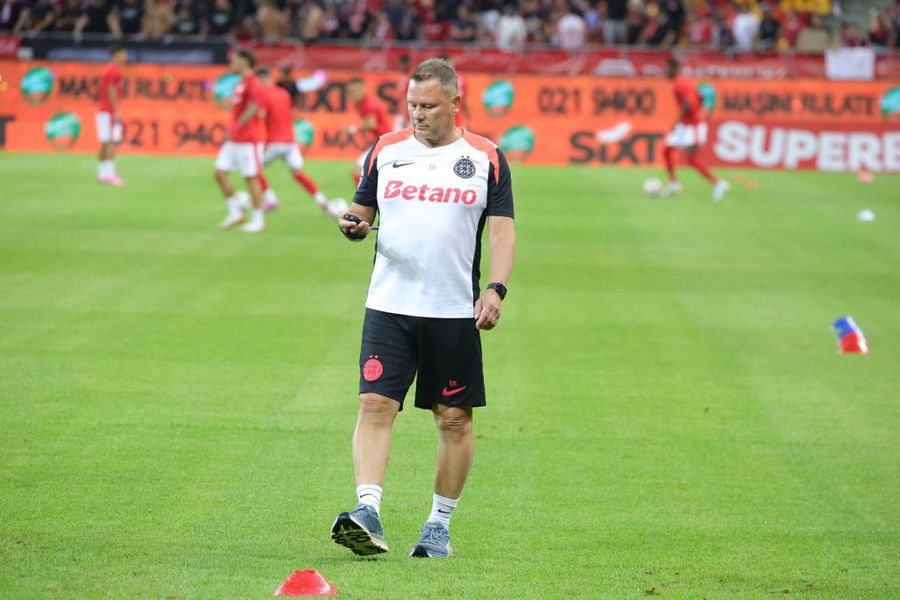
Thomas Neubert recently left FCSB, where he worked in 3 different periods, photo: Ionuț Iordache (GSP.ro)
“Doping in football is not even worth it, it doesn't make sense!”
Neubert goes further and states that, in his opinion, doping would not even help footballers progress:
“Stop! I want to say something else. Doping in football doesn't help much either. Football is a sport with many physical elements. For example, a marathon runner, if he is doping with EPO (no – erythropoietin)this is for endurance, it can cover a longer distance. Yes, it's doping and it's banned.
But a football player, if he takes EPO, he still runs between 10 and 12 kilometers. The effect is zero. He can't run 15 or 16 kilometers just because he's doped. Another point: if a player takes steroids for strength, muscle mass – strength is just a physical parameter, you are not automatically a better footballer. For me, I don't understand why a footballer would dope. There is a big risk and it is not worth it. It doesn't make sense, it doesn't help!“.
Asked, however, if abroad he believes that football teams resort to doping, Neubert commented as follows:
“Who knows? Probably, yes. I think 99.99% of players don't dope, but they probably still buy a product on the Internet, don't talk to the doctor, take a supplement for longer hair or to lose weight, and that supplement contains a banned substance. The player is doped without knowing. But the law is clear: it doesn't matter that he doesn't know. If he uses, he's doped and suspended.”

FCSB bought an ozone therapy device during Reghecampf's mandate
In 2018, Gazeta Sporturilor published clear evidence that FCSB used ozone therapy during the mandate of Laurentiu Reghecampf. In the Football Leaks database there are invoices for ozone therapy for 18 players and subsequently for the purchase of a device called Ozonosan, whose main therapeutic use is major autohemotherapy, a method considered blood doping in sports.
The FCSB club admitted that it used the device only for rectal insufflations with ozone, a method allowed by the regulation.
Thomas Neubert: “Everyone is doped there!”
The physical trainer directly accuses the cyclists of using banned substances:
“Cycling is different. Tour de France, different! Everyone is doped there, I know! What about doping? Some tests are being done in the lab. The pharmacy makes medicines. It's a game: developing drugs that go undetected. The first to test positive, because a new testing technology appears, is unlucky.
In a sport like cycling, everyone is doped, of course. You can't do otherwise, in 3 weeks, 5,000 kilometers in the Tour de France, in the Alps. You can't do it if you're not doped. Everyone knows. And Armstrong was, and Ullrich“.
Historically, cycling has been a sport rocked by doping scandals. As for the examples provided by Neubert:
-
Jan Ullrich he was Lance Armstrong's biggest challenger during a dark period for cycling in the early 2000s. The only German winner of the Tour de France, Ullrich produced real hysteria in his home country. He lost everything before the 2006 Tour de France when it was discovered that he was among the riders that doctor Eufemiano Fuentes was doping for performance.
-
American Lance Armstrong won 7 Tours de France but lost them all in 2012 when he was proven for systematic doping by the US Anti-Doping Agency. “I've been tested 500 times in my career and not one result has been positive.”
FULL VIDEO | The GSP podcast “2 to 1” with Thomas Neubert:
About Thomas Neubert:
- in the period 2003-2006 he was a personal trainer on the physical training side for American soldiers of the US Air Force, from the US base in Ramstein, Germany;
- 1992 is the year Neubert started the courses for the physiotherapist specialization;
- in Germany he worked at Kaiserslautern, where he met Laurentiu Reghecampf, who would mark his career;
- in 2010 he came to Romania, brought by Reghecampf, with whom he teamed up, consecutively, at Gloria Bistrița, Chiajna, FCSB;
- he went with Reghe to Saudi Arabia, to Al Hilal. He also collaborated with Laurentiu in Bulgaria, at Litex Lovech, again at FCSB and later at Al Wasl;
- without Reghecampf, Neubert had contracts at Pandurii Tg. Jiu, CSKA Sofia and FCSB (3rd term) and collaborated with technicians like Elias Charalambous, Toni Petrea, Nicolae Dică, Edi Iordănescu;
- the success he knew at FCSB, with whom he won, among others, 4 titles in League 1, qualified in the Champions League groups and in the spring of the Europa League.