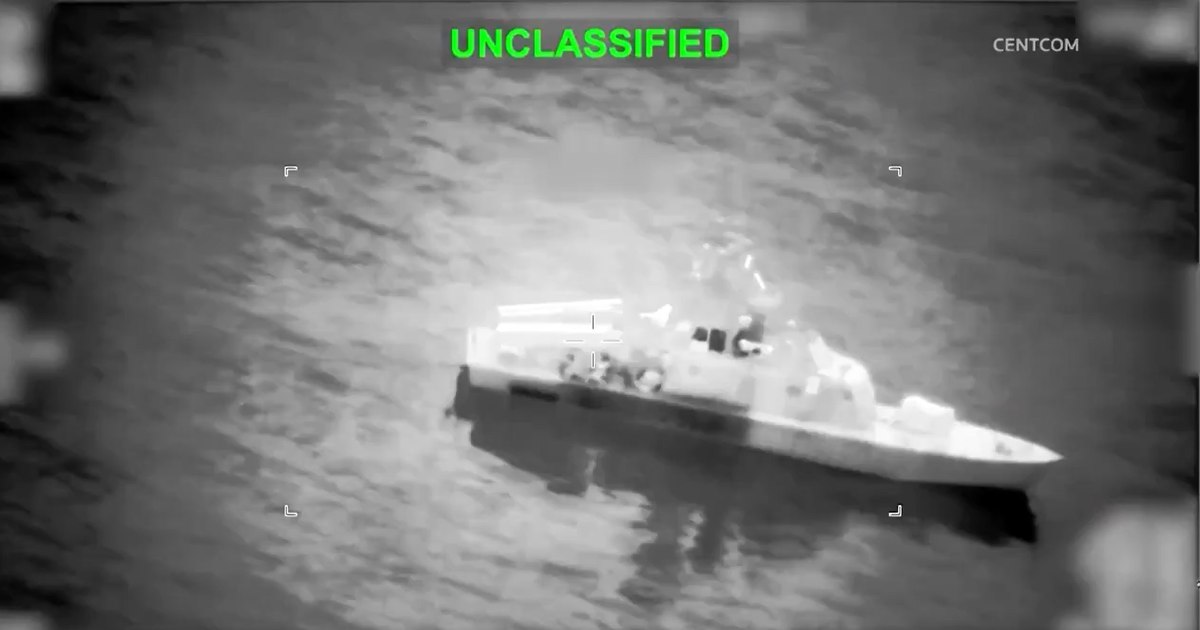
The United States has launched a major military offensive to reopen the Strait of Hormuz, deploying low-altitude attack aircraft and Apache helicopters to strike Iranian ships and drones that have virtually blocked one of the world's most important oil shipping routes, The Telegraph and WSJ report.
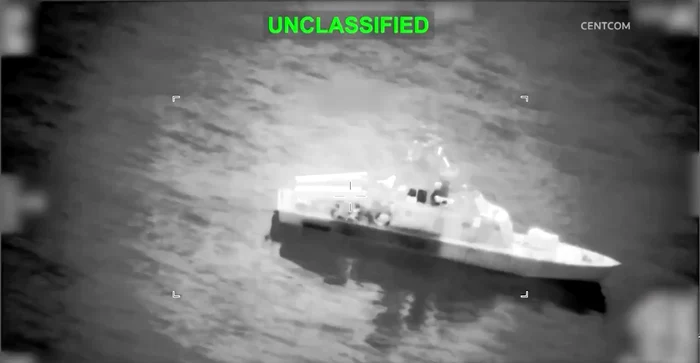
The US destroyed Iranian ships suspected of placing mines in the Strait of Hormuz PHOTO: video capture
The escalation comes after weeks of tensions, following Iran's threats to attack any ship transiting the narrow route, using fast attack craft, naval mines, drones and cruise missiles. The Strait of Hormuz, which is only 24 miles wide at its narrowest point, carries about a fifth of the world's oil, making blocking this route a major impact on global markets.
In a press conference at the Pentagon on Thursday, General Dan Caine, chairman of the Joint Chiefs of Staff, confirmed that US forces had begun active combat operations in the region.
“The A-10 Warthog is now employed on the southern flank, targeting fast attack craft in the Strait of Hormuz,” Caine said.
“Apache helicopters also joined the fray on the southern flank.”
According to US officials, A-10s and Apache helicopters have been destroying Iranian fast boats for several days, which have been accused of harassing and attacking merchant ships. The helicopters are also used to intercept kamikaze drones, a weapon used in war to strike neighboring targets in the region.
The operation is part of a larger, multi-phased Pentagon plan to reduce Iranian threats and ultimately allow US warships to safely escort merchant vessels through the strait. However, military leaders warn that fully reopening the route will take time.
“I think it will take weeks to reach a point where operations in the strait will be safe,” said Farzin Nadimi, an expert on Iran's military capabilities. “Even so, many of Iran's assets will survive.”
The United States has also stepped up strikes on Iranian military infrastructure, including underground weapons depots and fortified cruise missile batteries operated by the Islamic Revolutionary Guard Corps. General Caine confirmed the use of powerful penetrating bombs against such targets.
Defense Secretary Pete Hegseth said the operation had already caused significant casualties.
“More than 120 Iranian naval vessels were damaged or destroyed,” Hegseth said.
Despite these losses, analysts warn that Iran still has considerable capabilities, including hidden stockpiles of mines, mobile missile launchers and hundreds of small craft hidden in coastal tunnels and island bases.
Iran has attacked dozens of ships using drones laden with explosives, aerial drones and missiles, both in the straits and in the Gulf of Oman and the Persian Gulf.
The US operation took on new urgency on Thursday when oil prices topped $100 a barrel, reflecting fears of a prolonged disruption to cross-strait traffic. At the same time, Iran has hinted that it may seek to strengthen its control over maritime transit.
Tehran's parliament is considering a law that would allow selective passage of ships for a fee, raising concerns about using the position as a tool for geopolitical pressure.
“In practice, this creates a form of forced interdependence,” said Danny Citrinowicz, a national security expert at the Atlantic Council. “States seeking access to Gulf energy may find themselves forced to make concessions to Iran, either directly or indirectly”
To bolster its presence, Washington accelerated the deployment of Marine Expeditionary Unit 11 from California. The force, made up of about 4,500 sailors and marines, is expected to arrive in the Middle East within days.
Even with this increased military presence, experts point out that the geography of the strait favors Iran. The narrow width allows missiles to be launched from hundreds of kilometers away, with a high chance of hitting ships in transit.
“The environment makes this operation extremely difficult,” said Michael Connell, an Iran analyst.